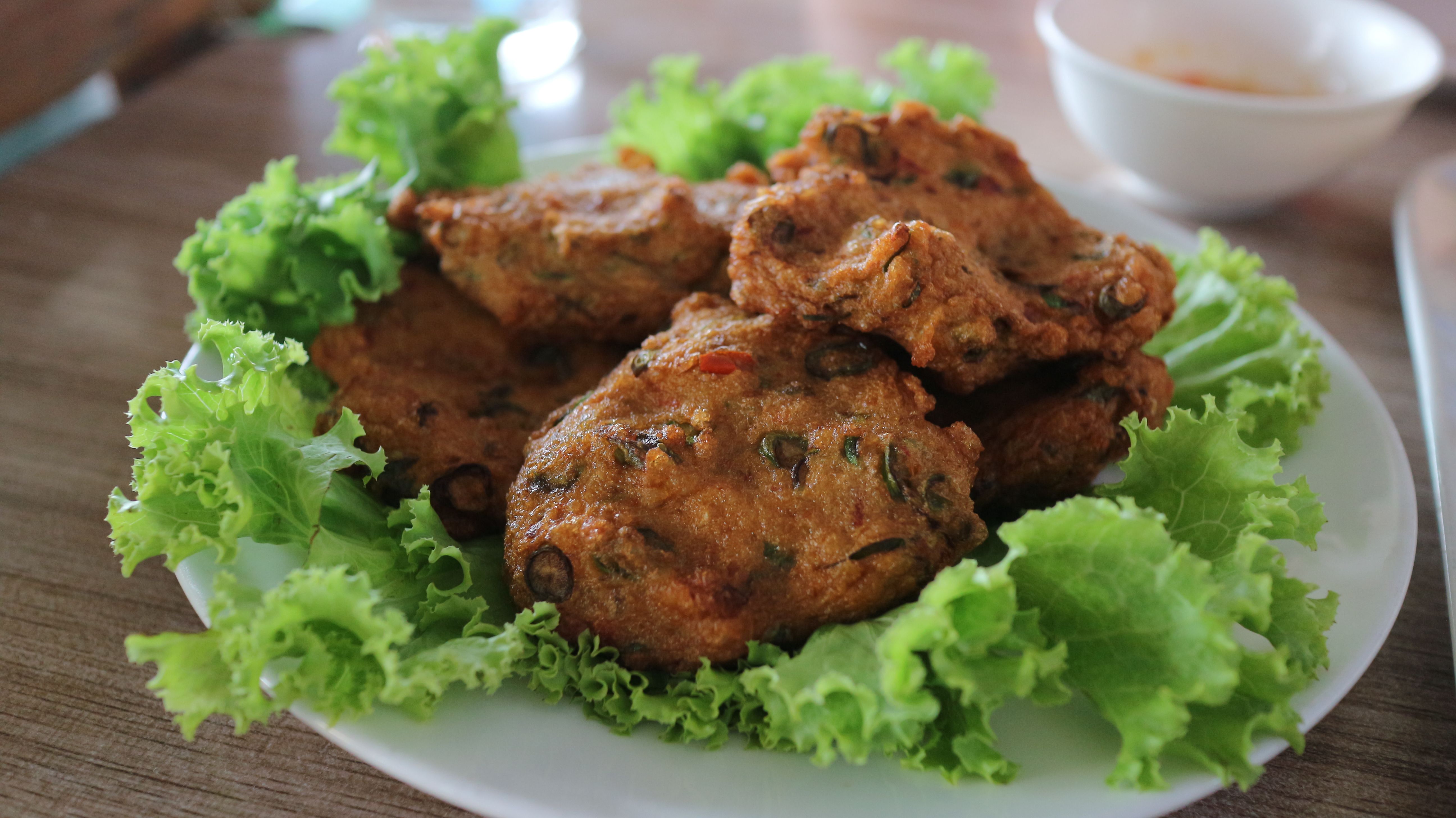
Photo: Ball CooleR / Pexels
Thai
Thai Shrimp Cakes
The diets react (see scores below)
Common Ingredients
- shrimp
- red curry paste
- kaffir lime leaves
- egg
- fish sauce
- cilantro
- scallions
- sweet chili sauce
Specific recipes may vary.
Incompatible with 4 of 11 diets
Diet Ratings
Thai Shrimp Cakes have a solid keto foundation — shrimp is a lean, low-carb protein, egg acts as a binder, and fish sauce, kaffir lime leaves, and cilantro are essentially carb-free. Red curry paste adds minimal carbs in small amounts. The critical problem is the sweet chili sauce, which is loaded with sugar (typically 10-15g net carbs per 2 tbsp serving) and is a standard accompaniment or ingredient in this dish. If sweet chili sauce is mixed into the cakes themselves, the dish becomes borderline problematic. If served as a dipping sauce, it can be omitted or swapped. Without the sweet chili sauce, this dish would score 7-8 and earn approval. With it included as listed, the dish earns a caution rating requiring substitution or strict omission.
Some lazy keto practitioners may approve this dish if the sweet chili sauce is used as a small-portion dipping sauce, arguing that a minimal dip keeps total carbs within daily limits. Conversely, strict keto adherents would flag both the sweet chili sauce entirely and scrutinize the red curry paste for hidden sugars, rejecting any form of this dish as served traditionally.
Thai Shrimp Cakes contain multiple animal-derived ingredients that are clearly incompatible with a vegan diet. Shrimp is seafood (an animal product), egg is an animal product, and fish sauce is derived from fermented fish. These three ingredients alone make this dish firmly non-vegan. There is no ambiguity or meaningful debate within the vegan community about any of these ingredients.
While the base ingredients (shrimp, egg, kaffir lime leaves, cilantro, scallions) are paleo-approved, two ingredients disqualify this dish. Fish sauce is typically fermented with added salt and often contains sugar and preservatives, making it a processed condiment that conflicts with paleo principles. More critically, sweet chili sauce is a heavily processed condiment containing refined sugar, vinegar, and often cornstarch — all non-paleo ingredients. Red curry paste is also a borderline processed product that frequently contains added salt, shrimp paste with preservatives, and other additives. The combination of these problematic ingredients makes this dish a clear avoid in its standard form.
Thai Shrimp Cakes feature shrimp as the primary protein, which aligns well with Mediterranean diet principles encouraging seafood 2-3 times weekly. The dish also includes egg and fresh aromatics (cilantro, scallions, kaffir lime leaves), which are compatible. However, this is a non-Mediterranean cuisine preparation, and several elements warrant caution: the sweet chili sauce adds notable sugar, red curry paste introduces non-traditional spice profiles, and fish sauce is a high-sodium processed condiment. Critically, the preparation method (pan-fried or deep-fried cakes) likely involves oils other than extra virgin olive oil, and the binding/frying process adds processed elements absent from a typical Mediterranean seafood dish. The sweet chili sauce dipping component is the most problematic factor due to added sugars.
Some Mediterranean diet interpreters would focus primarily on the seafood-forward protein source and argue that the fresh herbs, egg, and minimal processing align reasonably well with the diet's spirit, rating this more favorably if prepared with olive oil and the sweet chili sauce is used sparingly or omitted. Others applying a stricter traditional Mediterranean lens would note that none of these ingredients or techniques originate from Mediterranean culinary traditions.
Thai Shrimp Cakes are heavily incompatible with the carnivore diet despite containing animal-derived shrimp and egg. The dish is loaded with multiple plant-based ingredients that are strictly excluded: red curry paste (a blend of plant spices, chilis, and aromatics), kaffir lime leaves (plant), cilantro (herb/plant), scallions (plant), and sweet chili sauce (plant-based, sugar-laden condiment). Fish sauce, while animal-derived, often contains additives. The overwhelming presence of plant ingredients — particularly the sugar-containing sweet chili sauce and the complex curry paste — makes this dish fundamentally incompatible with carnivore principles. Even the most lenient carnivore practitioners who allow spices would draw the line at sweet chili sauce and a dish architected around plant-based flavor profiles.
Sweet chili sauce is the primary disqualifier here — it almost universally contains added sugar (typically as its second or third ingredient) and often includes corn starch as a thickener, both of which are excluded on Whole30. Red curry paste also commonly contains shrimp paste and other compliant ingredients, but many commercial brands include added sugar or non-compliant additives, requiring careful label-reading. The remaining ingredients — shrimp, egg, fish sauce, kaffir lime leaves, cilantro, and scallions — are all Whole30-compliant. However, sweet chili sauce as called for by name (not a compliant homemade substitute) makes this dish non-compliant as presented. Additionally, the 'cake' format may raise Rule 4 concerns about recreating fried snack foods, though shrimp cakes are arguably closer to a protein patty than a junk food recreation.
Thai Shrimp Cakes contain several problematic ingredients for the low-FODMAP elimination phase. The biggest concern is red curry paste, which typically contains garlic and/or shallots — both high-FODMAP fructan sources. Commercial red curry paste almost universally includes these ingredients, making it a significant FODMAP risk. Scallions (green onions) are low-FODMAP when only the green tops are used, but if the white bulb portions are included they become high-FODMAP. Sweet chili sauce often contains garlic and/or high-fructose corn syrup or excess fructose, adding further risk. The remaining ingredients — shrimp, egg, fish sauce (in typical small amounts), kaffir lime leaves, and cilantro — are all low-FODMAP. In theory, this dish could be made low-FODMAP with homemade garlic-free, onion-free curry paste and a compliant dipping sauce, but as typically prepared in restaurants or from standard recipes, the red curry paste alone makes it high-FODMAP.
Monash University rates garlic and onion/shallot (common curry paste bases) as high-FODMAP even in small amounts, making commercial red curry paste a likely elimination-phase violation. Some FODMAP practitioners allow garlic-infused oil-based curry pastes or homemade versions, but standard restaurant preparations should be presumed high-FODMAP during elimination.
Thai Shrimp Cakes present a mixed nutritional profile from a DASH perspective. Shrimp is a lean protein source compatible with DASH, but the combination of fish sauce and red curry paste contributes significant sodium — fish sauce alone can deliver 1,000–1,400mg per tablespoon, and even small amounts used in a recipe add up quickly. The sweet chili sauce adds both sodium and added sugar, both of which DASH limits. On the positive side, shrimp provides lean protein and some potassium, while scallions, cilantro, and kaffir lime leaves are DASH-friendly aromatics with negligible downside. The egg is an acceptable binder in moderate DASH interpretation. The overall dish, as commonly prepared, likely exceeds ideal sodium targets for a single snack portion, and the sweet chili sauce introduces added sugar. This dish could be made more DASH-compatible by reducing fish sauce, using a low-sodium alternative, and minimizing or omitting the sweet chili sauce.
NIH DASH guidelines emphasize limiting sodium to under 2,300mg/day (or 1,500mg for stricter adherence), which is difficult to achieve with fish sauce and sweet chili sauce as key ingredients. However, some DASH-oriented clinicians note that in small snack portions with mindful preparation — reducing fish sauce quantity or substituting low-sodium soy sauce — the lean protein value of shrimp and the vegetable-forward flavors can be retained within an otherwise DASH-compliant daily intake.
Thai Shrimp Cakes have a strong Zone foundation but require attention to the sweet chili sauce component. Shrimp is an excellent lean Zone protein — very low fat, high protein, easily portioned in blocks. Egg adds additional protein and minimal fat. The aromatics (red curry paste, kaffir lime leaves, cilantro, scallions, fish sauce) are essentially calorie-neutral and contribute anti-inflammatory polyphenols, which aligns well with Sears' later anti-inflammatory emphasis. The primary concern is the sweet chili sauce, which is a high-glycemic, sugar-forward condiment that disrupts the carbohydrate block balance — even a small serving (2 tbsp) can contain 15-20g of sugar, essentially using up carb blocks with low-quality, high-glycemic carbohydrate. The dish itself (without the sauce) would score 7-8, but the sweet chili sauce as a standard accompaniment pulls it into caution territory. As a snack, portion control is more critical since snacks in the Zone are typically 1-block meals. A Zone-savvy approach would use the sauce sparingly or substitute a lower-sugar alternative.
Some Zone practitioners would rate this more favorably, arguing that the sweet chili sauce can simply be minimized or omitted, and that the core shrimp cake itself is a near-ideal Zone snack protein source. Sears' later work (The OmegaRx Zone, Zone Perfect Meals in Minutes) increasingly emphasizes the anti-inflammatory polyphenol content of dishes like this — the curry paste and lime leaves contribute meaningful phytonutrients. From that lens, a small dip of sweet chili sauce (1 tsp) within a 1-block snack context is manageable rather than disqualifying.
Thai Shrimp Cakes present a mixed anti-inflammatory profile. On the positive side, shrimp provides lean protein and some omega-3s, while red curry paste contains anti-inflammatory spices (chili, galangal, lemongrass, turmeric), kaffir lime leaves offer antioxidant flavonoids, and cilantro and scallions contribute polyphenols. Fish sauce, while high in sodium, is a fermented product used in small amounts. The egg provides choline and selenium. However, the sweet chili sauce is a notable concern — it typically contains added sugar or high-fructose corn syrup and may include preservatives, tilting this dish toward a more inflammatory profile depending on quantity used. Additionally, shrimp contains arachidonic acid, which some anti-inflammatory frameworks flag as mildly pro-inflammatory, though the overall omega-3 content partially offsets this. The dish is typically pan-fried or deep-fried, which — depending on the cooking oil used — could introduce pro-inflammatory refined seed oils (corn, soybean). The spice blend from red curry paste is genuinely anti-inflammatory, but the sweet chili sauce and potential frying method hold this dish back from a clear approval. Made at home with a clean sweet chili sauce (low sugar, no HFCS) and cooked in a small amount of avocado or coconut oil, the score could approach 6-7.
Anti-inflammatory advocates like Dr. Weil who emphasize the benefits of chili peppers, ginger, and lemongrass in curry pastes would view the spice profile favorably; however, practitioners following stricter anti-inflammatory protocols (e.g., Wahls Protocol, AIP) might flag shrimp's arachidonic acid content, the added sugar in sweet chili sauce, and restaurant-style frying oils as reasons for more serious concern.
Thai shrimp cakes have a solid nutritional foundation — shrimp is a lean, high-protein seafood with excellent protein density per calorie and low fat content, making it well-suited for GLP-1 patients. Egg adds additional protein and binding without significant fat load. Kaffir lime leaves, cilantro, and scallions contribute micronutrients with negligible caloric impact. However, red curry paste introduces moderate spice and chili heat, which can exacerbate GLP-1-related nausea, reflux, or GI irritation in sensitive patients, especially given slowed gastric emptying. Fish sauce adds sodium but is used in small quantities and is not a major concern. The most significant flag is the sweet chili sauce — it is a high-sugar condiment that adds empty calories with minimal nutritional value, counterproductive given the critical importance of nutrient density per calorie on GLP-1 therapy. As a snack, portion size is manageable, which helps. If pan-fried or deep-fried (the typical preparation), added fat from cooking oil further reduces the score; if baked or air-fried, the dish performs considerably better. The spice level from red curry paste is the key tolerance variable.
Some GLP-1-focused dietitians would rate this higher, noting that shrimp is one of the best lean protein sources available and that spice tolerance is highly individual — many patients tolerate red curry paste without GI distress. Others would rate it lower, particularly if fried, emphasizing that combined fat from cooking oil plus spice is a known trigger combination for nausea and reflux in GLP-1 patients.
*See how scores were generated at our methodology page.
Nutritional profile
Six traits that cut across every diet.
Fiber & Plants
How much whole-plant food and fiber it delivers.
Healthy Fats
The quality of its fats (unsaturated, omega-3).
Whole / Unprocessed
How close it is to its natural, unprocessed form.
Gut Gentle
How easy it is on digestion (low FODMAP, few irritants).
Low Glycemic
How little it spikes your blood sugar.
Protein Density
How much protein it packs per calorie.
Controversy Index
Higher controversy = more disagreement between diets.
Diet-Specific Tips
 Keto — 5/10
View tips
- Sweet chili sauce is high in sugar and net carbs — primary disqualifying ingredient
- Shrimp is keto-friendly: low carb, quality protein
- Egg and fish sauce contribute negligible carbs
- Red curry paste contains minimal carbs in typical quantities
- Dish can be made fully keto-compatible by substituting sweet chili sauce with a sugar-free alternative
- Kaffir lime leaves, cilantro, and scallions are low-carb aromatics with negligible impact
 Mediterranean — 5/10
View tips
- Shrimp is an excellent Mediterranean-aligned protein source
- Sweet chili sauce adds significant refined sugar, conflicting with Mediterranean principles
- Non-Mediterranean preparation method and flavor profile
- Egg used as binder is acceptable in moderation
- Fish sauce is a high-sodium processed condiment
- Likely fried in non-olive oil fat
- Fresh herbs and aromatics are positive elements
 Low-FODMAP — 4/10
View tips
- Red curry paste almost always contains garlic and/or shallots — high-FODMAP fructans
- Scallion white bulbs are high-FODMAP; only green tops are safe
- Sweet chili sauce may contain garlic or excess fructose
- Shrimp, egg, fish sauce, kaffir lime leaves, and cilantro are all low-FODMAP
- Homemade garlic-free curry paste could make this dish elimination-safe
- As served in restaurants, FODMAP compliance cannot be assumed
 DASH — 4/10
View tips
- Fish sauce is very high in sodium, potentially 1,000–1,400mg per tablespoon
- Sweet chili sauce adds both sodium and added sugar, both limited on DASH
- Shrimp is a lean protein source, generally DASH-compatible
- Red curry paste contributes additional sodium depending on brand and quantity
- No saturated fat concerns from animal sources given shrimp and egg
- Aromatic ingredients (scallions, cilantro, kaffir lime) are DASH-neutral or positive
- Sodium load per snack serving likely exceeds DASH-friendly thresholds as typically prepared
- Low-sodium fish sauce substitution would significantly improve DASH compatibility
 Zone — 6/10
View tips
- Shrimp is a top-tier Zone lean protein — low fat, easily block-portioned
- Sweet chili sauce is a high-glycemic sugar source that disrupts carb block quality
- Egg contributes additional protein blocks with minimal fat impact
- Aromatics (curry paste, kaffir lime, cilantro) are calorie-negligible with anti-inflammatory polyphenol benefits
- Fish sauce adds sodium but negligible macronutrient impact
- As a snack, this is borderline 1-block — shrimp cake portion size needs to be modest
- No added cooking oil noted, but preparation method (pan-frying vs. baking) would affect fat block count significantly
 Anti-Inflammatory — 5/10
View tips
- Shrimp provides lean protein and modest omega-3s but contains arachidonic acid
- Red curry paste contributes anti-inflammatory spices: chili, galangal, lemongrass, turmeric
- Kaffir lime leaves and cilantro add antioxidant and anti-inflammatory polyphenols
- Sweet chili sauce introduces added sugar and potential HFCS — a meaningful pro-inflammatory concern
- Cooking method (frying) may add pro-inflammatory refined seed oils depending on preparation
- Fish sauce used in small amounts; sodium content not a primary inflammatory concern at culinary doses
- Overall profile is moderate — anti-inflammatory spices partially offset by sugar-containing sauce and frying concerns
 GLP-1 Friendly — 6/10
View tips
- Shrimp is an excellent lean protein source with high protein density per calorie
- Red curry paste introduces moderate-to-high spice that may worsen GLP-1-related nausea and reflux
- Sweet chili sauce is high in sugar and adds empty calories — contradicts nutrient density priority
- Cooking method is critical: baked or air-fried is caution-approve range; pan-fried or deep-fried pushes toward avoid
- Fish sauce adds sodium but is used in small quantities — minor concern
- Egg contributes additional protein and improves overall protein content
- No fiber-rich ingredients — fiber priority is unaddressed in this dish
- Small snack portion is appropriate for GLP-1 eating pattern of 4-5 small meals