Thai
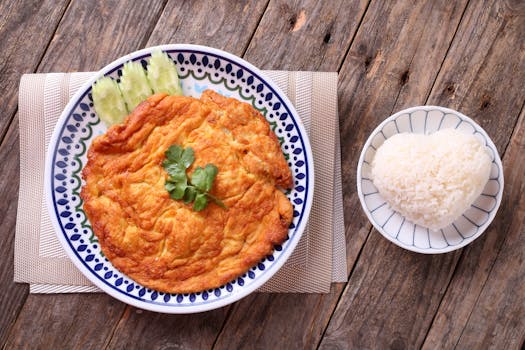
Thai Stuffed Omelette (Khai Yat Sai)
The diets react (see scores below)
Common Ingredients
- egg
- ground pork
- onion
- tomato
- carrots
- fish sauce
- scallions
- oyster sauce
Specific recipes may vary.
Incompatible with 5 of 11 diets
Diet Ratings
Thai Stuffed Omelette has a solid keto foundation—eggs and ground pork are excellent high-fat, moderate-protein keto staples, and fish sauce adds negligible carbs. However, the filling introduces meaningful carb load: carrots are a moderately starchy vegetable (~8-10g net carbs per medium carrot), tomatoes add ~3-4g net carbs, and oyster sauce is notably high in sugar/starch (~4-7g net carbs per tablespoon depending on brand). The combination of carrots, tomato, onion, and oyster sauce can push a single serving over 15-20g net carbs, consuming most of a daily keto budget. With careful portion control—reducing carrots, skipping or substituting oyster sauce with coconut aminos or fish sauce only, and using a small amount of tomato—this dish becomes much more keto-compatible. As traditionally prepared, it sits in caution territory.
Strict keto practitioners would likely classify this as 'avoid' due to the oyster sauce (which contains added sugar and starch) and carrots, arguing that any ingredient with added sugar or starchy vegetables should be eliminated entirely rather than moderated. They would recommend a modified version is a different dish altogether.
Thai Stuffed Omelette (Khai Yat Sai) contains multiple animal products and animal-derived ingredients that disqualify it entirely from a vegan diet. Eggs form the omelette wrapper itself, ground pork or chicken is the primary protein filling, fish sauce is an animal-derived condiment made from fermented fish, and oyster sauce is derived from oysters. This dish is built around animal products at every layer — wrapper, filling, and seasoning — leaving no ambiguity about its incompatibility with veganism.
This dish contains two non-paleo ingredients that disqualify it. Oyster sauce is a processed condiment containing sugar, cornstarch, and additives — clearly off-limits. Fish sauce, while made from fermented fish, virtually always contains added salt, which is excluded under strict paleo rules. The base ingredients — eggs, ground pork, onion, tomato, carrots, and scallions — are all paleo-approved, making this dish very close to compliant. A paleo-adapted version (omitting oyster sauce and using a salt-free or coconut aminos substitute) would score much higher.
Thai Stuffed Omelette contains a mix of Mediterranean-compatible and less-compatible elements. The eggs and vegetables (onion, tomato, carrots, scallions) align well with Mediterranean principles. Ground pork is the main concern — red/processed meat is limited to a few times per month in strict Mediterranean guidelines, though a small amount as a filling ingredient is less problematic than a large portion. If chicken is used instead, the dish moves closer to acceptable. Fish sauce and oyster sauce are processed condiments not traditional to Mediterranean cooking, but used in small amounts as seasoning, their impact is modest. There is no olive oil, whole grains, or legumes present, and the dish lacks the plant-forward emphasis of core Mediterranean meals. Overall, it is an acceptable occasional dish, especially with chicken substituted for pork and vegetables emphasized.
Some Mediterranean diet interpreters apply a broader 'whole food, vegetable-rich' lens and would view this dish more favorably when made with chicken and a modest amount of pork as flavoring, since eggs are an approved moderate food and the vegetable filling is substantial. Others following stricter traditional Mediterranean frameworks would downgrade it further due to the processed sauces and absence of olive oil as the cooking fat.
Thai Stuffed Omelette (Khai Yat Sai) contains multiple plant-derived ingredients that are strictly excluded from the carnivore diet. While eggs and ground pork are fully carnivore-approved animal proteins, the filling includes onion, tomato, carrots, and scallions — all vegetables that are categorically off-limits. Fish sauce is generally carnivore-compatible (fermented fish and salt), but oyster sauce typically contains sugar and starch fillers, adding further non-carnivore ingredients. This dish is fundamentally a plant-vegetable-stuffed egg dish; the plant components are not incidental trace additives but constitute the core filling and flavor profile. No meaningful modification short of a complete recipe overhaul would make this dish carnivore-compliant.
This dish is disqualified by oyster sauce, which is a common ingredient in Thai cooking but almost universally contains added sugar (and often cornstarch or other excluded ingredients) in its commercial form. Fish sauce is generally Whole30-compatible as long as it contains only fish and salt (no added sugar), but requires careful label-reading. All other ingredients — eggs, ground pork, onion, tomato, carrots, and scallions — are fully compliant whole foods. The dish is a straightforward omelette concept (not a 'baked good or junk food recreation'), so the format itself is fine. However, oyster sauce as listed makes this a default avoid, since the standard commercial product contains sugar.
Thai Stuffed Omelette (Khai Yat Sai) contains two high-FODMAP ingredients that make it unsuitable during the elimination phase: onion and oyster sauce. Onion is one of the highest-FODMAP foods tested by Monash University, containing significant fructans at any reasonable serving size — even small amounts can trigger symptoms. Oyster sauce contains high-fructose corn syrup and other high-FODMAP additives, and Monash rates it as high-FODMAP at standard serving sizes (1 tablespoon or more). The remaining ingredients are largely low-FODMAP: eggs are safe, ground pork or chicken is safe, tomato is low-FODMAP at standard servings (65g), carrots are low-FODMAP, fish sauce is low-FODMAP in small amounts (2 tablespoons), and scallion green tops are low-FODMAP (the white bulb parts are high-FODMAP). Unless onion is completely removed and oyster sauce is replaced with a low-FODMAP alternative (such as a small amount of tamari or low-FODMAP soy sauce), this dish is not safe during elimination.
Thai Stuffed Omelette (Khai Yat Sai) contains a mix of DASH-friendly and DASH-problematic ingredients. On the positive side, the filling includes vegetables (onion, tomato, carrots, scallions) that provide potassium, fiber, and micronutrients core to the DASH plan, and lean protein from egg and ground pork or chicken. However, the dish is seasoned with both fish sauce and oyster sauce — two high-sodium condiments that together can easily contribute 600–1,200mg or more of sodium per serving, pushing this dish into moderate-to-high sodium territory. Eggs are acceptable in DASH when consumed in moderation, and ground pork adds some saturated fat depending on the cut used. With reduced amounts of fish sauce and oyster sauce (or low-sodium substitutes), this dish could score higher. As commonly prepared in Thai cuisine, the sodium load from the condiments warrants caution.
NIH DASH guidelines explicitly limit high-sodium condiments like fish sauce and oyster sauce due to their sodium content. However, updated clinical interpretations note that eggs are no longer restricted under the 2020–2025 Dietary Guidelines, and some DASH-oriented dietitians argue that a vegetable-rich dish like this can fit within a DASH pattern if condiment quantities are minimized — the overall dietary sodium pattern matters more than any single dish.
Thai Stuffed Omelette (Khai Yat Sai) aligns reasonably well with Zone Diet principles. The egg and ground pork provide a solid protein foundation — eggs are a Zone-favorable protein source, while ground pork is acceptable if lean (though it carries more saturated fat than skinless chicken). The vegetable filling (onion, tomato, carrots, scallions) contributes low-glycemic carbohydrates with polyphenols and fiber, fitting well within Zone's emphasis on colorful vegetables. Carrots are slightly higher on the glycemic index but still within favorable range in moderate portions. The dish lacks added fats beyond what's in the egg yolks and pork, so a small drizzle of olive oil for cooking would help meet the monounsaturated fat target. The main Zone concerns are: (1) fish sauce and oyster sauce add sodium and a small sugar load from oyster sauce, though in typical culinary quantities this is minimal; (2) whole eggs include yolks which add saturated fat — Sears' earlier work preferred egg whites, though later writings are more accepting of whole eggs. With lean ground pork or chicken substitution and portion control (~3 oz protein, moderate vegetable filling), this dish can be structured into a solid Zone meal, potentially paired with a side salad to complete carb blocks.
Early Zone Diet writings (Enter the Zone) were cautious about whole eggs due to saturated fat in yolks and preferred egg whites. Ground pork also carries more saturated fat than ideal Zone proteins. Some strict Zone practitioners would rate this as 'caution' due to these fat quality concerns, particularly if made with fattier pork mince. However, Sears' later anti-inflammatory framework (The Anti-Inflammation Zone) takes a more moderate stance on dietary saturated fat when overall omega-6 load is low, which this dish largely achieves by avoiding seed oils.
Thai Stuffed Omelette (Khai Yat Sai) presents a mixed anti-inflammatory profile. On the positive side, the dish features eggs (a moderate protein source with choline and selenium), colorful vegetables including tomato (lycopene), carrots (beta-carotene), onion (quercetin), and scallions — all of which provide meaningful antioxidant and anti-inflammatory phytonutrients. These vegetables are genuine positives in an anti-inflammatory framework. The protein base — ground pork or chicken — is where the profile becomes more neutral to slightly negative. Pork, even lean ground pork, contains more saturated fat than poultry and falls into the 'limit' category in anti-inflammatory guidance; chicken would be the preferable option here. Fish sauce and oyster sauce contribute umami depth and are used in small quantities, but both are high in sodium and oyster sauce often contains added sugar and starch — minor concerns. The dish contains no refined carbohydrates, trans fats, seed oils, or processed additives beyond the condiments, which is a meaningful positive. Overall, this is a reasonably whole-food dish with good vegetable content but held back by the use of pork and moderately processed condiments. It fits well as an occasional meal within an anti-inflammatory eating pattern, particularly if made with chicken or leaner pork.
Eggs are a point of moderate debate: some anti-inflammatory practitioners flag arachidonic acid in egg yolks as potentially pro-inflammatory, while mainstream anti-inflammatory researchers including Dr. Weil consider whole eggs acceptable in moderation and note their nutrient density. The overall verdict would shift slightly more positive with chicken substituted for pork, or if pasture-raised eggs are used.
Thai Stuffed Omelette is a solid GLP-1-friendly dish overall. Eggs provide high-quality, easily digestible protein with good nutrient density per calorie, and the vegetable filling (onion, tomato, carrot, scallions) adds fiber, micronutrients, and water content — all priorities for GLP-1 patients. The dish is cooked in a small amount of oil rather than deep-fried, keeping fat content moderate. Ground pork adds protein but also contributes saturated fat, which is the main drawback; substituting ground chicken or turkey would improve the profile meaningfully. Fish sauce and oyster sauce contribute sodium, which is worth noting for patients who are also managing blood pressure, but both are used in small amounts and do not represent a meaningful GLP-1 concern. The dish is small-portioned by nature, easy to digest, and works well as one of several small meals across the day. It falls just short of a strong approve primarily because of the saturated fat from ground pork and the moderate (not high) fiber contribution.
Some GLP-1-focused dietitians would flag the ground pork version more cautiously, as higher saturated fat intake can worsen nausea and delayed gastric emptying symptoms in sensitive patients — particularly in the early weeks of titration. Others consider the fat content of a standard serving acceptable given the strong protein and micronutrient return, especially if prepared with minimal added cooking oil.
*See how scores were generated at our methodology page.
Nutritional profile
Six traits that cut across every diet.
Fiber & Plants
How much whole-plant food and fiber it delivers.
Healthy Fats
The quality of its fats (unsaturated, omega-3).
Whole / Unprocessed
How close it is to its natural, unprocessed form.
Gut Gentle
How easy it is on digestion (low FODMAP, few irritants).
Low Glycemic
How little it spikes your blood sugar.
Protein Density
How much protein it packs per calorie.
Controversy Index
Higher controversy = more disagreement between diets.
Diet-Specific Tips
 Keto — 5/10
View tips
- Eggs and ground pork are keto-ideal protein and fat sources
- Carrots are higher-carb vegetables (~8-10g net carbs per medium carrot)
- Oyster sauce contains added sugar and starch, adding 4-7g net carbs per tablespoon
- Tomato and onion contribute additional carbs (~3-5g combined)
- Fish sauce is keto-friendly with minimal carbs
- Total net carbs per serving can approach 15-25g depending on portion sizes
- Dish is salvageable with modification: reduce/omit carrots and replace oyster sauce
 Mediterranean — 5/10
View tips
- Eggs are acceptable in moderation under Mediterranean guidelines
- Ground pork is a red meat, ideally limited to a few times per month
- Chicken substitution would improve the rating to a comfortable caution range
- Vegetables (tomato, carrot, onion, scallions) are Mediterranean-positive ingredients
- Fish sauce and oyster sauce are processed condiments not part of traditional Mediterranean cuisine
- No olive oil, whole grains, or legumes — lacks core Mediterranean staples
- Small portion of meat relative to egg-and-vegetable base mitigates concern somewhat
 DASH — 5/10
View tips
- Fish sauce is very high in sodium (~1,400mg per tablespoon), significantly raising the dish's sodium load
- Oyster sauce adds additional sodium (~500mg per tablespoon), compounding the concern
- Eggs contribute dietary cholesterol; acceptable in moderation under current DASH/dietary guidelines
- Vegetables (tomato, carrots, onion, scallions) are DASH-positive, adding potassium, fiber, and micronutrients
- Ground pork adds saturated fat; lean ground chicken or turkey would be a more DASH-aligned substitution
- Dish can be modified to be more DASH-compatible by using low-sodium soy sauce or reducing condiment amounts substantially
 Zone — 7/10
View tips
- Eggs provide complete Zone-favorable protein; whole eggs add some saturated fat but acceptable in moderate amounts
- Ground pork is usable Zone protein but fattier than ideal — lean pork or chicken preferred
- Vegetable filling (tomato, onion, carrots, scallions) contributes low-glycemic carb blocks with polyphenols
- Oyster sauce adds minor sugar/sodium — negligible in small cooking quantities but worth noting
- No high-glycemic carbohydrates or refined grains present
- Dish lacks added cooking fat — olive oil recommended to meet monounsaturated fat target
- Well-structured as a protein-and-vegetable Zone meal; may need additional carb blocks from a side salad to hit 40/30/30 ratio
 Anti-Inflammatory — 5/10
View tips
- Colorful vegetables (tomato, carrot, onion, scallion) contribute antioxidants and polyphenols — a clear anti-inflammatory positive
- Eggs are a moderate protein source; debate exists around arachidonic acid vs. choline/selenium content
- Ground pork is in the 'limit' category due to saturated fat; chicken would be the preferred substitution
- Fish sauce and oyster sauce are used in small quantities but add sodium and minor processed ingredients
- No refined carbohydrates, seed oils, trans fats, or artificial additives — positive for an anti-inflammatory assessment
- Dish is predominantly whole-food and vegetable-forward, fitting within an anti-inflammatory pattern in moderation
 GLP-1 Friendly — 7/10
View tips
- Eggs are a high-quality, easily digestible protein source well-suited to GLP-1 patients
- Ground pork adds protein but also saturated fat — ground chicken or turkey is a preferable swap
- Vegetable filling (tomato, carrot, onion, scallions) contributes fiber, water content, and micronutrients
- Not fried — pan-cooked with minimal oil, keeping fat load moderate
- Fish sauce and oyster sauce are high in sodium but used in small quantities; not a GLP-1-specific concern
- Naturally small-portioned and easy to eat in modest servings across multiple small meals
- Moderate fiber — beneficial but not a high-fiber dish on its own; pairs well with a fiber-rich side