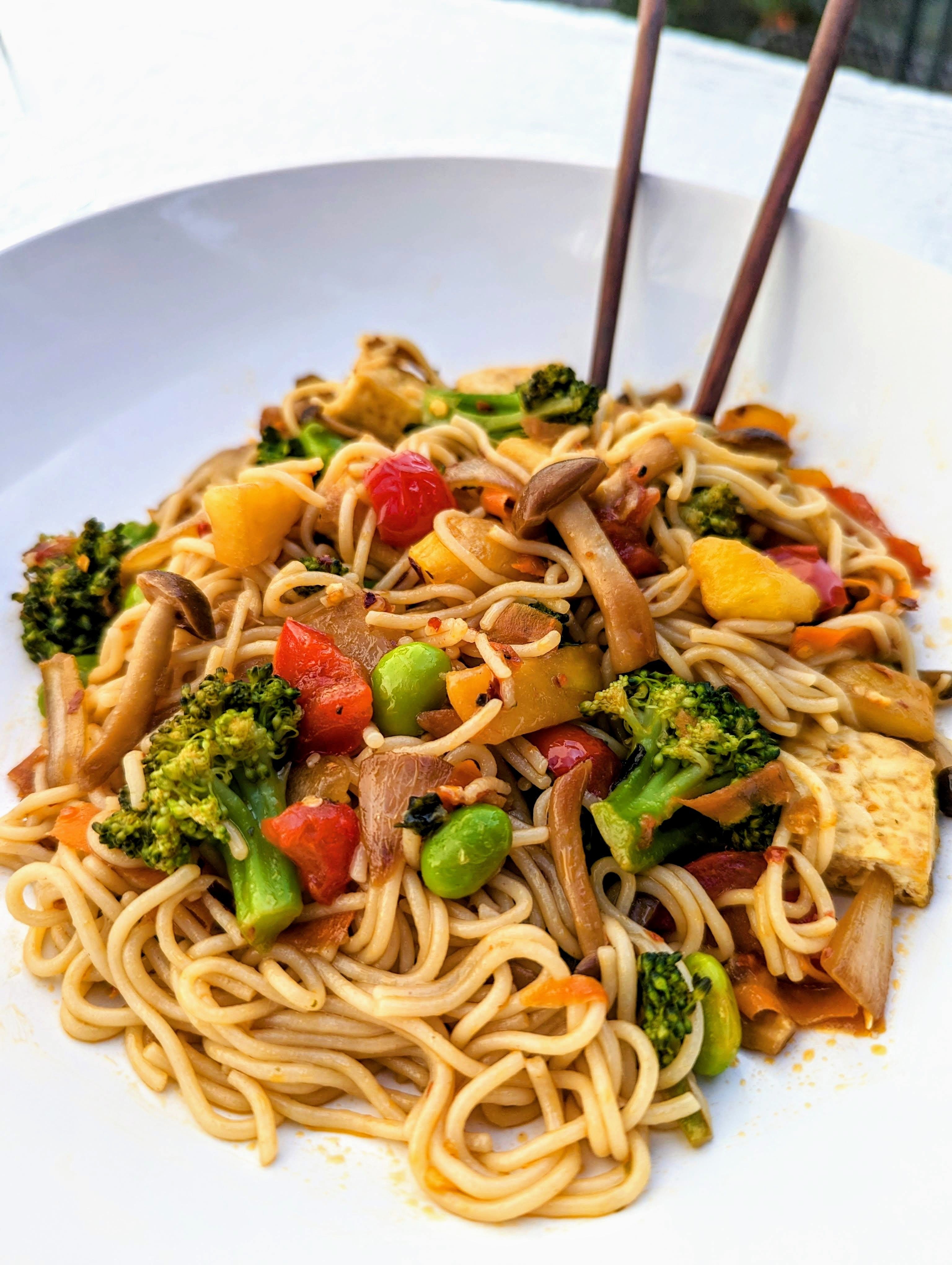
Photo: Todra Payne / Pexels
Thai
Thai Tofu Stir-Fry
The diets react (see scores below)
Common Ingredients
- tofu
- Thai basil
- garlic
- Thai chiles
- soy sauce
- oyster sauce
- onion
- bell pepper
Specific recipes may vary.
Incompatible with 5 of 11 diets
Diet Ratings
Thai Tofu Stir-Fry sits in a gray zone for keto. Tofu itself is relatively low-carb and acceptable on keto, but the dish has several problematic elements. Oyster sauce contains sugar and starch thickeners, adding meaningful net carbs per tablespoon. Soy sauce is lower in carbs but some versions contain wheat. Bell peppers and onion add moderate net carbs—onion especially can push totals up quickly. Thai basil, garlic, and Thai chiles are fine in small quantities. The combination of oyster sauce, onion, and bell pepper in a typical stir-fry serving could easily push net carbs to 10–18g, making it consumable only with careful portioning and ingredient substitutions (e.g., coconut aminos for soy sauce, omitting or minimizing oyster sauce, reducing onion). The dish also lacks significant fat content as described, relying on protein from tofu without an explicit high-fat cooking medium, which is suboptimal for keto macros.
Strict keto practitioners would likely avoid this dish entirely due to oyster sauce's sugar content and the cumulative carb load of onion and bell pepper, arguing that even with portioning, the insulin-spiking sauces make it incompatible. Others in the lazy keto camp may approve it if total daily carbs remain under threshold, accepting small sauce quantities.
This dish contains oyster sauce, which is made from oyster extracts — a clear animal-derived ingredient. Oysters are mollusks (shellfish), and oyster sauce is unambiguously non-vegan. Despite the otherwise plant-based ingredient list (tofu, Thai basil, garlic, chiles, soy sauce, vegetables), a single animal-derived ingredient disqualifies the dish as vegan. The fix is straightforward: substitute oyster sauce with vegan oyster sauce (made from mushrooms, typically king oyster or shiitake) or hoisin sauce, which would make this dish fully vegan-compliant.
Thai Tofu Stir-Fry is firmly non-paleo. Tofu is a processed soy product — soy is a legume, one of the most clearly excluded food groups in paleo. Soy sauce is a fermented grain-and-soy product (contains wheat), making it doubly non-paleo. Oyster sauce is heavily processed and typically contains added sugar, starch, and preservatives. These three ingredients alone are enough to disqualify the dish outright. The remaining ingredients — Thai basil, garlic, Thai chiles, onion, and bell pepper — are paleo-approved vegetables, but they cannot redeem a dish built around soy protein and grain-based condiments.
This Thai stir-fry has a strong Mediterranean-compatible core: tofu is an excellent plant-based protein, and the vegetables (bell pepper, onion, garlic, Thai basil, chiles) are all encouraged. However, the dish departs from Mediterranean principles in two ways. First, the cooking fat is unspecified — a stir-fry typically uses neutral vegetable oils rather than extra virgin olive oil, which is the Mediterranean dietary foundation. Second, soy sauce and oyster sauce are processed condiments with high sodium content that are not part of the Mediterranean tradition. Oyster sauce in particular is an animal-derived processed ingredient. The dish is not harmful, but it is not a Mediterranean staple either — it is an acceptable, plant-forward meal with some caveats.
Some modern Mediterranean diet interpretations are broadly plant-forward and would fully approve of any tofu-and-vegetable dish regardless of cultural origin, arguing the spirit of the diet (whole foods, plant protein, vegetables) matters more than strict adherence to specific oils or condiments. Conversely, strict traditional Mediterranean frameworks would note this dish has no Mediterranean culinary basis and lacks olive oil entirely.
Thai Tofu Stir-Fry is entirely incompatible with the carnivore diet. The primary protein is tofu, a soy-based plant product, which is one of the most excluded foods on carnivore — a legume derivative with phytoestrogens and antinutrients. Every single ingredient in this dish is plant-derived: Thai basil, garlic, Thai chiles, soy sauce, oyster sauce (typically contains starch and sugar), onion, and bell pepper. There are no animal products whatsoever. This dish represents the antithesis of carnivore eating — a fully plant-based, heavily spiced, processed-sauce-laden preparation.
This dish contains multiple excluded ingredients. Tofu is a soy product, and soy is explicitly excluded on Whole30. Soy sauce contains both soy and wheat (grains), making it doubly excluded. Oyster sauce typically contains added sugar and sometimes other non-compliant additives. Any one of these three ingredients alone would disqualify the dish.
This Thai Tofu Stir-Fry contains multiple high-FODMAP ingredients that make it unsuitable during the elimination phase. Garlic is one of the highest-FODMAP foods tested by Monash University, containing significant fructans even in very small amounts. Onion is similarly high in fructans and is another top trigger food in the FODMAP system. Oyster sauce typically contains garlic and/or onion derivatives and is rated high-FODMAP by Monash. Regular soy sauce contains wheat (fructans), though tamari (gluten-free soy sauce) is a low-FODMAP alternative. Tofu status depends on type — firm tofu is low-FODMAP at 170g per Monash, but silken tofu is high-FODMAP due to retained GOS. Thai basil, bell pepper, and Thai chiles are generally low-FODMAP. Even if the tofu and soy sauce issues were resolved, the garlic and onion alone make this dish a clear avoid — there is no safe serving size for these ingredients during elimination.
Thai Tofu Stir-Fry contains several DASH-friendly ingredients — tofu is an excellent lean plant protein, bell peppers and onions are nutrient-dense vegetables high in potassium and fiber, Thai basil and garlic add flavor without sodium, and Thai chiles provide capsaicin with no sodium impact. However, the combination of soy sauce and oyster sauce is a significant concern. A typical stir-fry uses 2-3 tablespoons of soy sauce (900-1,300mg sodium) plus oyster sauce (400-700mg sodium per 2 tablespoons), potentially pushing a single serving close to or beyond the standard DASH limit of 2,300mg/day, and well beyond the low-sodium DASH threshold of 1,500mg/day. The dish earns a 'caution' rather than 'avoid' because the base ingredients are genuinely DASH-aligned and the sodium issue is addressable with low-sodium soy sauce and reduced oyster sauce quantities.
NIH DASH guidelines flag high-sodium condiments like soy sauce and oyster sauce as incompatible with DASH targets; however, updated clinical interpretations note that the overall dietary pattern matters more than individual meals, and DASH-oriented dietitians frequently approve dishes like this when low-sodium soy sauce is substituted and portion sizes are controlled, making this a practical DASH adaptation rather than a violation.
Thai Tofu Stir-Fry aligns well with Zone Diet principles with some caveats. Tofu is a Zone-favorable vegetarian protein source, though it requires larger portions per block (~3 oz per protein block) and uses the vegetarian fat block calculation (3g fat per block rather than 1.5g). The vegetable base — bell peppers, onion, garlic, and Thai basil — provides low-glycemic, polyphenol-rich carbohydrates that Sears would consider favorable. Thai chiles add anti-inflammatory capsaicin compounds. The primary concerns are the sauces: soy sauce is high-sodium but negligible in macros, while oyster sauce contains added sugar and moderate sodium that nudges the glycemic load upward slightly. However, the amounts used in stir-fry are typically small enough to remain manageable within Zone block accounting. The dish likely needs a complementary fat source (a few almonds or a drizzle of sesame oil in moderation) since tofu's fat profile leans toward omega-6 polyunsaturated rather than monounsaturated. With careful portioning — roughly 1.5–2 cups tofu-vegetable mixture — this meal can hit a solid Zone block structure for a 3-block meal.
Some Zone practitioners note that tofu's omega-6 content (from soybean oil naturally present in the bean) runs counter to Sears' anti-inflammatory emphasis in his later works (The OmegaRx Zone, The Anti-Inflammation Zone), where he expresses concern about excess omega-6 linoleic acid. However, Sears himself consistently lists tofu as a favorable Zone protein in his block charts, suggesting the protein benefit outweighs the omega-6 concern at normal serving sizes. The oyster sauce sugar content is a minor point of disagreement among practitioners — some track it carefully, others consider it negligible at stir-fry quantities.
This Thai Tofu Stir-Fry is built on a strong anti-inflammatory foundation. Tofu is an emphasized whole soy food in Dr. Weil's Anti-Inflammatory Food Pyramid, providing plant-based protein with isoflavones that have demonstrated anti-inflammatory activity. Thai basil and garlic are potent anti-inflammatory herbs — garlic contains allicin and organosulfur compounds that suppress NF-κB signaling, while basil provides eugenol and flavonoids. Thai chiles contain capsaicin, a well-researched anti-inflammatory compound that reduces inflammatory cytokines. Bell peppers are colorful vegetables rich in vitamin C, carotenoids, and quercetin. Onions contribute quercetin and prebiotic fiber. The primary concerns are the condiments: soy sauce contributes significant sodium (high sodium diets are associated with systemic inflammation), and oyster sauce contains added sugar and often preservatives. However, these are used as flavor agents in relatively small quantities in a stir-fry context, not as primary ingredients. The overall dish remains plant-forward, spice-rich, and whole-food dominant. Cooking oil is not specified — if prepared with extra virgin olive oil or avocado oil rather than a seed oil, the profile improves further.
Soy itself carries medium confidence: while Dr. Weil's pyramid emphasizes whole soy foods as anti-inflammatory, some autoimmune protocol (AIP) advocates and functional medicine practitioners caution that soy phytoestrogens and potential gut-disrupting lectins may trigger inflammation in sensitive individuals, particularly those with thyroid conditions or estrogen-sensitive conditions. Additionally, the sodium load from soy sauce and oyster sauce may be a concern for those managing inflammatory conditions exacerbated by hypertension.
Thai Tofu Stir-Fry is a reasonably GLP-1-friendly dish with several strengths: tofu provides plant-based protein and unsaturated fat, bell peppers and onion add fiber and micronutrients, and the overall fat content is moderate if prepared with minimal oil. However, Thai chiles introduce a spice level that can worsen nausea and reflux — common GLP-1 side effects — and the combination of soy sauce and oyster sauce creates a high-sodium profile that can contribute to water retention and is worth monitoring. Oyster sauce also adds modest sugar. Stir-frying with excessive oil would push this toward a higher-fat preparation. As written, the dish lands in caution territory: good nutritional bones, but the spice and sodium elements require attention, and tofu alone may not reliably hit the 15–30g protein-per-meal target without a generous portion.
Some GLP-1-focused dietitians are comfortable recommending lightly spiced Thai-style tofu dishes, noting that individual spice tolerance varies widely and that chiles in stir-fry context are typically present in smaller amounts than in, say, a curry paste base. Others flag that any meaningful chile heat is a consistent trigger for GI discomfort in GLP-1 patients — particularly around injection day — and recommend omitting or significantly reducing Thai chiles rather than relying on individual tolerance.
*See how scores were generated at our methodology page.
Nutritional profile
Six traits that cut across every diet.
Fiber & Plants
How much whole-plant food and fiber it delivers.
Healthy Fats
The quality of its fats (unsaturated, omega-3).
Whole / Unprocessed
How close it is to its natural, unprocessed form.
Gut Gentle
How easy it is on digestion (low FODMAP, few irritants).
Low Glycemic
How little it spikes your blood sugar.
Protein Density
How much protein it packs per calorie.
Controversy Index
Higher controversy = more disagreement between diets.
Diet-Specific Tips
 Keto — 4/10
View tips
- Oyster sauce contains added sugars and starch, raising net carbs
- Onion is a moderate-carb vegetable that adds up quickly in stir-fry portions
- Bell peppers contribute additional net carbs (~4–6g per serving)
- Tofu is keto-acceptable but not high in fat, misaligning with keto macro targets
- Soy sauce may contain wheat; coconut aminos would be a keto-friendlier swap
- Thai basil, garlic, and chiles are low-carb and keto-compatible
- Dish could be adapted to caution-acceptable with sauce substitutions and reduced onion/pepper
 Mediterranean — 6/10
View tips
- Tofu is an excellent plant-based protein source compatible with Mediterranean principles
- Bell pepper, onion, garlic, and chiles are all Mediterranean-approved vegetables
- No olive oil specified — stir-fry typically uses refined vegetable oils, not the preferred fat source
- Soy sauce and oyster sauce are processed, high-sodium condiments foreign to Mediterranean cuisine
- Oyster sauce is an animal-derived processed ingredient, adding concern
- Dish is not traditional to Mediterranean cuisine, but plant-forward profile is broadly compatible
 DASH — 5/10
View tips
- Tofu is an excellent DASH-approved lean plant protein source
- Bell peppers and onions are potassium-rich DASH vegetables
- Soy sauce is very high in sodium (~900-1,300mg per 2-3 tbsp) — primary concern
- Oyster sauce adds additional sodium (~400-700mg per 2 tbsp) — secondary concern
- Combined condiment sodium can approach or exceed daily DASH limit in one dish
- Low-sodium soy sauce and reduced oyster sauce quantities would significantly improve DASH compatibility
- No saturated fat, added sugar, or red meat concerns in this dish
 Zone — 7/10
View tips
- Tofu is a Zone-approved vegetarian protein source (3 oz per protein block)
- Bell peppers and onion are favorable low-glycemic Zone carbohydrates
- Thai basil and garlic provide polyphenols aligned with Sears' anti-inflammatory focus
- Oyster sauce contains added sugar, mildly elevating glycemic contribution
- Tofu's fat is predominantly omega-6 polyunsaturated, not ideal monounsaturated
- Vegetarian protein fat block rule applies: 3g fat per block rather than 1.5g
- Dish benefits from added monounsaturated fat (avocado, almonds, or light sesame oil) to complete Zone ratios
- Sodium from soy sauce is a health note but does not affect Zone macro ratios
 Anti-Inflammatory — 8/10
View tips
- Tofu: emphasized whole soy food with isoflavones showing anti-inflammatory activity
- Garlic: allicin and organosulfur compounds inhibit NF-κB pro-inflammatory pathway
- Thai basil: eugenol and flavonoids with anti-inflammatory properties
- Thai chiles: capsaicin reduces inflammatory cytokine production
- Bell peppers: rich in vitamin C, quercetin, and carotenoids
- Soy sauce/oyster sauce: high sodium and added sugar are mild inflammatory concerns at condiment-level use
- Cooking oil unspecified — choice significantly impacts inflammatory profile
 GLP-1 Friendly — 6/10
View tips
- Tofu is a GLP-1-approved unsaturated plant protein, but portion size must be generous (150–200g firm tofu) to approach 15–20g protein per serving
- Thai chiles are a spice risk — can worsen nausea, reflux, and GI discomfort that GLP-1 medications already predispose patients to
- High sodium from soy sauce and oyster sauce; low-sodium soy sauce substitution recommended
- Oyster sauce adds small amounts of sugar — not disqualifying but worth noting for blood sugar management
- Bell pepper and onion contribute fiber and water content, supporting digestion and hydration
- Dish is easy to portion in small servings, which aligns well with GLP-1 small-meal recommendations
- Nutritional quality highly dependent on oil quantity used during stir-frying — excess oil increases fat and calorie density