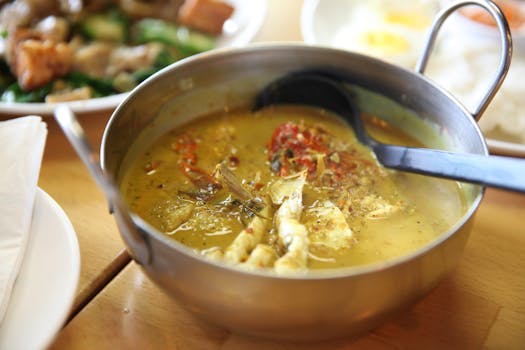
Photo: Hayden Walker / Pexels
Thai
Thai Yellow Curry
The diets react (see scores below)
Common Ingredients
- chicken
- coconut milk
- yellow curry paste
- potatoes
- onion
- turmeric
- fish sauce
- palm sugar
Specific recipes may vary.
Incompatible with 7 of 11 diets
Diet Ratings
Thai Yellow Curry as traditionally prepared is largely incompatible with ketogenic eating. The primary offenders are potatoes (a starchy vegetable with approximately 15-17g net carbs per 100g), palm sugar (added sugar, directly anti-ketogenic), and onion in significant quantities. While coconut milk is an excellent keto fat source, chicken is appropriate protein, and fish sauce is negligible in carbs, the combination of potatoes and palm sugar alone would blow a standard daily carb budget in a single serving. Yellow curry paste may also contain small amounts of sugar and starch. A standard serving of this dish could easily deliver 30-50g+ net carbs, making ketosis maintenance impossible for most individuals.
Thai Yellow Curry as described contains multiple animal-derived ingredients that make it entirely incompatible with a vegan diet. Chicken is the primary protein — a direct animal product. Fish sauce is derived from fermented fish and is a staple non-vegan ingredient in traditional Thai cooking. These two ingredients alone are sufficient to classify this dish as non-vegan. Coconut milk and the plant-based vegetables (potatoes, onion) are vegan, but they cannot offset the presence of animal products. A vegan version of this dish could be made by substituting tofu or chickpeas for the chicken and using soy sauce or coconut aminos in place of fish sauce, with a verified vegan yellow curry paste (many commercial pastes contain shrimp paste).
Thai Yellow Curry contains several problematic ingredients from a paleo perspective. Palm sugar is a refined/processed sugar that should be avoided. Fish sauce typically contains added salt and often preservatives or additives, making it a processed condiment. Yellow curry paste is a commercially processed product that frequently contains added salt, shrimp paste with preservatives, and other non-paleo additives. White potatoes are a debated ingredient — discouraged by strict Cordain-school paleo but accepted by some modern practitioners. The base ingredients (chicken, coconut milk, onion, turmeric) are paleo-friendly, but the combination of palm sugar, processed fish sauce, and commercial curry paste pushes this dish firmly into avoid territory. A homemade version with strict ingredient control could potentially reach caution status.
Some modern paleo practitioners (e.g., Mark Sisson's Primal Blueprint approach) would tolerate small amounts of natural sweeteners like palm sugar and minimally processed fish sauce as condiments, and would accept white potatoes, potentially rating a carefully sourced or homemade version of this dish as caution rather than avoid.
Thai Yellow Curry is a non-Mediterranean dish with several elements that conflict with Mediterranean diet principles. Coconut milk is a high-saturated-fat ingredient not used in traditional Mediterranean cooking, where extra virgin olive oil is the primary fat. Palm sugar adds refined/added sugar, and yellow curry paste may contain processed ingredients. On the positive side, chicken is an acceptable moderate protein, potatoes and onions are whole vegetables, turmeric is a beneficial spice, and fish sauce provides umami with minimal volume. The dish lacks olive oil, whole grains, or legumes as a base, and the coconut milk-heavy sauce is a significant departure from Mediterranean fat guidelines. However, the vegetable content and lean protein keep it from a full 'avoid' rating.
Some modern Mediterranean diet interpreters, particularly those focused on anti-inflammatory eating patterns, may view turmeric and the vegetable components favorably, and consider coconut milk acceptable in small amounts as a plant-based fat. However, traditional Mediterranean diet authorities (e.g., Willett et al. and the original Seven Countries Study framework) would flag coconut milk's saturated fat profile as inconsistent with the diet's cardiovascular benefits.
Thai Yellow Curry is fundamentally incompatible with the carnivore diet. While it contains chicken and fish sauce (animal-derived), the dish is dominated by plant-based ingredients: yellow curry paste (a blend of plant spices and aromatics), potatoes (starchy plant tuber), onion (plant), turmeric (plant spice), coconut milk (plant fat), and palm sugar (plant-derived sweetener). The palm sugar alone is a disqualifying additive, introducing processed plant sugar. Potatoes and onion are vegetables/plant foods explicitly excluded from carnivore. The only salvageable components would be the chicken and fish sauce in isolation — the dish as a whole cannot be adapted within carnivore guidelines without being completely deconstructed.
This Thai Yellow Curry contains palm sugar, which is an added sugar and explicitly excluded on the Whole30 program. All forms of added sugar — real or artificial — are eliminated for the 30 days, and palm sugar is a real, caloric sweetener derived from palm sap. Additionally, yellow curry paste as commercially sold commonly contains shrimp paste, which is generally compliant, but many brands include added sugar or other non-compliant ingredients, requiring careful label-reading. Fish sauce is generally compliant if it contains only fish and salt. Chicken, coconut milk, potatoes, onion, and turmeric are all fully compliant. However, the inclusion of palm sugar as a listed ingredient makes this dish non-compliant as described.
Thai Yellow Curry contains multiple high-FODMAP ingredients that make it unsuitable during the elimination phase. Onion is one of the highest-FODMAP foods tested by Monash University, loaded with fructans at any cooking quantity. Yellow curry paste is a critical problem: commercial yellow curry paste almost universally contains garlic and onion (both high-fructan) as primary ingredients, often in concentrated form. Potatoes are low-FODMAP at moderate servings (Monash approves ~75g), but the combination of other high-FODMAP ingredients is already disqualifying. Coconut milk is low-FODMAP at 1/2 cup (125ml). Chicken, turmeric, and fish sauce are low-FODMAP and unproblematic. Palm sugar in small culinary amounts is generally considered low-FODMAP. However, the onion and garlic-containing curry paste alone are sufficient to classify this dish as high-FODMAP. Even if onions were removed, a standard yellow curry paste contains concentrated garlic, making it a guaranteed fructan source. This dish cannot be made low-FODMAP without substituting the onion for the green tops of scallions and using a homemade or certified low-FODMAP curry paste with garlic-infused oil instead of garlic cloves.
Thai Yellow Curry contains multiple ingredients that conflict with core DASH diet principles. Coconut milk is high in saturated fat from a tropical oil source, which DASH explicitly limits. Palm sugar adds significant amounts of added sugar. Fish sauce is extremely high in sodium (one tablespoon contains roughly 1,000-1,400mg of sodium), making it very difficult to stay within DASH's 1,500-2,300mg daily sodium limit with a full serving of this dish. Yellow curry paste also typically contains significant sodium. The combination of full-fat coconut milk, fish sauce, and palm sugar stacks multiple DASH-incompatible elements into a single dish, making it a poor fit even in moderation. While the chicken, potatoes, onion, and turmeric are individually DASH-compatible or neutral, they cannot offset the problematic core ingredients at typical Thai Yellow Curry preparation ratios.
Thai Yellow Curry presents several Zone Diet challenges that collectively push it into 'caution' territory. The chicken is a lean Zone-favorable protein, and turmeric is an excellent anti-inflammatory polyphenol that Sears explicitly endorses. However, the dish has three notable Zone concerns: (1) Potatoes are a high-glycemic carbohydrate that Dr. Sears explicitly lists as an 'unfavorable' carb to avoid — they spike insulin and are difficult to incorporate into Zone blocks without disrupting the 40/30/30 ratio. (2) Coconut milk is high in saturated fat, creating a fat profile that is primarily saturated rather than the monounsaturated fats (olive oil, avocado, almonds) Sears prefers. Full-fat coconut milk is calorie-dense and fat-heavy, making it difficult to hit the 30% fat target without overshooting significantly. (3) Palm sugar is added sugar, contributing to glycemic load with no fiber buffer. The 40/30/30 balance is theoretically achievable with aggressive modifications — using light coconut milk, eliminating or minimizing potatoes, omitting palm sugar, and controlling portion size tightly — but the dish as traditionally prepared leans high-fat and high-glycemic. A Zone practitioner could consume a small portion with a side of low-GI vegetables to partially rebalance the meal, but this dish requires significant modification to work well within the Zone framework.
Some Zone practitioners and later Sears writings (particularly his work on anti-inflammatory eating) take a more nuanced view of coconut milk. Sears' later research acknowledges that medium-chain triglycerides (MCTs) in coconut fat have a different metabolic profile than long-chain saturated fats, and some Zone-adjacent practitioners accept coconut milk in moderation. Additionally, the turmeric and fish sauce provide notable polyphenol and anti-inflammatory benefits that align with Sears' broader health philosophy. If potatoes are substituted with a low-GI vegetable (e.g., zucchini, bell peppers) and palm sugar is omitted, some practitioners would rate this dish more favorably (5-6 range).
Thai Yellow Curry presents a genuinely mixed anti-inflammatory profile. On the positive side, turmeric is one of the most well-supported anti-inflammatory spices (curcumin is a studied COX-2 inhibitor), and yellow curry paste typically contains additional beneficial spices like ginger, lemongrass, coriander, and chili. Chicken is a lean protein generally acceptable in anti-inflammatory frameworks. Onion contributes quercetin, a polyphenol with anti-inflammatory properties. Potatoes, while starchy, contain resistant starch and vitamin C. Fish sauce adds umami without significant inflammatory burden. However, the dish has notable concerns: coconut milk is high in saturated fat (lauric acid), which most anti-inflammatory authorities including Dr. Weil's framework classify as something to limit — though its effect on inflammation is genuinely debated. Palm sugar is an added sugar, a category to limit as excess sugar drives inflammatory pathways (elevated AGEs, CRP). Palm kernel oil, if used in the curry paste, is a saturated fat to avoid. The overall dish is not egregiously pro-inflammatory, but the saturated fat load from coconut milk combined with added sugar from palm sugar pulls it into caution territory for regular consumption.
Some functional medicine and paleo-adjacent practitioners (e.g., Mark Sisson, Weston A. Price advocates) consider coconut milk's medium-chain triglycerides (MCTs) metabolically neutral or even beneficial, arguing lauric acid has antimicrobial properties and does not raise inflammatory markers the same way long-chain saturated fats do. Conversely, mainstream anti-inflammatory guidance (Dr. Weil, AHA-aligned researchers) recommends limiting saturated fat from coconut products, treating full-fat coconut milk as an occasional rather than regular ingredient.
Thai Yellow Curry with chicken has meaningful protein from the chicken breast, but the defining issue is full-fat coconut milk, which is high in saturated fat and can significantly worsen GLP-1 side effects including nausea, bloating, and delayed gastric emptying. Potatoes add starchy carbohydrates with modest fiber and limited nutrient density per calorie. Palm sugar adds unnecessary refined sugar. Yellow curry paste and turmeric are generally well-tolerated anti-inflammatory ingredients. Fish sauce adds sodium but is used in small amounts. The dish is not inherently off-limits — the chicken provides useful protein and the vegetables contribute some micronutrients — but the fat load from coconut milk makes this a portion-sensitive, moderate-risk choice for GLP-1 patients. A modified version using light coconut milk, reduced palm sugar, and a larger chicken-to-sauce ratio would score significantly higher.
Some GLP-1-focused dietitians allow full-fat coconut milk in small portions, noting that the medium-chain triglycerides (MCTs) in coconut fat digest differently than long-chain saturated fats and may be better tolerated than other high-fat sauces. Others maintain that any high-fat sauce meaningfully increases nausea and reflux risk given slowed gastric emptying, and recommend avoiding coconut milk curries entirely during the early titration phase when GI side effects are most pronounced.
*See how scores were generated at our methodology page.
Nutritional profile
Six traits that cut across every diet.
Fiber & Plants
How much whole-plant food and fiber it delivers.
Healthy Fats
The quality of its fats (unsaturated, omega-3).
Whole / Unprocessed
How close it is to its natural, unprocessed form.
Gut Gentle
How easy it is on digestion (low FODMAP, few irritants).
Low Glycemic
How little it spikes your blood sugar.
Protein Density
How much protein it packs per calorie.
Controversy Index
Higher controversy = more disagreement between diets.
Diet-Specific Tips
 Mediterranean — 4/10
View tips
- Coconut milk is high in saturated fat and not a Mediterranean ingredient — olive oil is the canonical fat
- Palm sugar adds unnecessary refined/added sugar
- Chicken is acceptable as a moderate poultry protein
- Potatoes and onions are whole vegetables consistent with plant-forward eating
- Turmeric has anti-inflammatory properties valued in Mediterranean-adjacent dietary patterns
- No olive oil, whole grains, or legumes present
- Dish is entirely outside the Mediterranean culinary tradition
 Zone — 4/10
View tips
- Chicken is a Zone-favorable lean protein — positive
- Potatoes are explicitly 'unfavorable' high-glycemic carbs in Zone methodology — negative
- Full-fat coconut milk contributes heavy saturated fat, misaligning with Zone's monounsaturated fat preference — negative
- Palm sugar adds glycemic load with no nutritional benefit in Zone terms — negative
- Turmeric is a highly valued anti-inflammatory polyphenol in Sears' later work — positive
- Fish sauce adds sodium but negligible macro impact — neutral
- Dish is technically Zone-adaptable but requires significant ingredient substitutions to score well
 Anti-Inflammatory — 5/10
View tips
- Turmeric (curcumin) — well-established anti-inflammatory spice
- Yellow curry paste — typically includes ginger, lemongrass, chili peppers with additional anti-inflammatory compounds
- Coconut milk — high in saturated fat (lauric acid); debated in anti-inflammatory contexts
- Palm sugar — added sugar drives inflammatory markers (CRP, AGEs) at regular consumption
- Chicken — lean protein, acceptable in anti-inflammatory diet
- Onion — quercetin and flavonoids offer anti-inflammatory benefit
- Palm kernel oil (possible in curry paste) — saturated fat to avoid per anti-inflammatory guidelines
 GLP-1 Friendly — 5/10
View tips
- High saturated fat from full-fat coconut milk — primary concern for GLP-1 GI side effects
- Chicken provides meaningful protein but total protein density is diluted by the sauce-heavy preparation
- Potatoes are starchy and low in fiber relative to their calorie contribution
- Palm sugar adds refined sugar with no nutritional benefit
- Turmeric and yellow curry paste are anti-inflammatory and generally well-tolerated
- Dish is highly portion-sensitive — a small serving is far more appropriate than a standard restaurant portion
- Light coconut milk substitution would meaningfully improve the rating