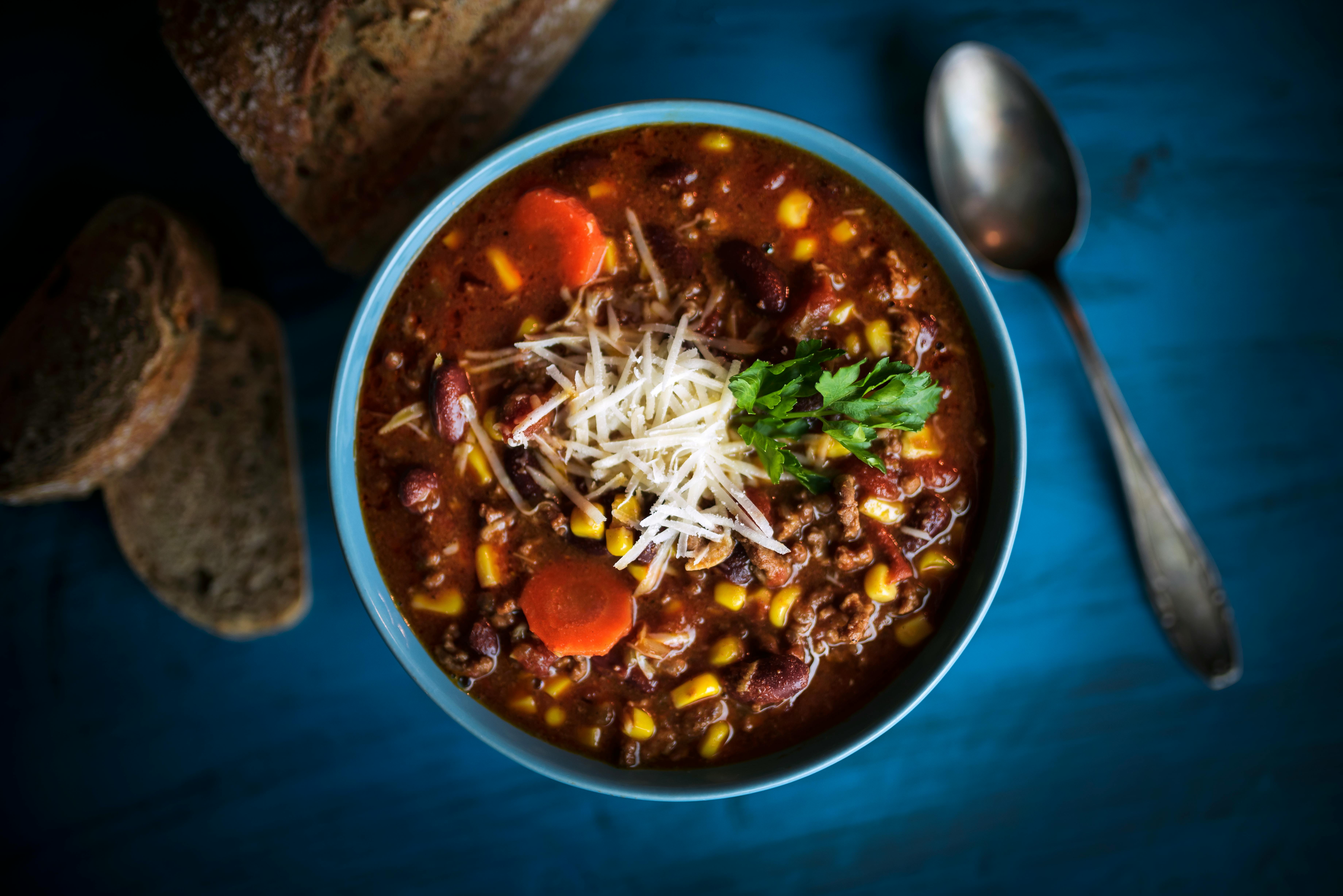
Photo: Piotr Arnoldes / Pexels
American
Three-Bean Chili
The diets react (see scores below)
Common Ingredients
- kidney beans
- black beans
- pinto beans
- tomatoes
- bell pepper
- onion
- chili powder
- cumin
Specific recipes may vary.
Incompatible with 5 of 11 diets
Diet Ratings
Three-Bean Chili is fundamentally incompatible with a ketogenic diet. The dish is built on three varieties of legumes — kidney beans, black beans, and pinto beans — each carrying approximately 20-25g of net carbs per half-cup serving. A standard bowl of three-bean chili could easily contain 60-100g of net carbs from the beans alone, far exceeding the entire daily keto limit of 20-50g. Tomatoes and onions add further carbohydrates. The dish is also extremely low in fat and lacks a meaningful fat source, making the macronutrient profile the inverse of what keto requires. There is no realistic portion size that makes this dish keto-compatible while still functioning as a meal.
Three-Bean Chili as described is an exemplary whole-food, plant-based dish. Every ingredient — kidney beans, black beans, pinto beans, tomatoes, bell pepper, onion, chili powder, and cumin — is entirely plant-derived with no animal products or animal-derived additives. The dish is built around legumes and vegetables, making it nutritionally dense and high in protein, fiber, and micronutrients. There is nothing contested or ambiguous in this ingredient list from a vegan perspective.
Three-Bean Chili is fundamentally incompatible with the Paleo diet. The dish is built entirely around three legumes — kidney beans, black beans, and pinto beans — all of which are explicitly excluded from the Paleo framework. Legumes contain lectins, phytates, and other anti-nutrients that Paleo authorities argue impair nutrient absorption and gut health. While the remaining ingredients (tomatoes, bell pepper, onion, chili powder, cumin) are all Paleo-approved, the primary protein source and structural foundation of the dish is entirely non-Paleo. No amount of modification within the spirit of this recipe would make it compliant — the beans are not a minor ingredient but the defining component of the dish.
Three-Bean Chili is an excellent fit for the Mediterranean diet despite its American presentation. The dish is built entirely on legumes (kidney, black, and pinto beans) — among the most prized staples in Mediterranean eating — combined with tomatoes, bell peppers, and onion, all core Mediterranean vegetables. The spices (chili powder, cumin) are plant-based and add flavor without compromising nutritional integrity. There are no processed ingredients, added sugars, refined grains, or animal products. Legumes are explicitly encouraged multiple times per week as a primary protein source, and this dish delivers a concentrated dose. The only minor note is that traditional Mediterranean cuisines tend toward chickpeas and lentils, but beans broadly are fully endorsed by Mediterranean diet guidelines.
Three-Bean Chili is entirely plant-based and contains zero animal products. Every single ingredient — kidney beans, black beans, pinto beans, tomatoes, bell pepper, onion, chili powder, and cumin — is explicitly excluded on the carnivore diet. Legumes (beans) are among the most anti-carnivore foods possible, packed with antinutrients like lectins and phytates that carnivore proponents specifically cite as harmful. Vegetables like tomatoes, bell peppers, and onions are likewise completely off-limits. The plant-based spices (chili powder, cumin) would be debated even as minor additions to an otherwise carnivore meal, but here they are moot — this dish has no redeeming carnivore-compatible ingredients whatsoever. There is unanimous consensus across all carnivore authorities and protocols that this dish is incompatible with the diet.
Three-Bean Chili is definitively not Whole30 compliant. The dish contains three types of legumes — kidney beans, black beans, and pinto beans — all of which are explicitly excluded on the Whole30 program. Unlike green beans, sugar snap peas, and snow peas (which are specifically excepted), these are true legumes with no exception in the official Whole30 rules. All other ingredients (tomatoes, bell pepper, onion, chili powder, cumin) are fully compliant, but the foundational protein source of this dish is entirely off-limits.
Three-Bean Chili is a high-FODMAP dish by virtually every ingredient that constitutes its protein base and aromatics. Kidney beans, black beans, and pinto beans are all high in galacto-oligosaccharides (GOS) and fructans — the primary FODMAP culprits in legumes — and any standard chili serving would include a substantial quantity of all three. Onion is one of the highest-FODMAP foods tested by Monash University, rich in fructans, and is essentially non-negotiable in a traditional chili recipe. Even a small amount of onion cooked into a dish contributes significant FODMAPs. Chili powder blends frequently contain onion and garlic powder, adding further fructan load. The three-bean combination alone makes this dish impossible to render low-FODMAP at any realistic serving size during the elimination phase. Tomatoes, bell peppers, and cumin are low-FODMAP and not a concern, but they cannot offset the profound FODMAP burden of the beans and onion.
Three-Bean Chili is an excellent DASH diet dish. Kidney beans, black beans, and pinto beans are explicitly emphasized in NIH/NHLBI DASH guidelines as core legume servings (4-5 per week recommended), providing high fiber, plant-based protein, potassium, and magnesium. Tomatoes, bell peppers, and onions contribute additional potassium, fiber, vitamins, and antioxidants — all hallmark DASH vegetables. Chili powder and cumin add flavor without sodium (assuming no salt-heavy spice blends), supporting the DASH strategy of using herbs and spices to reduce the need for added salt. The dish contains no saturated fat, no added sugar, no red meat, no full-fat dairy, and no processed ingredients. This is a near-ideal DASH meal. The primary caution is preparation: canned beans can be high in sodium (400-600mg per half-cup serving), so rinsing canned beans reduces sodium by ~40%, and dried or no-salt-added canned beans are preferred for full DASH compliance.
Three-Bean Chili is a nutritious dish with genuine Zone-compatible qualities, but requires careful portioning to fit the 40/30/30 framework. The vegetables (tomatoes, bell pepper, onion) are excellent low-glycemic Zone carbs, and the spices (chili powder, cumin) add polyphenols with no macro concerns. The beans, however, are the critical complication: in Zone methodology, beans function as a CARBOHYDRATE block, not a protein block, despite being a common protein source. Kidney, black, and pinto beans are all moderate-to-higher glycemic legumes that contribute significant starch alongside their protein and fiber. A serving of this chili will be heavily carbohydrate-dominant, making it difficult to hit the 40/30/30 ratio without adding a lean protein source (e.g., ground turkey, chicken) and a monounsaturated fat (e.g., a few slices of avocado or olive oil drizzle). The fiber content of the beans does moderate the glycemic impact and reduces net carbs, which is a meaningful Zone-positive factor. As written, this is a vegetarian protein source, which means the fat blocks needed per protein block are larger (3g fat per block vs 1.5g), and the dish contains essentially no added fat — leaving it fat-deficient. Overall: a solid Zone base meal that needs a lean protein addition and a fat source to balance the blocks properly.
Some Zone practitioners and Sears' earlier writing treat beans primarily as 'unfavorable' carbs due to their starch content and moderate glycemic load, suggesting very small portions. However, Sears' later anti-inflammatory work has acknowledged legumes more favorably due to their high fiber, polyphenol content, and relatively modest glycemic response compared to grains — meaning this dish could be viewed more favorably by practitioners following the updated Zone framework. The classification of beans as carb vs. protein block also varies slightly by Zone practitioner.
Three-Bean Chili is an exemplary anti-inflammatory dish. The three legumes — kidney, black, and pinto beans — are fiber-rich, high in plant protein, and loaded with polyphenols and antioxidants that are well-documented to reduce inflammatory markers like CRP and IL-6. Dr. Weil's Anti-Inflammatory Food Pyramid explicitly emphasizes beans and legumes as foundational foods. Tomatoes provide lycopene (a potent carotenoid antioxidant), especially when cooked, as heat increases lycopene bioavailability. Bell peppers and onions contribute quercetin, vitamin C, and other flavonoids with anti-inflammatory properties. The spice blend of chili powder and cumin adds meaningful anti-inflammatory benefit: cumin contains apigenin and luteolin, while chili powder typically contains capsaicin (from chili peppers) and often includes turmeric and oregano, all of which have documented anti-inflammatory mechanisms. There are no pro-inflammatory ingredients in this dish — no refined carbohydrates, seed oils, added sugars, trans fats, or processed additives. The entire ingredient list aligns strongly with anti-inflammatory principles, making this a high-scoring, high-confidence approval.
Three-bean chili is a strong GLP-1-friendly dish overall. The combination of kidney, black, and pinto beans delivers a meaningful plant-based protein payload (roughly 20-25g per 1.5-cup serving) alongside exceptional fiber content (15-20g per serving), directly addressing both top dietary priorities. Tomatoes, bell peppers, and onions add micronutrient density, antioxidants, and water content — supporting hydration and nutrient density per calorie. The dish is naturally low in fat and contains no fried, greasy, or high-sugar ingredients. Cumin and chili powder are moderate spices that most patients tolerate well at typical cooking quantities. Gastric emptying is already slowed on GLP-1 medications, and beans are slow-digesting, which is largely a benefit here (sustained fullness, stable blood sugar), though it does increase the potential for bloating and gas in some patients. Portion size matters — a smaller serving (1 cup vs. 2 cups) is advisable given reduced stomach capacity on GLP-1 medications. The one meaningful nutritional gap is that beans alone are an incomplete protein source and not as protein-dense per calorie as animal proteins; patients who rely on this as a primary protein source should be mindful of overall daily protein targets.
Some GLP-1-focused dietitians caution against beans as a primary protein source, noting that patients with already limited stomach capacity may struggle to eat enough volume to hit protein targets from beans alone, and that the fermentable fiber (FODMAPs) in legumes can significantly worsen GLP-1-associated GI side effects — particularly bloating and gas — especially in the early weeks of medication. Individual tolerance to legumes varies considerably, and some clinicians recommend introducing them gradually or pairing with a lean animal protein to close the protein gap.
*See how scores were generated at our methodology page.
Nutritional profile
Six traits that cut across every diet.
Fiber & Plants
How much whole-plant food and fiber it delivers.
Healthy Fats
The quality of its fats (unsaturated, omega-3).
Whole / Unprocessed
How close it is to its natural, unprocessed form.
Gut Gentle
How easy it is on digestion (low FODMAP, few irritants).
Low Glycemic
How little it spikes your blood sugar.
Protein Density
How much protein it packs per calorie.
Controversy Index
Higher controversy = more disagreement between diets.
Diet-Specific Tips
 Vegan — 10/10
View tips
- All three bean varieties are whole plant foods and excellent vegan protein sources
- All vegetables (tomatoes, bell pepper, onion) are unambiguously plant-based
- Chili powder and cumin are plant-derived spices with no animal ingredients
- No processed or animal-derived additives present
- Dish is a canonical whole-food plant-based meal, not merely technically vegan
 Mediterranean — 9/10
View tips
- Three varieties of legumes as the sole protein — highly encouraged
- All-vegetable supporting ingredients: tomatoes, bell pepper, onion
- No processed foods, refined grains, or added sugars
- Plant-based spice profile with no problematic additives
- Slight departure from traditional Mediterranean legume varieties (chickpeas, lentils), but beans are fully compatible
- No olive oil listed, but easily incorporated as a cooking fat
 DASH — 9/10
View tips
- Three varieties of legumes provide high fiber, plant-based protein, potassium, and magnesium — all core DASH nutrients
- Vegetables (tomatoes, bell pepper, onion) add potassium, fiber, and micronutrients aligned with DASH vegetable servings
- No saturated fat, no added sugar, no red meat, no full-fat dairy
- Spices used for flavor reduce reliance on sodium — a key DASH strategy
- Sodium management is critical: canned beans should be rinsed or replaced with no-salt-added/dried varieties to maintain low-sodium DASH compliance
 Zone — 6/10
View tips
- Beans count as CARBOHYDRATE blocks in Zone, not protein blocks — a common misclassification
- High-fiber bean content reduces net carbs and moderates glycemic impact favorably
- No lean animal protein present — dish is protein-deficient for Zone without adding chicken, fish, or egg whites
- No fat source present — avocado or olive oil needed to complete the Zone block ratio
- Vegetables (tomatoes, bell pepper, onion) are excellent low-glycemic Zone carb choices
- Spices provide polyphenols, consistent with Sears' anti-inflammatory dietary emphasis
- Dish can be Zone-compatible with simple additions but as written is macronutrient-imbalanced
 Anti-Inflammatory — 9/10
View tips
- Three legumes provide high fiber and polyphenols shown to reduce CRP and other inflammatory markers
- Cooked tomatoes deliver highly bioavailable lycopene, a potent carotenoid antioxidant
- Bell peppers and onions contribute quercetin and vitamin C with anti-inflammatory properties
- Cumin and chili powder add capsaicin, apigenin, and luteolin — all anti-inflammatory compounds
- No pro-inflammatory ingredients: free of seed oils, refined carbs, added sugars, trans fats, or additives
- Whole-food, plant-based profile aligns directly with Dr. Weil's Anti-Inflammatory Food Pyramid recommendations
 GLP-1 Friendly — 8/10
View tips
- High fiber content (15-20g per serving) directly addresses GLP-1 constipation risk
- Solid plant-based protein (~20-25g per serving) meets per-meal protein targets
- Low fat — no fried or greasy ingredients that would worsen nausea or reflux
- High water-content vegetables support hydration
- Nutrient-dense per calorie — good micronutrient profile
- Beans are fermentable (FODMAPs) and may cause bloating or gas in sensitive GLP-1 patients
- Incomplete protein source — should be paired with other proteins across the day to hit daily targets
- Moderate spice level generally well tolerated but individual sensitivity varies
- Portion-sensitive — smaller servings recommended given slowed gastric emptying
Community
Healthiest Three-Bean Chili recipes
One scanned recipe so far — scan yours to see how it stacks up.
Scan your Three-Bean Chili recipe →