Photo: Willians Huerta / Pexels
The diets react (see scores below)
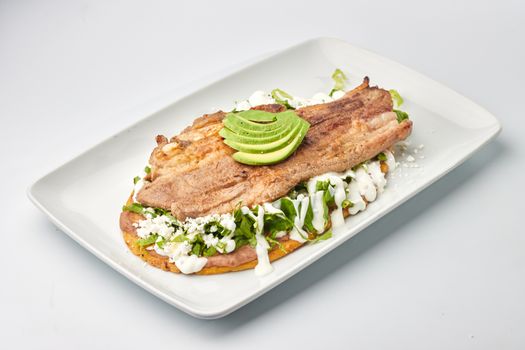
Common Ingredients
- large corn tortilla
- refried beans
- Oaxaca cheese
- cecina
- cabbage
- avocado
- salsa
- onion
Specific recipes may vary.
Incompatible with 7 of 11 diets
Diet Ratings
Tlayudas are fundamentally incompatible with a ketogenic diet. The base is a large corn tortilla, which is a grain product typically containing 40-50g of net carbs on its own — already at or exceeding the entire daily keto carb budget. This is compounded by refried beans, which add another 15-25g of net carbs per serving. Together, these two ingredients alone make the dish impossible to fit within keto macros. The remaining ingredients — cecina (dried salted beef), Oaxaca cheese, avocado, cabbage, salsa, and onion — are individually keto-friendly or borderline acceptable, but they cannot offset the massive carbohydrate load from the tortilla and beans. There is no practical portion-control workaround since the tortilla is the structural foundation of the dish.
Tlayudas as described contain multiple animal-derived ingredients that make them clearly incompatible with a vegan diet. Oaxaca cheese is a dairy product (animal-derived), and cecina is a cured/salted beef (the listed primary protein). Both are direct animal products, not trace contaminants. The base ingredients — corn tortilla, refried beans, cabbage, avocado, salsa, and onion — are all plant-based, but the dish as presented is disqualified by two distinct animal ingredients. A vegan version could theoretically be made by omitting the cheese and cecina and substituting plant-based alternatives, but the traditional dish is not vegan.
Tlayudas are fundamentally incompatible with the paleo diet. The dish is built on a large corn tortilla (a grain — explicitly excluded), topped with refried beans (a legume — explicitly excluded), and Oaxaca cheese (dairy — explicitly excluded). These three ingredients form the structural and flavor foundation of the dish and cannot be removed without the dish ceasing to be a tlayuda. While some individual components — cecina (cured beef, though processed/salted), avocado, cabbage, onion, and salsa — have varying degrees of paleo acceptance, the non-negotiable core ingredients are all hard excludes under every mainstream paleo framework. The dish scores a 1 because multiple foundational ingredients fall into the 'avoid' category with high consensus.
Tlayudas contain several Mediterranean diet-compatible ingredients—corn tortilla (whole grain), refried beans (legumes), cabbage, avocado, onion, and salsa are all plant-forward components that align well with Mediterranean principles. However, the primary protein is cecina, a salted and dried beef, which is both red meat and a processed/cured meat product. Red meat is limited to a few times per month in the Mediterranean diet, and cured/processed red meats are among the least compatible foods. The Oaxaca cheese adds saturated fat, and refried beans may contain lard depending on preparation. The combination of processed red meat (cecina) as the primary protein tips this dish into 'avoid' territory, as it contradicts the diet's core guidance on minimizing red and processed meats.
Some Mediterranean diet interpreters might score this higher, noting that the dish is rich in legumes, vegetables, and avocado, and that cecina is used in relatively modest quantities as a topping rather than the bulk of the meal. A flexible interpretation could treat this as an occasional indulgence, similar to how some traditional Mediterranean cuisines incorporate small amounts of cured meats in otherwise plant-heavy dishes.
Tlayudas are fundamentally incompatible with the carnivore diet. The dish is built on a large corn tortilla (grain-based, entirely plant-derived carbohydrate), refried beans (legumes, strictly excluded), and is loaded with additional plant foods including cabbage, avocado, salsa, and onion. Even the animal-derived components — cecina (cured beef) and Oaxaca cheese — are secondary to the plant foundation of the dish. The corn tortilla alone disqualifies it as a grain product, beans are among the most explicitly excluded foods on carnivore, and the remaining plant toppings compound the incompatibility. The cecina could theoretically be eaten in isolation, but as a complete dish, Tlayudas are essentially a plant-dominant meal with trace animal products.
Tlayudas contain multiple excluded ingredients that make this dish incompatible with Whole30. First, the large corn tortilla is made from corn, which is a grain explicitly excluded from the program. Second, refried beans are legumes, also explicitly excluded. Third, Oaxaca cheese is a dairy product, which is excluded (only ghee and clarified butter are permitted as dairy exceptions). These three core structural components of a tlayuda are all independently disqualifying. Additionally, cecina (salt-cured beef) may contain additives requiring label scrutiny, though the other violations are already decisive. The remaining ingredients — cabbage, avocado, salsa, and onion — are compliant on their own, but they cannot redeem a dish built on a corn tortilla base with beans and cheese.
Tlayudas contain multiple high-FODMAP ingredients that make this dish unsuitable during the elimination phase. Refried beans are a major source of GOS (galacto-oligosaccharides) and are high-FODMAP at any typical serving size. Onion is one of the highest-FODMAP foods tested by Monash, containing significant fructans even in small quantities. Avocado is low-FODMAP only at 1/8 of a fruit (30g), but a typical tlayuda portion would include far more. Oaxaca cheese is a fresh/semi-soft cheese with moderate lactose content, adding another FODMAP concern. The large corn tortilla base is generally low-FODMAP, cecina (dried/cured beef) is likely low-FODMAP, cabbage in moderate portions is low-FODMAP, and salsa may be acceptable if made without onion or garlic — but the combination of refried beans and onion alone makes this dish a clear avoid. There is no realistic way to make a standard tlayuda low-FODMAP without fundamentally altering its core ingredients.
Tlayudas present a mixed DASH profile. The base (large corn tortilla) and vegetables (cabbage, onion, avocado, salsa) align well with DASH principles — avocado provides healthy monounsaturated fats and potassium, while cabbage and onion add fiber and micronutrients. Refried beans are a DASH-friendly legume source of fiber, potassium, and plant protein, though commercially prepared versions can be high in sodium and saturated fat. The significant concerns are the primary protein (cecina — a heavily salted, cured beef) and the Oaxaca cheese. Cecina is a cured/salted red meat, combining two DASH concerns: high sodium content (often 800–1,200mg+ per serving) and red meat with saturated fat. Oaxaca cheese, while a traditional full-fat cheese, adds further saturated fat and sodium. Together, these components can push a single serving well above 1,500–2,000mg sodium and contribute meaningfully to saturated fat intake. The dish is not categorically off-limits if portion-controlled and modified (e.g., substituting grilled chicken or fish for cecina, using reduced-fat cheese, and choosing low-sodium refried beans), but as traditionally prepared it exceeds DASH sodium and saturated fat targets.
NIH DASH guidelines clearly restrict cured/salted red meats and full-fat cheeses due to sodium and saturated fat concerns. However, some DASH-oriented clinicians note that the overall dietary pattern matters more than individual meals, and that the substantial vegetable, legume, and avocado content in tlayudas can partially offset concerns — particularly for non-hypertensive individuals using the standard 2,300mg sodium threshold rather than the stricter 1,500mg target.
Tlayudas present a mixed Zone Diet picture. On the positive side, the dish contains several Zone-favorable components: avocado provides excellent monounsaturated fat, cabbage is a low-glycemic colorful vegetable, salsa and onion add polyphenols, and cecina (dried/salted beef) provides a reasonable protein source (though it is red meat rather than the ideal lean protein). The problematic elements are the large corn tortilla, which is a high-glycemic grain carbohydrate that would use up many carb blocks quickly and skew the 40/30/30 ratio; refried beans, which are higher in carbohydrates and often cooked with lard; and Oaxaca cheese, which adds saturated fat. As traditionally served, Tlayudas are carbohydrate-heavy and fat-heavy (from cheese and beans) relative to protein, making the 40/30/30 ratio difficult to achieve without significant modification — for example, reducing tortilla size, limiting cheese, and increasing the cecina portion. With strategic portioning, the dish can be nudged toward Zone compliance, but as a standard restaurant or street preparation it leans carb- and fat-heavy.
Some Zone practitioners would note that corn tortillas have a moderate (not extreme) glycemic index compared to white flour, and that refried beans do provide protein alongside their carbs, which partially offsets the macro imbalance. Dr. Sears' later anti-inflammatory writings also acknowledge that traditional whole-food preparations with polyphenol-rich ingredients (salsa, cabbage, avocado) carry benefits that pure macro math doesn't capture. A carefully portioned Tlayuda — smaller tortilla, generous cecina, light cheese — could edge into a 5–6 score range.
Tlayudas present a mixed anti-inflammatory profile. On the positive side, avocado is a standout anti-inflammatory ingredient (monounsaturated fats, fiber, carotenoids), refried beans contribute fiber and plant protein that support gut health and reduce inflammatory markers, cabbage provides cruciferous antioxidants and glucosinolates, onion adds quercetin (a polyphenol with anti-inflammatory properties), and salsa typically includes tomatoes, chili, and garlic — all beneficial. The corn tortilla base is a whole grain-adjacent minimally processed carbohydrate, notably better than refined wheat. However, cecina (salt-cured, dried beef) is the main protein concern: it is red meat, often high in sodium and saturated fat, and processed cured meats in general are flagged in anti-inflammatory frameworks. Oaxaca cheese is a full-fat dairy product, which falls in the 'limit' category due to saturated fat content, though it is unprocessed and appears in moderate amounts relative to the dish. Refried beans can be pro-inflammatory if cooked in lard; traditionally they often are, though vegetable oil versions exist. The combination of cured red meat and full-fat cheese alongside genuinely anti-inflammatory components (avocado, beans, cabbage, alliums, salsa) places this dish squarely in caution territory — beneficial when eaten occasionally but not a dish to anchor an anti-inflammatory eating pattern.
Some anti-inflammatory practitioners following Dr. Weil's more flexible Mediterranean-adjacent framework would view the heavy bean, vegetable, and avocado content as sufficiently offsetting the moderate cheese and beef, particularly if cecina is used sparingly — placing the dish closer to acceptable. Stricter AIP or red-meat-limit protocols would rate this lower due to cured beef and full-fat dairy regardless of vegetable content.
Tlayudas present a mixed nutritional profile for GLP-1 patients. The base components — large corn tortilla, refried beans, and Oaxaca cheese — combine into a heavy, high-fat, moderate-fiber foundation that can worsen GLP-1 side effects like nausea, bloating, and slowed gastric emptying. Cecina (thin dried/salted beef) provides meaningful protein but is a fatty, salty cut of red meat, adding saturated fat and sodium concerns. Refried beans contribute both fiber and plant protein, which are positives, but are often prepared with lard, adding saturated fat. Oaxaca cheese is a high-fat dairy component that, while providing some protein, contributes significantly to the fat load of the dish. The large corn tortilla is a refined/semi-refined carbohydrate base with moderate fiber at best, and its sheer size makes portion control difficult. On the positive side, cabbage adds fiber and easy digestibility, avocado provides heart-healthy unsaturated fats, and salsa and onion are low-calorie, nutrient-supporting additions. Overall, the dish is too large in volume, too high in saturated fat, and too heavy for comfortable digestion on GLP-1 medications as traditionally prepared. A modified version — smaller tortilla, reduced cheese, lard-free beans, more cabbage and vegetables — could improve the rating, but the traditional preparation lands in caution territory.
Some GLP-1-focused dietitians may view the bean and plant components more favorably, noting that the fiber and protein combination from beans is genuinely beneficial; the key disagreement centers on whether the saturated fat from cecina and Oaxaca cheese is a meaningful clinical concern at typical serving sizes, or whether the dish can be tolerated if portioned down significantly. Individual GI tolerance to high-fat, high-volume meals varies considerably among GLP-1 patients, particularly in the first months of treatment.
*See how scores were generated at our methodology page.
Nutritional profile
Six traits that cut across every diet.
Fiber & Plants
How much whole-plant food and fiber it delivers.
Healthy Fats
The quality of its fats (unsaturated, omega-3).
Whole / Unprocessed
How close it is to its natural, unprocessed form.
Gut Gentle
How easy it is on digestion (low FODMAP, few irritants).
Low Glycemic
How little it spikes your blood sugar.
Protein Density
How much protein it packs per calorie.
Controversy Index
Higher controversy = more disagreement between diets.
Diet-Specific Tips
 DASH — 4/10
View tips
- Cecina (cured salted beef) is high in sodium and saturated fat — conflicts with core DASH restrictions on red and processed meats
- Oaxaca cheese adds saturated fat and sodium; DASH specifies low-fat dairy
- Refried beans are DASH-positive but commercially prepared versions can be high in sodium and lard
- Avocado provides DASH-beneficial potassium, fiber, and monounsaturated fats
- Cabbage, onion, and salsa contribute vegetables aligned with DASH vegetable servings
- Large corn tortilla is preferable to refined flour but portion size contributes significant carbohydrate load
- Combined sodium from cecina, cheese, refried beans, and salsa likely exceeds 1,500–2,000mg per serving
- Dish is modifiable: substituting grilled chicken/fish and low-fat cheese would substantially improve DASH compatibility
 Zone — 4/10
View tips
- Large corn tortilla is a high-glycemic, high-carb block that disrupts 40/30/30 ratio
- Refried beans add significant carbohydrates and often saturated fat from lard
- Oaxaca cheese contributes saturated fat, not preferred monounsaturated fat
- Cecina (salted dried beef) is red meat — usable protein but not ideal lean Zone protein
- Avocado is an excellent monounsaturated fat source — strongly Zone-favorable
- Cabbage, onion, and salsa are low-glycemic, polyphenol-rich vegetables — Zone-favorable
- As traditionally prepared, dish skews carb- and fat-heavy relative to Zone protein targets
- Portioning adjustments (smaller tortilla, more cecina, less cheese) can improve Zone compatibility
 Anti-Inflammatory — 5/10
View tips
- Avocado: strong anti-inflammatory — monounsaturated fats and fiber
- Refried beans: high fiber, plant protein, anti-inflammatory when not cooked in lard
- Cabbage and onion: cruciferous antioxidants and quercetin
- Salsa with tomato, chili, garlic: polyphenols and anti-inflammatory compounds
- Cecina (cured beef): pro-inflammatory — red meat, processed, high sodium, saturated fat
- Oaxaca cheese: full-fat dairy, saturated fat — in 'limit' category
- Corn tortilla: minimally processed whole grain base, neutral to mildly positive
- Traditional lard in refried beans: potential pro-inflammatory factor if applicable
 GLP-1 Friendly — 4/10
View tips
- Cecina is a fatty, high-sodium red meat cut — adds saturated fat and may worsen GI side effects
- Oaxaca cheese is high in fat and a common GI discomfort trigger on GLP-1 medications
- Refried beans often prepared with lard — saturated fat concern, though lard-free versions improve the rating
- Large corn tortilla base is high volume and difficult to portion down without restructuring the dish
- Refried beans and cabbage provide meaningful fiber — a genuine positive
- Avocado contributes healthy unsaturated fats, appropriate in moderation
- Dish volume is large, conflicting with small-portion recommendations for GLP-1 patients
- Protein contribution from cecina and beans is moderate but partially offset by high fat content