Photo: Jana Ohajdova / Pexels
The diets react (see scores below)
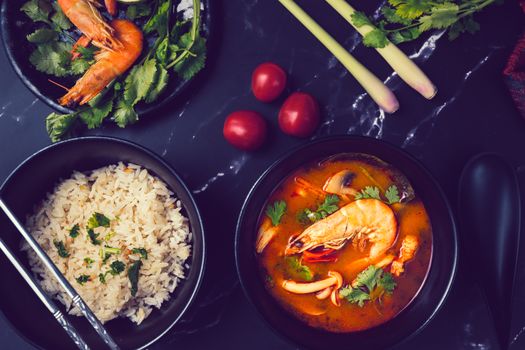
Common Ingredients
- shrimp
- lemongrass
- galangal
- kaffir lime leaves
- Thai chiles
- mushrooms
- lime juice
- fish sauce
Specific recipes may vary.
Incompatible with 2 of 11 diets
Diet Ratings
Tom Yum Goong is highly keto-compatible in its traditional clear broth form. Shrimp is an excellent lean protein with zero carbs. The aromatic ingredients — lemongrass, galangal, kaffir lime leaves, and Thai chiles — are used in small quantities as flavoring agents and contribute negligible net carbs despite not being zero. Mushrooms add minimal net carbs (roughly 2-3g per cup). Fish sauce contains a small amount of sugar in some commercial versions but is used in small quantities. Lime juice adds a modest carb load (~1-2g per tablespoon). Total net carbs for a standard bowl are estimated at 4-8g, well within keto limits. No grains, starchy vegetables, noodles, or added sugars are present in this ingredient list. The soup is naturally low-carb and whole-food based.
Some strict keto practitioners flag fish sauce for often containing added sugar and sodium, and express concern about cumulative carbs from lime juice and aromatic aromatics if portions are generous. Restaurant versions may also add sugar or use carb-containing thickeners not listed here, leading cautious keto adherents to prepare it only at home.
Tom Yum Goong contains multiple animal-derived ingredients that are unambiguously non-vegan. Shrimp is seafood (an animal product), and fish sauce is derived from fermented fish. Both are core, defining ingredients of this dish — not incidental additives. The aromatic plant-based components (lemongrass, galangal, kaffir lime leaves, Thai chiles, mushrooms, lime juice) are all vegan-friendly, but they cannot offset the animal products that form the dish's protein base and primary seasoning. A vegan version would require replacing shrimp with tofu or mushrooms and substituting fish sauce with soy sauce or a seaweed-based alternative.
Tom Yum Goong is a remarkably paleo-friendly Thai soup. Shrimp is an unprocessed animal protein fully endorsed by paleo. Lemongrass, galangal, kaffir lime leaves, Thai chiles, and mushrooms are all whole, unprocessed plants available in nature. Lime juice is a whole fruit product. The only point of contention is fish sauce, which is traditionally made from fermented fish and salt — the added salt places it outside strict paleo guidelines. However, most practical paleo frameworks accept high-quality fish sauce (especially those with minimal ingredients: just fish and salt) as a condiment in small quantities, given that it is a minimally processed, ancestrally consistent fermented food. The dish contains no grains, legumes, dairy, seed oils, or refined sugars, making it one of the cleaner soups from a paleo perspective.
Strict Cordain-school paleo would flag fish sauce due to its added salt content and fermentation processing, recommending it be avoided or replaced with a salt-free, additive-free alternative. The Paleo Diet book discourages any added salt as it was not available to Paleolithic hunter-gatherers in refined form.
Tom Yum Goong aligns well with Mediterranean diet principles despite being a Thai dish. Shrimp is an excellent lean seafood protein, encouraged 2-3 times weekly. The soup is built almost entirely on whole, plant-based aromatics and vegetables (lemongrass, galangal, kaffir lime leaves, chiles, mushrooms) with no refined grains, added sugars, or saturated fats. Lime juice provides acidity similar to the Mediterranean use of citrus. Fish sauce adds sodium but is minimally processed and used in small quantities as a seasoning. The dish is low in unhealthy fats and rich in micronutrients. The main deviation from Mediterranean tradition is the absence of olive oil and the use of Southeast Asian aromatics rather than Mediterranean ones, but the underlying nutritional profile is highly compatible.
Some strict Mediterranean diet frameworks emphasize adherence to traditional regional ingredients and preparation methods, and may view fish sauce's high sodium content as a concern. Additionally, without olive oil as the fat base, the dish lacks a core pillar of the Mediterranean pattern, and purists might rate it 'caution' as it is not a native Mediterranean preparation.
Tom Yum Goong is fundamentally incompatible with the carnivore diet. While shrimp is a perfectly acceptable carnivore protein and fish sauce is animal-derived, the dish is built around an extensive array of plant-based ingredients. Lemongrass, galangal, kaffir lime leaves, Thai chiles, mushrooms, and lime juice are all plant foods explicitly excluded from the carnivore diet. The aromatic herbs and spices alone disqualify this dish under strict carnivore rules, and mushrooms are fungi. Lime juice adds plant-derived acids and sugars. Even the fish sauce, while animal-derived, often contains added sugar. This dish cannot be made carnivore-compliant without removing nearly every ingredient except the shrimp — at which point it is no longer Tom Yum Goong.
Tom Yum Goong as listed contains entirely Whole30-compliant ingredients. Shrimp is an approved protein; lemongrass, galangal, kaffir lime leaves, and Thai chiles are all fresh herbs and aromatics explicitly within the allowed spices and seasonings category; mushrooms are vegetables; lime juice is a natural fruit juice; and fish sauce is a fermented seafood condiment with no excluded ingredients (typical fish sauce contains only anchovies, salt, and water). Every component maps cleanly to the 'meat, seafood, eggs, vegetables, fruits, natural fats, herbs, spices, seasonings' allowance with no grains, legumes, dairy, added sugar, alcohol, or other excluded ingredients present.
Tom Yum Goong contains several low-FODMAP-friendly ingredients (shrimp, lemongrass, galangal, kaffir lime leaves, Thai chiles, lime juice, fish sauce) but mushrooms are the key FODMAP concern. Most common mushrooms tested by Monash (e.g., button, shiitake, oyster) are high in polyols (mannitol) even at moderate servings. Canned mushrooms or oyster mushrooms in small amounts (~75g) may be lower-FODMAP, but standard restaurant portions of mushrooms in Tom Yum often exceed safe thresholds. Shrimp is low-FODMAP, lemongrass and galangal are used as aromatics (typically not consumed in large amounts), kaffir lime leaves are low-FODMAP, fish sauce is low-FODMAP at normal quantities, and lime juice is low-FODMAP. The dish is otherwise well-suited to the elimination phase if mushrooms can be controlled or omitted.
Monash University has tested oyster mushrooms as low-FODMAP at 75g, which may be achievable in a carefully portioned serving of Tom Yum. However, many clinical FODMAP practitioners recommend avoiding mushrooms entirely during the elimination phase due to the high mannitol content in most varieties and the difficulty of controlling restaurant serving sizes.
Tom Yum Goong has several DASH-friendly elements — shrimp is a lean protein, and the aromatics (lemongrass, galangal, kaffir lime leaves, chiles) and mushrooms contribute negligible sodium and useful micronutrients. However, the primary concern is fish sauce, which is extremely high in sodium (roughly 1,400–1,500mg per 2 tablespoons), a staple seasoning in this dish. A single restaurant serving can easily contain 800–1,500mg of sodium, pushing against or exceeding the DASH daily sodium targets (1,500–2,300mg/day). Shrimp also contributes moderate dietary cholesterol, though it is low in saturated fat. The overall dish is not heavily processed, contains no saturated fat concern, and avoids added sugars, which keeps it from an 'avoid' rating. With reduced fish sauce or a low-sodium fish sauce substitute, this dish could align much better with DASH principles.
NIH DASH guidelines emphasize strict sodium limits and would flag fish sauce as a significant sodium source warranting avoidance or strict moderation. However, some updated DASH-oriented clinicians note that when prepared at home with reduced fish sauce quantities, Tom Yum Goong's overall nutrient profile — lean protein, anti-inflammatory aromatics, low saturated fat — may fit within a flexible DASH framework, particularly for non-hypertensive individuals on the 2,300mg sodium threshold.
Tom Yum Goong is an excellent Zone Diet candidate. Shrimp is a lean, low-fat protein that fits cleanly into Zone protein blocks (approximately 7g protein per ounce, very low in fat and carbohydrates). The aromatic base — lemongrass, galangal, kaffir lime leaves, Thai chiles — contributes negligible macronutrients while adding polyphenols and anti-inflammatory compounds that Sears specifically values. Mushrooms are a favorable low-glycemic carbohydrate source. Lime juice and fish sauce add minimal carbohydrates and sodium. The dish is naturally low in fat, which means a small addition of monounsaturated fat (e.g., a drizzle of olive oil or a few slices of avocado as a side) would complete the Zone 40/30/30 ratio. The anti-inflammatory profile — omega-3-rich shrimp, polyphenol-rich herbs, low-glycemic vegetables — aligns strongly with Sears' later anti-inflammatory Zone work. The primary adjustment needed is ensuring adequate protein portion (roughly 3 oz shrimp per meal) and adding a fat source, as the broth itself is nearly fat-free.
Tom Yum Goong is a strongly anti-inflammatory dish by design. Its aromatic base — lemongrass, galangal, kaffir lime leaves, and Thai chiles — is a concentrated source of bioactive compounds with well-documented anti-inflammatory properties. Lemongrass contains citral and limonene; galangal (a close relative of ginger) contains galangin and ACA, both studied for inhibiting pro-inflammatory cytokines; kaffir lime leaves contribute flavonoids and antioxidants; and Thai chiles provide capsaicin, which suppresses NF-κB signaling and reduces CRP. Shrimp is a lean protein with meaningful astaxanthin content (a potent carotenoid antioxidant) and some omega-3s, though its omega-6 to omega-3 ratio is less favorable than fatty fish. Mushrooms — particularly common Thai additions like oyster or straw mushrooms — add beta-glucans with immune-modulating effects. Lime juice contributes vitamin C, which supports antioxidant defense. Fish sauce, while high in sodium, is used in small amounts as a seasoning and does not meaningfully undermine the dish's anti-inflammatory profile. This is a broth-based, low-fat, whole-ingredient soup with no refined carbohydrates, added sugars, or seed oils — a near-ideal anti-inflammatory template.
Tom Yum Goong is a nutritionally solid soup for GLP-1 patients in its traditional clear-broth form: shrimp provides lean, high-quality protein (~18-20g per standard serving), the broth is low in fat and calories, and mushrooms add modest fiber and micronutrients. The high water content of the broth actively supports hydration, which is a meaningful benefit given reduced thirst sensation on GLP-1 medications. However, the Thai chiles are a meaningful concern — hot, spicy foods can worsen nausea, acid reflux, and GI discomfort, which are already common GLP-1 side effects. Fish sauce adds sodium, which is generally manageable but worth noting. The dish scores well on protein density, low fat, easy digestibility, and hydration support, but the spice level prevents a full approve rating. A low-spice or mild version would rate higher (7-8).
Some GLP-1-focused dietitians accept mildly spicy foods without issue in patients who tolerate them well, noting that capsaicin may even support satiety; others flag any significant chili presence as a categorical risk given how unpredictably GLP-1 patients respond to GI irritants, particularly in early weeks of treatment or after dose escalation.
*See how scores were generated at our methodology page.
Nutritional profile
Six traits that cut across every diet.
Fiber & Plants
How much whole-plant food and fiber it delivers.
Healthy Fats
The quality of its fats (unsaturated, omega-3).
Whole / Unprocessed
How close it is to its natural, unprocessed form.
Gut Gentle
How easy it is on digestion (low FODMAP, few irritants).
Low Glycemic
How little it spikes your blood sugar.
Protein Density
How much protein it packs per calorie.
Controversy Index
Higher controversy = more disagreement between diets.
Diet-Specific Tips
 Keto — 6/10
View tips
- Shrimp is zero net-carb protein — fully keto approved
- Aromatics (lemongrass, galangal, kaffir lime leaves) used in trace amounts, negligible net carbs
- Mushrooms contribute ~2-4g net carbs per serving
- Lime juice adds ~1-2g net carbs per tablespoon — portion should be moderate
- Fish sauce may contain trace added sugar — check label or make at home
- No grains, noodles, starchy vegetables, or significant sugar sources
- Estimated 4-8g net carbs per bowl — fits within daily keto budget
- Restaurant versions may add sugar or thickeners — home preparation recommended
 Paleo — 8/10
View tips
- Shrimp is a fully approved paleo protein
- Lemongrass, galangal, kaffir lime leaves, and Thai chiles are whole natural aromatics — fully paleo
- Mushrooms are approved whole-food vegetables
- Lime juice is a natural, unprocessed fruit product
- Fish sauce contains added salt, which is technically non-paleo under strict guidelines
- No grains, legumes, dairy, seed oils, or refined sugars present
- Fish sauce is widely accepted in practical paleo as a minimal-ingredient fermented condiment
 Mediterranean — 8/10
View tips
- Shrimp is a Mediterranean-approved seafood protein
- Vegetable-forward with mushrooms, aromatics, and chiles
- No refined grains, added sugars, or saturated fats
- Fish sauce is high in sodium but used sparingly
- No olive oil present — a core Mediterranean fat source
- Non-Mediterranean cuisine but nutritionally compatible profile
- Light broth-based preparation supports healthy eating patterns
 Whole30 — 9/10
View tips
- Shrimp is an explicitly approved protein source
- Lemongrass, galangal, kaffir lime leaves, and Thai chiles are compliant herbs and aromatics
- Mushrooms are compliant vegetables
- Lime juice is a compliant natural fruit juice
- Fish sauce (anchovy-based, no added sugar or soy) is Whole30-compatible — label-reading advised to confirm no sugar or additives in commercial versions
- No grains, legumes, dairy, or added sugars present
 Low-FODMAP — 5/10
View tips
- Mushrooms are high in polyols (mannitol) and are the primary FODMAP risk in this dish
- Shrimp is low-FODMAP and safe at standard servings
- Lemongrass, galangal, and kaffir lime leaves are used as aromatics and are low-FODMAP
- Fish sauce is low-FODMAP at normal culinary quantities
- Lime juice is low-FODMAP
- No onion or garlic listed, which is a positive feature for FODMAP compliance
- Dish can be made low-FODMAP if mushrooms are omitted or replaced with oyster mushrooms at a controlled portion
 DASH — 4/10
View tips
- Fish sauce is very high in sodium (~1,400mg per 2 tbsp), the primary DASH concern
- Shrimp is a lean protein aligned with DASH principles
- No saturated fat, no added sugar, no processed ingredients
- Vegetables and aromatics (mushrooms, lemongrass, galangal) support DASH nutrient goals
- Restaurant portions likely exceed DASH sodium budget for a single dish
- Low-sodium fish sauce substitution would substantially improve DASH compatibility
- Shrimp contains dietary cholesterol but low saturated fat — moderate concern
 Zone — 8/10
View tips
- Shrimp is a lean Zone-favorable protein — low fat, high protein density
- Aromatic herbs (lemongrass, galangal, kaffir lime leaves) are nutritionally negligible but polyphenol-rich, aligning with Sears' anti-inflammatory emphasis
- Mushrooms are a low-glycemic, favorable Zone carbohydrate
- Fish sauce adds sodium but minimal macronutrient impact — portion awareness advised
- Dish is naturally very low in fat — requires a monounsaturated fat addition to hit 30% fat target
- No high-glycemic carbohydrates, refined grains, or processed ingredients
- Omega-3 content of shrimp supports Zone's anti-inflammatory goals
 Anti-Inflammatory — 8/10
View tips
- Lemongrass: citral and limonene with anti-inflammatory bioactivity
- Galangal: galangin and related compounds shown to inhibit pro-inflammatory cytokines
- Thai chiles: capsaicin suppresses NF-κB and reduces CRP
- Kaffir lime leaves: flavonoids and antioxidant compounds
- Mushrooms: beta-glucans with immune-modulating and anti-inflammatory properties
- Shrimp: lean protein with astaxanthin; moderate omega-3 content
- Broth-based, low-fat format with no refined carbs or seed oils
- Fish sauce is high-sodium but used sparingly — minimal inflammatory concern
 GLP-1 Friendly — 6/10
View tips
- Shrimp is a lean high-quality protein source — strong positive for GLP-1 patients
- Clear broth base is low fat and easy to digest — well tolerated on slowed gastric emptying
- High water content supports hydration, a specific GLP-1 concern
- Thai chiles may worsen nausea, reflux, or GI discomfort — a real risk on GLP-1 medications
- Fish sauce adds sodium but is not a disqualifying factor at standard serving amounts
- Mushrooms contribute modest fiber and micronutrient density
- Spice level is the primary limiting factor; a mild version would qualify for approve