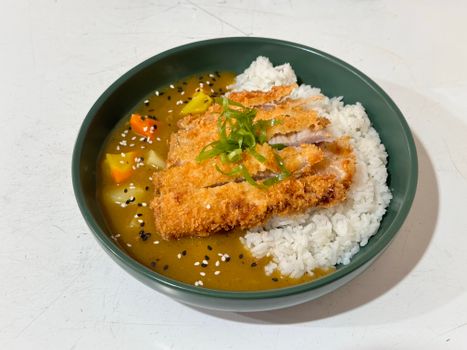
Photo: Jazheel Inocencio / Pexels
The diets react (see scores below)
Common Ingredients
- pork loin
- panko breadcrumbs
- flour
- eggs
- tonkatsu sauce
- cabbage
- vegetable oil
- Japanese rice
Specific recipes may vary.
Incompatible with 10 of 11 diets
Diet Ratings
Tonkatsu is fundamentally incompatible with a ketogenic diet in its standard form. The dish involves pork loin coated in flour and panko breadcrumbs (both grain-based, high-carb), then deep-fried and served with tonkatsu sauce (which contains sugar and starch), alongside Japanese rice (a high-glycemic starch). Even without the rice, the breading alone contributes significant net carbs per serving. The panko coating and flour dredge together can add 20-30g of net carbs per serving, and tonkatsu sauce adds another 10-15g of sugar-derived carbs. Japanese rice adds roughly 40-50g of net carbs per cup. The pork loin itself is keto-friendly, but the preparation method disqualifies this dish entirely. No meaningful adaptation short of a complete recipe overhaul (replacing breading with pork rinds, eliminating rice and tonkatsu sauce) would make this keto-compatible.
Tonkatsu is a Japanese breaded pork cutlet and is fundamentally incompatible with a vegan diet. It contains multiple animal products: pork loin as the primary protein, eggs used in the breading process, and the dish is defined by its meat component. There is no ambiguity here — this dish cannot be made vegan without completely replacing its core ingredients, at which point it would no longer be tonkatsu.
Tonkatsu is fundamentally incompatible with the paleo diet. The dish is built around a wheat-flour-and-panko-breadcrumb coating — both grain-based and strictly excluded. It is deep-fried in vegetable oil, a seed oil explicitly banned under paleo guidelines. Japanese rice is a grain and excluded. Tonkatsu sauce typically contains sugar, soy sauce (soy = legume derivative), and other additives, making it a processed condiment. Of the full ingredient list, only pork loin, eggs, and cabbage are paleo-compliant. The non-compliant ingredients are not incidental — they define the dish itself.
Tonkatsu is a deep-fried pork cutlet that conflicts with Mediterranean diet principles on multiple levels. Pork loin (red meat) should be limited to only a few times per month, and the deep-frying in vegetable oil rather than olive oil adds refined fats. The panko breadcrumbs and flour coating represent refined grains, and tonkatsu sauce typically contains added sugars. White Japanese rice is a refined grain with no fiber benefit. The only redeeming element is the cabbage garnish, a Mediterranean-friendly vegetable. Overall, this dish is processed, fried, red meat-centered, and relies on refined carbohydrates — directly contradicting the Mediterranean diet's core principles.
Tonkatsu is fundamentally incompatible with the carnivore diet. While the base protein is pork loin (an acceptable animal product), the dish is defined by its breaded coating of panko breadcrumbs and flour — both grain-derived plant foods that are strictly excluded. The dish is served with cabbage (plant), Japanese rice (grain), and tonkatsu sauce (a plant-based condiment containing fruit, vegetables, sugar, and other additives). Vegetable oil used for frying is a plant-derived fat, also excluded. Only the pork and eggs (used in the breading process) are carnivore-compatible; the overwhelming majority of this dish's defining components violate carnivore principles.
Tonkatsu contains multiple excluded ingredients that make it clearly non-compliant with Whole30. Panko breadcrumbs are made from wheat (a grain), flour is a grain product, tonkatsu sauce typically contains sugar, soy (soy sauce), and other non-compliant additives, and Japanese rice is a grain. The dish is essentially a breaded, fried cutlet — a format that would also fall under the 'no recreating comfort foods' spirit concern even if individual ingredients were swapped. There is no reasonable compliant version of this dish as traditionally prepared.
Tonkatsu contains multiple high-FODMAP ingredients that make it problematic during the elimination phase. The primary concerns are: (1) Panko breadcrumbs are made from wheat, which is high in fructans — a standard coating (~30g) delivers a significant fructan load. (2) All-purpose flour used for dredging, also wheat-based, adds further fructans. (3) Tonkatsu sauce (e.g., Bull-Dog brand) typically contains apple purée, dates, and sometimes onion or garlic, all of which are high-FODMAP ingredients. The pork loin, eggs, vegetable oil, Japanese white rice, and raw green cabbage (in typical serving portions) are all low-FODMAP and unproblematic. However, the wheat-based coating and the tonkatsu sauce together represent multiple FODMAP hits (fructans + excess fructose/polyols from fruit-based sauce) that would disqualify this dish during strict elimination. A modified version using gluten-free breadcrumbs, rice flour, and a low-FODMAP dipping sauce (e.g., tamari with a small amount of maple syrup) could make this dish elimination-safe.
Some FODMAP practitioners note that the quantity of flour and breadcrumbs used as a thin coating may deliver a borderline fructan dose, and a few registered dietitians argue that very thin wheat-based coatings (<10g total) could be tolerated by many individuals. However, Monash University clearly rates wheat-containing foods as high-FODMAP, and the tonkatsu sauce adds an additional uncontrolled FODMAP risk, so most elimination-phase protocols would advise avoiding this dish as traditionally prepared.
Tonkatsu is a deep-fried pork cutlet that conflicts with multiple core DASH diet principles. The dish is deep-fried in vegetable oil, significantly raising total fat content and caloric density. Pork loin itself is a lean cut, but the panko breading and deep-frying process adds substantial fat. Tonkatsu sauce is high in sodium and added sugars (a typical serving contains 400-600mg sodium from the sauce alone). The refined white rice and white flour breading contribute refined carbohydrates with minimal fiber. The overall sodium load from the sauce, breading, and preparation easily pushes a serving toward or beyond DASH sodium limits. While cabbage is a DASH-friendly vegetable, it cannot offset the negatives of the preparation method. Deep-fried foods are explicitly discouraged in DASH guidelines due to high fat content and caloric density.
Tonkatsu presents multiple Zone Diet challenges. The dish combines pork loin (acceptable lean protein) with panko breadcrumbs and flour coating (high-glycemic refined carbs), deep-frying in vegetable oil (omega-6 heavy seed oils, explicitly discouraged by Sears), tonkatsu sauce (typically high in sugar), and Japanese white rice (high-glycemic, unfavorable carb). The shredded cabbage is the one Zone-favorable element. The fat profile is problematic: deep-frying in vegetable oil loads the dish with omega-6 polyunsaturated fats, directly opposing Zone's anti-inflammatory principles. The carbohydrate load from rice plus breading plus sugary sauce makes the 40/30/30 ratio nearly impossible to achieve without radical modification. While Zone is ratio-based rather than exclusionary, tonkatsu as traditionally prepared stacks multiple unfavorable elements simultaneously — refined high-GI carbs, inflammatory seed oils, and added sugars — making it genuinely difficult to incorporate even with careful portioning. This places it at the low end of caution, nearly in avoid territory. Significant modifications (air-frying or baking, eliminating rice or substituting cauliflower rice, skipping or minimizing the sauce) would be required to make it Zone-compatible.
Tonkatsu is a deep-fried pork cutlet that presents multiple anti-inflammatory concerns. The dish is cooked by deep-frying in vegetable oil (typically high-omega-6 seed oils such as corn, sunflower, or soybean oil), which is a primary concern — high-heat frying in omega-6-rich refined oils generates oxidized lipids and advanced glycation end products (AGEs), both of which are pro-inflammatory. Pork loin itself is lean red/white meat that is acceptable in moderation, but as the primary protein fried in this manner it moves into problematic territory. The panko breadcrumbs and flour coating are refined carbohydrates with minimal nutritional value, and deep-frying locks in absorbed oil throughout the coating. Tonkatsu sauce is typically high in sugar and may contain additives. White Japanese rice is a refined grain offering little fiber or anti-inflammatory benefit. The one positive element is the cabbage accompaniment, which provides fiber, vitamin C, and some anti-inflammatory glucosinolates — but this does not offset the overall profile. The combination of deep-frying in seed oils, refined carbohydrates, and added sugar places this dish firmly in the 'avoid' category for an anti-inflammatory dietary pattern.
Tonkatsu is a deep-fried breaded pork cutlet — exactly the type of preparation GLP-1 patients should avoid. The dish is cooked in vegetable oil via deep frying, resulting in high fat content per serving that is likely to worsen GLP-1 side effects including nausea, bloating, and reflux. The panko-flour breading adds refined carbohydrates with minimal fiber or nutritional value. Tonkatsu sauce is typically high in sugar. White Japanese rice is a refined grain with low fiber and high glycemic load. While pork loin itself is a relatively lean cut with decent protein, the deep-frying preparation and breading coating negate those benefits entirely. The shredded cabbage is the only genuinely GLP-1-friendly component, offering fiber and digestive support, but it does not offset the rest of the dish. The combination of high fat, fried preparation, refined carbs, and sugary sauce makes this a poor choice for GLP-1 patients — particularly those managing nausea, slowed gastric emptying, or trying to maximize nutrient density per calorie.
*See how scores were generated at our methodology page.
Nutritional profile
Six traits that cut across every diet.
Fiber & Plants
How much whole-plant food and fiber it delivers.
Healthy Fats
The quality of its fats (unsaturated, omega-3).
Whole / Unprocessed
How close it is to its natural, unprocessed form.
Gut Gentle
How easy it is on digestion (low FODMAP, few irritants).
Low Glycemic
How little it spikes your blood sugar.
Protein Density
How much protein it packs per calorie.
Controversy Index
Higher controversy = more disagreement between diets.
Diet-Specific Tips
 Zone — 5/10
View tips
- Pork loin is a lean protein and Zone-acceptable, but breading adds unwanted refined carbs
- Panko breadcrumbs and flour are high-glycemic refined carbohydrates
- Deep-frying in vegetable oil introduces heavy omega-6 fatty acids, anti-inflammatory diet violation
- Tonkatsu sauce is high in sugar, adding unfavorable glycemic load
- White Japanese rice is a high-glycemic unfavorable carb that compounds the imbalance
- Shredded cabbage is the only Zone-favorable element
- Combined carb load from rice + breading + sauce makes 40/30/30 ratio extremely difficult to achieve
- Multiple simultaneous unfavorable elements distinguish this from a single-issue caution food