Italian
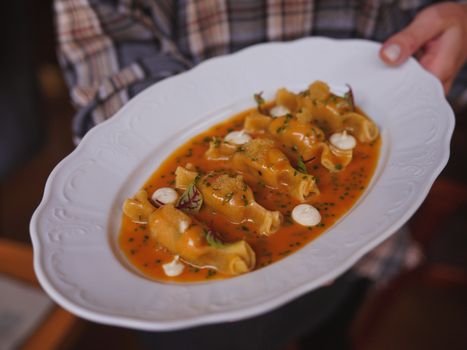
Tortellini in Brodo
The diets react (see scores below)
Common Ingredients
- meat tortellini
- chicken broth
- Parmesan
- parsley
- carrot
- celery
- onion
Specific recipes may vary.
Incompatible with 6 of 11 diets
Diet Ratings
Tortellini in Brodo is fundamentally incompatible with a ketogenic diet. The tortellini pasta itself is made from wheat flour, a grain-based product that is a direct violation of keto principles. A standard serving of meat tortellini (roughly 100-120g) delivers approximately 30-40g of net carbs from the pasta alone, which can single-handedly exceed or nearly exhaust an entire day's carb allowance. The filling (pork and chicken) and the broth are keto-friendly, as are the Parmesan and herbs, but the pasta shell is the dominant component and cannot be separated from the dish. The aromatic vegetables (carrot, onion, celery) also add modest additional net carbs. There is no meaningful way to consume this dish in a keto-compliant manner — it cannot be portion-controlled into acceptability because the pasta carbs scale directly with any serving size.
Tortellini in Brodo contains multiple animal products that are categorically excluded from a vegan diet. The meat tortellini filling contains pork and chicken, and the pasta dough itself is traditionally made with eggs. The broth is chicken-based, and the dish is finished with Parmesan cheese, which is a dairy product. There is no ambiguity here — this dish is built entirely around animal ingredients at every structural level.
Tortellini in Brodo is fundamentally incompatible with the Paleo diet. The dish's centerpiece — meat tortellini — is pasta, made from wheat flour, a grain that is categorically excluded from Paleo. The filling typically contains Parmesan or other cheese (dairy), another excluded category. Parmesan served as a garnish is also dairy. The broth and vegetables (carrot, celery, onion, parsley) are Paleo-friendly, but the core components — wheat pasta and dairy cheese — are non-negotiable violations with clear consensus across all major Paleo authorities.
Tortellini in Brodo is a classic Northern Italian dish that sits in a gray zone for Mediterranean diet adherence. The broth base with vegetables (carrot, celery, onion, parsley) and Parmesan aligns well with Mediterranean principles. However, the meat-filled tortellini combines pork and chicken in a refined white-flour pasta, which raises two concerns: pork is a red/processed meat best limited to a few times per month, and refined pasta dough is a less preferred carbohydrate compared to whole grains. The dish is relatively modest in total meat content per serving, and the broth-based preparation avoids heavy fats, keeping it lighter than many meat dishes. Consumed occasionally in a traditional portion size, it is acceptable, but it is not a Mediterranean staple due to the refined grain and pork filling.
In Emilian and broader Northern Italian culinary tradition — regions historically recognized as part of the broader Mediterranean food culture — tortellini in brodo is a festive, celebratory dish consumed in small quantities, and some Mediterranean diet scholars argue that traditional, minimally processed regional pasta dishes like this should be evaluated in cultural context rather than penalized as 'refined grains.' The pork component is small and the overall dish is broth-light and vegetable-supported.
Tortellini in Brodo is fundamentally incompatible with the carnivore diet. The dish is built around tortellini, which are pasta dumplings made from wheat flour — a grain-based plant food that is strictly excluded. Beyond the pasta, the dish contains multiple plant-based vegetables (carrot, celery, onion, parsley) used in the broth and as garnish. While the chicken broth and pork/chicken filling are carnivore-compliant, and Parmesan is debated-but-used by many practitioners, the wheat pasta alone is an absolute disqualifier. There is no version of this dish that can be made carnivore-compatible without fundamentally changing it into a different dish entirely.
Tortellini in Brodo is not Whole30 compatible. Meat tortellini is a pasta/noodle product made from wheat flour (a grain), which is explicitly excluded on Whole30. Additionally, Parmesan is a dairy product, which is also excluded. The broth and vegetables (carrot, celery, onion, parsley) would be compliant, but the two core components of this dish — the tortellini pasta and the cheese — directly violate Whole30 rules. Pasta and noodles are also specifically called out in rule 4 as foods that cannot be recreated even with compliant ingredients, further cementing this as an avoid.
Tortellini in Brodo contains multiple high-FODMAP ingredients that make it unsuitable during the elimination phase. The meat tortellini are made with wheat pasta (high in fructans) and typically contain garlic and/or onion in the filling — both significant fructan sources. The broth itself is made with onion and celery in amounts that contribute FODMAPs. Onion is one of the highest-FODMAP vegetables regardless of quantity and is a major fructan source; it cannot be made safe by portion reduction. Celery becomes high-FODMAP above 10cm stalk per serve. Even setting the tortellini pasta aside, the combination of onion-cooked broth and wheat-based pasta creates a high-FODMAP load from multiple pathways simultaneously.
Tortellini in Brodo presents multiple DASH concerns despite its wholesome Italian tradition. The primary issues are sodium and refined carbohydrates. Chicken broth is typically high in sodium (standard commercial broth runs 800–1,000mg per cup), and a serving of this soup can easily contain 1–2 cups of broth alone. Meat tortellini (pork and chicken filling) adds further sodium from the seasoned meat and pasta, plus Parmesan cheese is one of the saltiest common foods (~450mg sodium per ounce). Together, a single serving likely delivers 1,000–1,500mg or more of sodium, consuming a large portion of the DASH daily limit (1,500–2,300mg). The pork filling also introduces saturated fat, which DASH limits. On the positive side, the dish includes DASH-friendly vegetables (carrot, celery, onion) and lean chicken protein, and broth-based soups are preferred over cream-based. If made with homemade or low-sodium broth, minimal Parmesan, and portion-controlled tortellini, the score improves. As commonly consumed in restaurants or with commercial ingredients, however, the sodium load places this firmly in the caution category.
Tortellini in Brodo presents a mixed Zone profile. The dish has genuine positives: chicken broth is essentially a free food, the vegetables (carrot, celery, onion) are low-glycemic Zone-favorable carbs, parsley adds polyphenols, and Parmesan provides some protein and fat. However, the meat tortellini are the primary component, and they carry significant Zone challenges. The pasta dough is refined wheat — a high-glycemic, unfavorable carbohydrate in Zone terminology. A typical serving of tortellini delivers a disproportionate carbohydrate load relative to protein and fat, skewing heavily away from the 40/30/30 ratio. The pork-and-cheese filling does contribute protein and fat, which partially offsets the carb load compared to plain pasta, making tortellini somewhat more Zone-manageable than a bowl of spaghetti. To fit Zone blocks, portions must be kept small (roughly 4-5 tortellini), and the vegetable content should be emphasized. The broth-based format (rather than cream sauce) is favorable, keeping fat content moderate and controllable. Overall, this dish can be incorporated into a Zone eating plan with careful portioning, but it is not naturally Zone-balanced and would require deliberate adjustment — classifying it as a cautious 'unfavorable carb' choice in Sears' framework.
Some Zone practitioners note that Sears' later writings (particularly 'The Anti-Inflammation Zone') are less rigid about occasional refined carbs in small quantities, especially when the overall meal context includes lean protein (the meat filling) and the dish is broth-based rather than fat-heavy. In a small, portion-controlled serving, tortellini in brodo could be seen as a reasonable Zone-compatible meal rather than a strict avoid. Additionally, the stuffed pasta format provides more protein per carb gram than plain pasta, softening the glycemic impact slightly.
Tortellini in Brodo is a traditional Italian comfort dish with a mixed anti-inflammatory profile. On the positive side, the broth base with carrot, celery, and onion provides a classic mirepoix rich in antioxidants, flavonoids, and quercetin. Parsley is a meaningful anti-inflammatory herb with luteolin and apigenin content. Bone-based chicken broth may contain collagen precursors and glycine, which some research associates with reduced inflammatory markers. The pork and chicken filling is a combination of lean poultry (acceptable) and pork (lean cuts are moderate, but processed or fatty pork in tortellini filling is more pro-inflammatory). The refined pasta (tortellini) is a refined carbohydrate with a moderate-to-high glycemic impact, which is the dish's primary anti-inflammatory liability — refined carbs can elevate blood glucose and downstream inflammatory signaling. Parmesan is a hard aged cheese; while full-fat dairy is flagged for limitation, aged hard cheeses are often considered lower-concern than butter or cream. Overall, this dish is not strongly pro-inflammatory, but the refined pasta and processed meat filling prevent an 'approve' rating. It sits comfortably in the caution/moderate zone — a reasonable occasional food in an otherwise anti-inflammatory diet.
Some anti-inflammatory practitioners would rate this more favorably, noting the mineral-rich broth, vegetable aromatics, and modest portions of Parmesan align with Mediterranean dietary patterns, which are broadly anti-inflammatory — Dr. Weil's framework does allow for pasta in moderation within a Mediterranean-style diet. Others following stricter protocols (e.g., AIP or grain-free anti-inflammatory approaches) would rate it lower due to refined wheat pasta and processed meat filling potentially containing additives or nitrates.
Tortellini in Brodo is a light, easily digestible Italian soup that has some genuine GLP-1-friendly qualities — the broth-based format is hydrating, the small pasta portions are stomach-friendly, and the vegetable aromatics (carrot, celery, onion) add modest fiber. However, the dish falls short as a primary meal for GLP-1 patients. Meat tortellini is a refined-grain pasta filled with a pork-and-cheese mixture, meaning the protein-per-calorie ratio is moderate at best and comes packaged with saturated fat. A typical serving (1–1.5 cups) delivers roughly 10–15g protein and only 1–2g fiber — well below the 15–30g protein per meal target. The Parmesan adds flavor and a small protein boost but also adds saturated fat. As a starter or light supplementary dish it is acceptable; as a standalone meal it leaves significant nutritional gaps for GLP-1 patients who need to maximize protein and fiber in small volumes.
Some GLP-1-focused dietitians view broth-based soups favorably because the liquid format aids hydration, is gentle on a slowed digestive system, and reduces the likelihood of nausea — making Tortellini in Brodo a practical option on high-side-effect days even if protein density is suboptimal. Others counter that the refined pasta and processed meat filling make it a poor nutritional trade-off given reduced appetite, and would recommend pairing it with a high-protein side or substituting a legume-based pasta to meaningfully improve the profile.
*See how scores were generated at our methodology page.
Nutritional profile
Six traits that cut across every diet.
Fiber & Plants
How much whole-plant food and fiber it delivers.
Healthy Fats
The quality of its fats (unsaturated, omega-3).
Whole / Unprocessed
How close it is to its natural, unprocessed form.
Gut Gentle
How easy it is on digestion (low FODMAP, few irritants).
Low Glycemic
How little it spikes your blood sugar.
Protein Density
How much protein it packs per calorie.
Controversy Index
Higher controversy = more disagreement between diets.
Diet-Specific Tips
 Mediterranean — 5/10
View tips
- Refined white-flour pasta dough is not a whole grain
- Pork filling classifies as limited red/processed meat
- Chicken broth and aromatic vegetables are Mediterranean-positive
- Parmesan adds moderate dairy in small amounts — acceptable
- Low fat preparation (broth-based, no heavy cream or butter)
- Traditional Northern Italian dish — cultural authenticity noted
- Portion-dependent: small festive servings are more acceptable
 DASH — 4/10
View tips
- High sodium from commercial chicken broth (800–1,000mg+ per cup)
- Parmesan cheese adds significant sodium (~450mg/oz)
- Meat tortellini contributes additional sodium and saturated fat from pork filling
- Refined pasta in tortellini (not whole grain) is not emphasized in DASH
- Positive: broth-based (not cream-based) soup format
- Positive: DASH-friendly vegetables (carrot, celery, onion) included
- Positive: lean chicken protein component
- Low-sodium broth and reduced Parmesan would significantly improve DASH compatibility
 Zone — 5/10
View tips
- Refined wheat pasta dough is a high-glycemic 'unfavorable' carbohydrate in Zone terminology
- Meat filling (pork/chicken) provides protein and fat that partially offset the pasta's carb load vs. plain pasta
- Broth-based format keeps fat low and controllable — favorable for Zone ratios
- Vegetables (carrot, celery, onion) are Zone-favorable low-glycemic carbs
- Parmesan adds fat blocks; small amounts are manageable
- Portion control is critical — typical restaurant servings would significantly over-deliver carbohydrate blocks
- Overall macro ratio skews carb-heavy without deliberate portioning
 Anti-Inflammatory — 5/10
View tips
- Refined wheat pasta (tortellini) raises glycemic load and has pro-inflammatory potential
- Mixed pork and chicken filling — lean chicken is acceptable, pork quality/fat content in tortellini filling is uncertain
- Chicken broth with mirepoix (carrot, celery, onion) provides antioxidants, quercetin, and anti-inflammatory phytonutrients
- Parsley adds meaningful anti-inflammatory polyphenols (luteolin, apigenin)
- Parmesan is a high-fat aged cheese — moderate concern, less problematic than soft or processed cheeses
- No strongly pro-inflammatory ingredients (no trans fats, seed oils, HFCS, or artificial additives identified)
- Portion size matters — a light broth-forward preparation is more favorable than a heavy, cheese-laden version
 GLP-1 Friendly — 5/10
View tips
- Broth base supports hydration, a key GLP-1 priority
- Protein per serving (~10–15g) falls below the 15–30g per meal target
- Refined pasta dough offers minimal fiber
- Pork-and-cheese filling introduces saturated fat
- Small, soft pasta pieces are easy to digest and stomach-friendly
- Low overall calorie density limits nutrient delivery per meal
- Works best as a light starter or supplemented with additional lean protein