Photo: Patricia Bozan / Pexels
Spanish
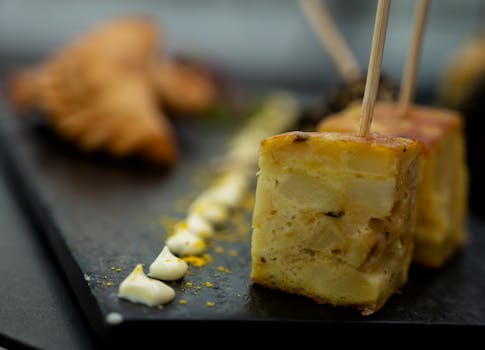
Tortilla Española (Spanish Omelette)
The diets react (see scores below)
Common Ingredients
- potatoes
- onion
- eggs
- olive oil
- salt
- black pepper
- garlic
- parsley
Specific recipes may vary.
Incompatible with 4 of 11 diets
Diet Ratings
Tortilla Española is fundamentally built around potatoes, a starchy vegetable with very high net carbs (~15-17g net carbs per 100g). A standard serving of this dish contains a substantial portion of potato, easily pushing 30-50g of net carbs per serving from the potatoes alone — which can exhaust or exceed an entire day's keto carb budget in a single meal. While eggs and olive oil are excellent keto foods, and onion, garlic, and parsley contribute only minor carbs, the potato base makes this dish incompatible with ketosis in its traditional form. There is no meaningful way to reduce the potato content and still have an authentic Tortilla Española.
Tortilla Española is built around eggs as its primary structural ingredient — they are not incidental but essential to the dish. Eggs are an animal product excluded from all mainstream vegan frameworks. There is no ambiguity here: the dish cannot exist in its traditional form without eggs. The remaining ingredients (potatoes, onion, olive oil, salt, black pepper, garlic, parsley) are all plant-based, but they are secondary components in a fundamentally egg-based preparation.
Tortilla Española sits in a gray area for paleo. The eggs and olive oil are paleo-approved, and onion, garlic, parsley, and black pepper are all unproblematic. The two sticking points are white potatoes and salt. White potatoes are a long-standing debate: Loren Cordain originally excluded them due to glycoalkaloid content and high glycemic index, while modern paleo practitioners like Mark Sisson and the Whole30 protocol have since accepted them. Salt is listed as an avoid under strict paleo rules (no added salt), though many practical paleo followers use it in moderation. Neither issue is trivial — this dish is built around potatoes as its primary carbohydrate base, and salt is explicitly called for. The overall profile is otherwise clean: no grains, no legumes, no dairy, no seed oils, no processed ingredients.
Strict Cordain-school paleo would flag white potatoes for their saponins and high glycemic load, and would also exclude added salt entirely, pushing this dish toward avoid. Conversely, more permissive modern paleo frameworks (Whole30, Mark Sisson's Primal Blueprint) accept both white potatoes and moderate salt use, which would push this closer to an approve.
Tortilla Española is a traditional Spanish dish with a largely Mediterranean-compatible ingredient profile. Potatoes, onion, garlic, parsley, and extra virgin olive oil are all wholesome, plant-based components fully aligned with Mediterranean principles. Eggs are the primary protein, which the Mediterranean diet allows in moderate amounts (a few servings per week). The dish is minimally processed, contains no refined grains, added sugars, or red meat, and uses olive oil as the cooking fat — a hallmark of Mediterranean cooking. However, eggs are classified as a moderate/occasional food rather than a dietary staple, and the dish is egg-centric, which places it in the 'caution' category rather than a full approval. The overall dish is nutritious and represents an authentic Mediterranean culinary tradition, earning a solid score within the caution range.
Some Mediterranean diet authorities, particularly those referencing traditional Spanish and broader Iberian dietary patterns, would consider Tortilla Española an approvable staple, arguing that eggs combined with plant-based ingredients represent a nutrient-dense, whole-food meal well within traditional Mediterranean eating habits. Modern clinical guidelines such as those from the PREDIMED study do not strictly limit egg consumption and may support a higher rating for this dish.
Tortilla Española is fundamentally incompatible with the carnivore diet. While eggs are a carnivore-approved ingredient, the dish is dominated by potatoes and onion — both plant foods that are strictly excluded. Olive oil is a plant-derived oil (excluded), and garlic and parsley are plant-based seasonings also off-limits. Black pepper, while debated, is a plant spice. Only the eggs and salt are carnivore-compatible. The dish cannot be modified in any meaningful way while retaining its identity — the potatoes and onion are structural to the recipe. This is essentially a potato-and-egg dish with a plant oil base, making it a clear avoid.
Tortilla Española is a classic Spanish omelette made with potatoes, onion, eggs, and olive oil — all of which are fully compliant Whole30 ingredients. The additional seasonings (salt, black pepper, garlic, parsley) are also explicitly allowed. There are no excluded ingredients whatsoever: no grains, no legumes, no dairy, no added sugars, no alcohol. This is a whole-food dish built on eggs, vegetables, and a natural fat, which sits squarely within the Whole30 framework.
Tortilla Española as traditionally prepared contains two high-FODMAP ingredients that make it unsuitable during the elimination phase: onion and garlic. Onion is one of the highest-fructan foods tested by Monash University and is high-FODMAP at virtually any culinary quantity — even small amounts used in cooking can trigger symptoms. Garlic is similarly among the highest-fructan foods and must be strictly avoided during elimination. These are not trace additions; they are core flavoring ingredients in this dish. The remaining ingredients are low-FODMAP: eggs (approve), potatoes (low-FODMAP at ~75g per Monash), olive oil (low-FODMAP), salt, black pepper, and parsley are all safe. However, the onion and garlic alone disqualify the dish as prepared for the elimination phase.
Tortilla Española contains several DASH-friendly ingredients — potatoes (good source of potassium), onion, garlic, parsley, and olive oil (a DASH-approved vegetable oil) — alongside eggs, which are the primary protein source. The main considerations are: (1) Eggs: historically DASH limited whole eggs due to cholesterol concerns, though the 2020-2025 Dietary Guidelines dropped the 300mg/day cholesterol cap, and most current DASH-oriented clinicians allow eggs in moderation; a typical tortilla uses 4-6 eggs for a dish serving 4 people, which is manageable. (2) Olive oil: DASH-approved, but traditional recipes use a generous amount (often 1/2 cup or more) for frying the potatoes, increasing calorie density and total fat — though this is unsaturated fat, portion control matters. (3) Sodium: salt is added but the dish contains no processed high-sodium ingredients, making sodium relatively controllable compared to many egg dishes. (4) Potatoes are a moderate-GI starchy vegetable, acceptable in DASH but not a top-tier choice compared to non-starchy vegetables. Overall, this is a moderately DASH-compatible dish that works well in controlled portions, particularly if olive oil is used conservatively and salt is minimized.
NIH DASH guidelines historically emphasized limiting eggs due to dietary cholesterol and fat content, which would push this dish lower. However, updated clinical interpretation following the 2020-2025 Dietary Guidelines — which removed the strict cholesterol cap — suggests eggs in moderate quantities (as found in a single serving of tortilla) are acceptable within a DASH framework, and some DASH practitioners now consider this dish a reasonable lean-protein option given its whole-food, minimally processed ingredients.
Tortilla Española is a classic Spanish dish that presents a mixed Zone Diet profile. The eggs provide excellent lean protein and healthy fats, and olive oil is an ideal monounsaturated fat — both are strong Zone-favorable ingredients. However, potatoes are explicitly listed as an 'unfavorable' high-glycemic carbohydrate in Dr. Sears' Zone framework, classified alongside corn and bananas as carbs to avoid due to their high glycemic load. Potatoes are the primary carbohydrate source in this dish, which is the central Zone concern. That said, the dish is not categorically off-limits: a smaller portion of tortilla paired with a large low-glycemic vegetable side (leafy greens, peppers, tomatoes) could bring the overall meal closer to Zone ratios. The eggs and olive oil are genuinely ideal Zone components, so the dish is rescuable with portion control and smart pairing — it just cannot stand alone as a Zone-compliant meal. The protein-to-fat ratio from eggs and olive oil is actually quite favorable, so the main corrective action is reducing potato quantity and supplementing with low-GI vegetables.
Some Zone practitioners and later Sears writings take a more nuanced view of potatoes in context: when potatoes are used in modest quantity within an egg-dominant dish (rather than as a standalone starch), the overall glycemic load of the meal may be moderated by the protein and fat content of the eggs and olive oil. In this interpretation, a small serving of tortilla with added vegetables could be considered a workable Zone meal rather than an unfavorable one.
Tortilla Española is a simple, whole-food dish with a largely neutral-to-moderate anti-inflammatory profile. Extra virgin olive oil is a standout anti-inflammatory ingredient, rich in oleocanthal and monounsaturated fats, and is used generously in authentic preparation. Onion, garlic, and parsley contribute meaningful anti-inflammatory polyphenols and flavonoids. Eggs are a moderate-category food in the anti-inflammatory framework — they provide choline, selenium, and lutein, but also contain arachidonic acid, a precursor to pro-inflammatory eicosanoids. Potatoes are a neutral starchy whole food; they are not inherently pro-inflammatory when prepared in olive oil rather than fried in seed oils, and they contain vitamin C and potassium, though they lack the fiber density of legumes or whole grains. The dish has no processed ingredients, refined sugars, trans fats, or additives. The overall profile is wholesome and Mediterranean in character, consistent with the anti-inflammatory diet's Mediterranean foundation, but it lacks omega-3-rich proteins, strong antioxidant vegetables, or concentrated polyphenol sources that would push it into 'approve' territory. It is an acceptable, moderately anti-inflammatory meal rather than an optimized one.
Eggs are the main point of contention: some anti-inflammatory practitioners flag arachidonic acid in egg yolks as potentially pro-inflammatory, particularly for individuals with autoimmune conditions, while others — including Dr. Weil — consider whole eggs acceptable in moderation given their nutrient density and the lack of strong evidence linking moderate egg consumption to elevated inflammatory markers in healthy individuals. Additionally, nightshade-aware protocols (e.g., AIP) would flag potatoes as potentially problematic for autoimmune-sensitive individuals, though mainstream anti-inflammatory nutrition does not restrict them.
Tortilla Española is a mixed profile for GLP-1 patients. Eggs provide solid protein (roughly 18-21g for a standard 3-egg serving) and are easy to digest, making them a GLP-1-friendly base. Olive oil is a preferred unsaturated fat, but traditional recipes use a substantial amount — often 1/4 to 1/2 cup to slow-cook the potatoes — which significantly raises the fat content per serving and may worsen nausea, bloating, or reflux. Potatoes add digestible carbohydrates and some fiber but are relatively low in nutrient density per calorie compared to non-starchy vegetables. The dish is not fried in the deep-fry sense and is easy to digest when made with moderate oil. Portion size matters considerably: a small wedge is quite manageable; a large slice pushes fat and carbohydrate loads higher. The dish has no fiber-rich vegetables beyond onion, so fiber contribution is low. Overall it is acceptable in moderation — a small portion works well as part of a balanced GLP-1 meal — but the oil-heavy traditional preparation and starchy base prevent a full approval.
Some GLP-1-focused dietitians view eggs-plus-olive-oil combinations favorably as the fat is unsaturated and satiating in small amounts, and would rate this higher if prepared with a reduced-oil technique. Others caution that the high total fat per serving, even from quality sources, is a consistent trigger for GLP-1 GI side effects and recommend patients avoid olive-oil-heavy dishes regardless of fat type, particularly in the first months of treatment.
*See how scores were generated at our methodology page.
Nutritional profile
Six traits that cut across every diet.
Fiber & Plants
How much whole-plant food and fiber it delivers.
Healthy Fats
The quality of its fats (unsaturated, omega-3).
Whole / Unprocessed
How close it is to its natural, unprocessed form.
Gut Gentle
How easy it is on digestion (low FODMAP, few irritants).
Low Glycemic
How little it spikes your blood sugar.
Protein Density
How much protein it packs per calorie.
Controversy Index
Higher controversy = more disagreement between diets.
Diet-Specific Tips
 Paleo — 4/10
View tips
- White potatoes are debated in paleo — excluded by Cordain but accepted by Whole30 and Mark Sisson
- Added salt is discouraged under strict paleo guidelines
- Eggs are fully paleo-approved and form the structural base
- Olive oil is a preferred paleo fat — no seed oils present
- Onion, garlic, parsley, and black pepper are all paleo-compliant
- No grains, legumes, dairy, or processed ingredients
- Dish is built around potatoes as the primary carb, making potato stance pivotal to verdict
 Mediterranean — 6/10
View tips
- Eggs are the primary protein — moderate consumption is permitted but not a daily staple under most Mediterranean guidelines
- Extra virgin olive oil used as the cooking fat — strongly aligned with Mediterranean principles
- Potatoes, onion, garlic, and parsley provide plant-based nutritional value
- No red meat, processed ingredients, refined grains, or added sugars
- Authentic traditional Spanish dish with deep Mediterranean culinary roots
- Egg quantity per serving may be relatively high depending on portion size
 Whole30 — 9/10
View tips
- Eggs are a core Whole30-approved protein
- Potatoes are fully allowed on Whole30 (no potato exclusion in current rules)
- Olive oil is an approved natural fat
- Onion, garlic, and parsley are compliant vegetables/herbs
- Salt and black pepper are explicitly allowed seasonings
- No excluded ingredients present in any form
 DASH — 5/10
View tips
- Eggs as primary protein — moderate cholesterol concern per traditional DASH, but acceptable in portion-controlled servings under updated guidelines
- Olive oil is DASH-approved but quantity used in traditional preparation is high — calorie density warrants portion control
- Potatoes provide potassium but are starchy; non-starchy vegetables would score higher
- No processed or high-sodium ingredients — salt content is user-controlled, a DASH advantage
- Garlic, onion, and parsley contribute antioxidants and flavor, reducing need for added salt
- Saturated fat content is low given olive oil base — favorable for cardiovascular health vs. butter- or lard-cooked alternatives
 Zone — 5/10
View tips
- Potatoes are explicitly 'unfavorable' high-glycemic carbs in Zone Diet — the primary concern
- Eggs are ideal Zone protein: lean, complete amino acid profile, ~7g protein per egg fitting block structure well
- Olive oil is the ideal Zone fat source — monounsaturated, anti-inflammatory
- Onion, garlic, and parsley are low-glycemic, Zone-favorable carb contributors
- Dish is rescuable: smaller potato portions + large low-GI vegetable side can approximate Zone ratios
- No processed ingredients, trans fats, or seed oils — clean whole-food base
- Whole eggs include yolk fat (some saturated), but Sears' later work accepts this in moderation
 Anti-Inflammatory — 6/10
View tips
- Extra virgin olive oil is a core anti-inflammatory fat (oleocanthal, monounsaturated fats)
- Garlic and onion provide quercetin and organosulfur anti-inflammatory compounds
- Parsley adds flavonoids and vitamin C
- Eggs are moderate — contain beneficial micronutrients but also arachidonic acid
- Potatoes are a neutral whole-food starch with no refined processing
- No processed ingredients, seed oils, trans fats, or added sugars
- Lacks omega-3-rich protein or concentrated antioxidant vegetables for a higher score
 GLP-1 Friendly — 5/10
View tips
- Moderate protein from eggs (~18-21g per standard serving) supports GLP-1 protein priority
- High olive oil volume in traditional preparation raises total fat per serving, risking nausea and bloating
- Olive oil is an unsaturated fat — preferred fat type, partially mitigating concern
- Potatoes add digestible carbs but low fiber and low nutrient density per calorie
- No high-fiber vegetables present — fiber contribution is minimal
- Small portion friendliness: a small wedge is manageable; a large slice is not ideal
- Easy digestibility when oil is moderate — not fried or heavily greasy if home-prepared carefully
- Preparation method matters significantly — oil-reduced versions score meaningfully better