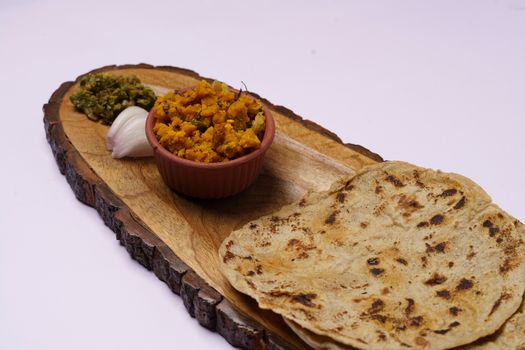
Photo: Kunal Lakhotia / Pexels
Caribbean
Trinidadian Roti with Curry
The diets react (see scores below)
Common Ingredients
- roti
- chicken
- Trinidadian curry powder
- potatoes
- onion
- garlic
- Scotch bonnet
- cumin
Specific recipes may vary.
Incompatible with 6 of 11 diets
Diet Ratings
Trinidadian Roti with Curry is fundamentally incompatible with a ketogenic diet due to two major high-carb components: the roti flatbread (made from wheat flour, delivering 30-50g+ net carbs per serving) and the potatoes included in the curry (a starchy vegetable with ~15-20g net carbs per 100g). Together, these two ingredients alone would far exceed the daily 20-50g net carb limit in a single meal. While the curried chicken or goat protein, aromatics (onion, garlic, Scotch bonnet), and spices (curry powder, cumin) are generally keto-friendly, the dish's structural foundations — roti and potato — make it impossible to consume in any meaningful portion without breaking ketosis. Modifications (removing roti, substituting cauliflower for potato) would create an entirely different dish.
Trinidadian Roti with Curry as described contains chicken or goat as the primary protein — both are animal flesh and unambiguously excluded from a vegan diet. The remaining ingredients (roti, curry powder, potatoes, onion, garlic, Scotch bonnet, cumin) are all plant-based, but the presence of meat makes the dish non-vegan. A vegan adaptation is entirely possible by substituting the meat with chickpeas, tofu, or additional vegetables, which is a common preparation in Trinidad as well.
Trinidadian Roti with Curry is fundamentally incompatible with the Paleo diet. The defining element of this dish — roti — is a flatbread made from wheat flour, a grain that is strictly excluded from Paleo. Beyond the roti itself, Trinidadian curry powder often contains added salt and may include legume-based fillers, and the dish traditionally incorporates potatoes (a debated ingredient at best). The chicken, onion, garlic, Scotch bonnet pepper, and cumin are all Paleo-approved ingredients, but they are minor considerations given that the dish's entire structural identity revolves around a grain-based bread. Even if the curry filling were prepared on its own, the dish as presented cannot be considered Paleo.
Trinidadian Roti with Curry has a mixed Mediterranean diet profile. The positive elements include legume/vegetable-forward ingredients like potatoes, onion, garlic, and aromatic spices (cumin, curry powder, Scotch bonnet) that align well with Mediterranean principles. Chicken as the primary protein is acceptable in moderation (poultry is a 'caution' tier food). However, goat as an alternative protein pushes toward red meat territory, which is limited in the Mediterranean diet. The roti itself is a refined flatbread, not a whole grain, which conflicts with the preference for whole grains. The dish is not cooked in olive oil as the primary fat, which is a departure from core Mediterranean practice. Overall, this is a flavorful, largely plant-forward dish that falls short mainly due to the refined grain in the roti and the non-olive oil cooking fat typically used.
Some Mediterranean diet practitioners would argue the rich spice profile, vegetable base, and lean protein make this dish broadly compatible when chicken is chosen and olive oil is substituted for cooking fat. Others note that the refined roti wrapper is a meaningful red flag, and that traditional Mediterranean whole grain flatbreads (like pita from whole wheat) would be preferable.
Trinidadian Roti with Curry is fundamentally incompatible with the carnivore diet. The dish is built around roti, a flatbread made from wheat flour — a plant-based grain that is strictly excluded. Beyond the roti, the majority of the remaining ingredients are also plant-derived: potatoes (starchy vegetable), onion, garlic, Scotch bonnet pepper, cumin, and curry powder (a blend of multiple plant-based spices). While the protein source (chicken or goat) is carnivore-compatible, it represents only a fraction of the dish, and it is prepared in a context entirely dominated by excluded plant foods. There is no meaningful adaptation possible here — this is a plant-forward dish at its core.
Trinidadian Roti with Curry is not Whole30 compatible. The central component — roti — is a flatbread made from wheat flour (or sometimes split peas/chickpea flour in the case of dhalpuri or paratha roti), both of which are explicitly excluded on Whole30: wheat is a grain, and chickpea/split pea is a legume. Beyond the grain/legume issue, roti also falls squarely into the Rule 4 prohibition against recreating baked goods, breads, wraps, and tortillas, even if a compliant flour were hypothetically used. The curry filling itself (chicken or goat, potatoes, onion, garlic, Scotch bonnet, cumin, Trinidadian curry powder) could potentially be made Whole30-compliant if the curry powder contains no non-compliant additives, but the roti wrapper is the defining and disqualifying element of this dish.
Trinidadian Roti with Curry contains multiple high-FODMAP ingredients that make it unsuitable during the elimination phase. The roti itself is traditionally made from wheat flour, which is high in fructans — a major FODMAP. Onion and garlic are among the highest-FODMAP foods tested by Monash University, both rich in fructans, and they are core flavor foundations of this dish, not minor garnishes. These two ingredients alone would disqualify the dish. Additionally, Trinidadian curry powder blends often contain onion and garlic powder, compounding the fructan load. While chicken, potatoes, Scotch bonnet pepper, and cumin are low-FODMAP, the structural components — wheat roti, onion, and garlic — make this dish high-FODMAP at any standard serving size. Adaptation (gluten-free roti, garlic-infused oil instead of garlic, elimination of onion) could make a modified version tolerable, but the traditional dish as described is not suitable for FODMAP elimination.
Trinidadian Roti with Curry contains several DASH-compatible elements — lean chicken (if used), potatoes, onion, garlic, and spices like cumin and curry powder are all acceptable or encouraged. However, goat meat is a red meat that DASH guidelines recommend limiting due to its saturated fat content. The roti itself is typically made from refined white flour, which DASH de-emphasizes in favor of whole grains, and is often cooked with oil or ghee, adding saturated fat. Traditional preparation can also accumulate significant sodium depending on seasoning amounts. The dish is not inherently high in sodium from processed sources, which is a positive, but the refined grain base, potential red meat choice, and cooking fats push it into caution territory. With modifications — whole wheat roti, chicken instead of goat, minimal added fat, and controlled sodium — this dish can be made more DASH-compatible.
NIH DASH guidelines explicitly recommend limiting red meat and refined grains, which apply to goat and white-flour roti respectively. However, some DASH-oriented clinicians note that when goat is consumed in small portions as part of a vegetable- and legume-rich dish, the overall dietary pattern may still align with DASH principles, and recent nutritional science suggests saturated fat context within a whole meal matters more than individual food exclusion.
Trinidadian Roti with Curry presents a mixed Zone profile. The protein component (chicken) is excellent — lean, Zone-favorable, and easy to portion to 25g per meal. The curry spices (turmeric, cumin, coriander base) are anti-inflammatory and polyphenol-rich, aligning well with Sears' later anti-inflammatory emphasis. However, the dish has two significant Zone challenges: (1) Roti is made from refined wheat flour, placing it in the 'unfavorable' carbohydrate category — high-glycemic, low in fiber, and likely to spike insulin. (2) Potatoes are explicitly listed by Sears as an unfavorable, high-glycemic vegetable to minimize. Together, roti + potatoes create a carbohydrate double-problem: both are starchy, high-glycemic, and low in fiber. The 40/30/30 ratio could theoretically be achieved with very small roti portions and modest potato amounts, but in traditional serving sizes this dish is carbohydrate-heavy and glycemically problematic. Goat as a protein alternative is higher in saturated fat than chicken but still leaner than beef, making it Zone-acceptable in moderate portions. The onion, garlic, and Scotch bonnet are Zone-favorable low-glycemic carb contributors. To make this Zone-compatible, one would need to significantly reduce roti portion, eliminate or minimize potatoes, and increase the vegetable base — essentially modifying the dish substantially from its traditional form.
Some Zone practitioners following Sears' later works (The Anti-Inflammation Zone, The Mediterranean Zone) may give more credit to the dish's polyphenol-rich spice profile and argue that small portions of roti alongside generous curry vegetables and lean chicken can be Zone-balanced. Additionally, if buss-up-shut roti is replaced with a whole wheat or spinach roti variant, the glycemic load improves. The curry powder's anti-inflammatory compounds (curcumin from turmeric) are explicitly valued in Sears' later anti-inflammatory framework, which could nudge the assessment slightly more favorable.
Trinidadian Roti with Curry is a mixed dish from an anti-inflammatory standpoint. On the positive side, it contains several strongly anti-inflammatory ingredients: Trinidadian curry powder typically includes turmeric (curcumin), cumin, coriander, and other spices with well-documented anti-inflammatory properties. Garlic, onion, and Scotch bonnet peppers (capsaicin) are also anti-inflammatory. Chicken is a lean protein acceptable in moderation. Potatoes offer some nutrients but are a high-glycemic carbohydrate. The main concern is the roti wrapper itself — typically made from refined white flour, which is a refined carbohydrate that can spike blood sugar and promote inflammation when consumed regularly. If goat is used as the protein, it is a lean red meat that falls in the 'limit' category. The dish as traditionally prepared is not a processed food, which is a point in its favor. Overall, the spice profile is genuinely anti-inflammatory, but the refined flour roti and starchy potato base temper the overall rating considerably.
Some anti-inflammatory practitioners would rate this more favorably, emphasizing the cumulative effect of turmeric, cumin, garlic, and chili as potent anti-inflammatory agents — Dr. Weil's pyramid strongly endorses these spices, and whole-food curry dishes feature prominently in Mediterranean and Asian anti-inflammatory eating patterns. Conversely, stricter low-glycemic anti-inflammatory approaches (such as those advocated by Dr. David Ludwig or the glycemic-load-aware version of the anti-inflammatory diet) would rate this lower due to the refined flour roti and potato combination driving a significant glycemic load.
Trinidadian roti with curry is a culturally rich dish that presents a mixed nutritional profile for GLP-1 patients. The chicken version offers meaningful protein (20-30g per serving depending on portion), but the goat version introduces higher saturated fat content and can be harder to digest. The roti itself is a refined-flour flatbread — low in fiber, moderately calorie-dense, and not particularly nutrient-dense per calorie, which is a significant drawback given reduced appetite on GLP-1 medications. Potatoes add starchy carbohydrates with modest fiber but limited protein value. The Scotch bonnet pepper is a serious concern: it is one of the hottest chili peppers commonly used in cooking and may significantly worsen GLP-1-associated nausea, acid reflux, and GI discomfort. Trinidadian curry powder and cumin are generally well-tolerated and offer anti-inflammatory benefits. The dish is typically prepared with oil or ghee, adding fat that can worsen bloating and reflux via slowed gastric emptying. The overall fat load, refined carbohydrate base, high spice heat, and portion size make this a cautionary dish rather than an approve — though the chicken version with a small roti portion and Scotch bonnet minimized or omitted could be made more GLP-1-compatible.
Some GLP-1-focused dietitians would note that individual spice tolerance varies considerably — patients who regularly consumed spicy food prior to starting GLP-1 therapy may tolerate Scotch bonnet better than naive users, and the dish should not be universally avoided on that basis alone. Others would argue the chicken curry component, stripped of excess roti, is a reasonable protein-forward meal, and that cultural food preservation matters for long-term dietary adherence — a clinically relevant consideration that rigid scoring can underweight.
*See how scores were generated at our methodology page.
Nutritional profile
Six traits that cut across every diet.
Fiber & Plants
How much whole-plant food and fiber it delivers.
Healthy Fats
The quality of its fats (unsaturated, omega-3).
Whole / Unprocessed
How close it is to its natural, unprocessed form.
Gut Gentle
How easy it is on digestion (low FODMAP, few irritants).
Low Glycemic
How little it spikes your blood sugar.
Protein Density
How much protein it packs per calorie.
Controversy Index
Higher controversy = more disagreement between diets.
Diet-Specific Tips
 Mediterranean — 5/10
View tips
- Roti is a refined flatbread, not a whole grain — conflicts with Mediterranean grain preferences
- Chicken is acceptable in moderation; goat (red meat) would lower the score further
- Potatoes, onion, garlic, and Scotch bonnet are plant-forward Mediterranean-compatible ingredients
- Cumin and curry spices are not traditional Mediterranean but align with the diet's emphasis on herbs and aromatics
- Cooking fat is typically ghee or oil other than olive oil — a departure from Mediterranean principles
- No added sugars or heavily processed ingredients — a positive
 DASH — 5/10
View tips
- Roti typically made from refined white flour — DASH prefers whole grains
- Goat meat is red meat, limited under DASH guidelines; chicken is the more DASH-compatible protein choice
- Curry spices (cumin, Scotch bonnet, garlic, onion) are DASH-neutral or beneficial
- Potatoes provide potassium, a key DASH nutrient, but are high glycemic
- No inherently high-sodium processed ingredients, though added salt in preparation is a variable
- Oil or ghee used in roti preparation adds saturated fat
- Whole wheat roti and chicken selection would significantly improve DASH compatibility
 Zone — 4/10
View tips
- Refined white flour roti is an unfavorable high-glycemic carbohydrate per Zone guidelines
- Potatoes are explicitly listed by Dr. Sears as an unfavorable, high-GI vegetable to avoid
- Chicken is an ideal Zone lean protein — favorable and easy to block
- Curry spices (turmeric, cumin) are polyphenol-rich and anti-inflammatory — aligns with Sears' later work
- Goat meat is leaner than beef but higher in saturated fat than chicken — acceptable in moderation
- Onion, garlic, Scotch bonnet are low-glycemic, Zone-favorable carb contributors
- Traditional serving sizes are carbohydrate-heavy, making the 40/30/30 ratio difficult to achieve without significant modification
 Anti-Inflammatory — 5/10
View tips
- Turmeric and cumin in curry powder are potent anti-inflammatory spices (curcumin, terpenoids)
- Garlic and onion provide anti-inflammatory allicin and quercetin
- Scotch bonnet pepper contributes capsaicin, a known anti-inflammatory compound
- Roti made from refined white flour is a pro-inflammatory refined carbohydrate
- Potatoes add glycemic load alongside the refined flour base
- Chicken (lean poultry) is acceptable in moderation; goat is a lean red meat in the 'limit' category
- No processed ingredients, trans fats, or artificial additives — a significant positive
- Overall spice-forward profile partially offsets the refined carbohydrate base
 GLP-1 Friendly — 4/10
View tips
- Scotch bonnet pepper is extremely high heat and likely to worsen GLP-1-related nausea, reflux, and GI distress
- Roti is a refined-flour flatbread — low fiber, low nutrient density per calorie, not ideal for reduced-appetite eating
- Chicken version provides reasonable protein (20-30g); goat version adds saturated fat and digestive burden
- Potatoes contribute starchy carbohydrates with limited fiber and protein payoff
- Oil or ghee used in preparation increases fat load, worsening potential for bloating and reflux
- Curry spices (cumin, Trinidadian curry powder) are generally well-tolerated and nutritionally neutral to positive
- Portion-sensitive: a small serving of chicken curry with minimal roti is far more GLP-1-compatible than a full traditional portion
- Goat meat variant scores lower due to higher saturated fat and tougher digestibility