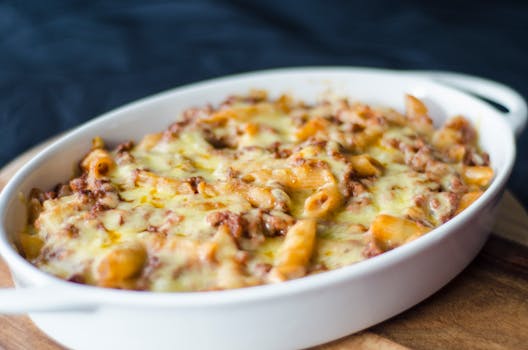
Photo: Ronmar Lacamiento / Pexels
American
Tuna Casserole
The diets react (see scores below)
Common Ingredients
- canned tuna
- egg noodles
- cream of mushroom soup
- frozen peas
- milk
- cheddar cheese
- breadcrumbs
- butter
Specific recipes may vary.
Incompatible with 7 of 11 diets
Diet Ratings
Tuna Casserole is fundamentally incompatible with ketogenic eating. The dish is built around multiple high-carb ingredients that collectively deliver a massive carbohydrate load. Egg noodles are a grain-based pasta with roughly 30-40g net carbs per cup. Cream of mushroom soup (canned) typically contains starch thickeners and added sugars, contributing additional carbs. Breadcrumbs on top add yet another grain-based carb source. Frozen peas, while a vegetable, are starchy and carb-dense compared to keto-friendly greens. Milk also adds sugars (lactose). While tuna, cheddar cheese, and butter are keto-friendly components, they are overwhelmed by the carbohydrate-heavy base of this classic casserole. A standard serving would easily exceed the entire daily net carb allowance for ketosis.
Tuna Casserole contains multiple animal products that are explicitly excluded under vegan dietary rules. Canned tuna is fish (an animal product), egg noodles contain eggs, milk and cheddar cheese are dairy products, and butter is an animal-derived fat. This dish is fundamentally built around animal ingredients — there is no version of this classic recipe that is vegan without replacing virtually every core component.
Tuna Casserole is fundamentally incompatible with the Paleo diet. Nearly every ingredient beyond the tuna itself violates core Paleo principles. Egg noodles are a grain-based pasta. Cream of mushroom soup is a heavily processed product typically containing wheat flour, dairy, and additives. Frozen peas are legumes. Milk and cheddar cheese are dairy. Breadcrumbs are a grain product. Even the butter is dairy-derived. Only the canned tuna (a borderline-acceptable processed form of an otherwise Paleo food) has any defensible standing, and even canned tuna may contain added salt or oils. This dish is a cascade of avoid-category ingredients with no meaningful Paleo-compliant base.
While tuna is a Mediterranean-approved protein, this casserole is built around ingredients that fundamentally contradict Mediterranean diet principles. Egg noodles are refined grains, cream of mushroom soup is a highly processed ingredient loaded with sodium and additives, butter replaces olive oil as the fat source, and cheddar cheese adds significant saturated fat. The dish is a classic American comfort food assembled almost entirely from processed pantry staples with no whole grains, minimal vegetables, and no olive oil. The tuna content is the only redeeming element, but it is insufficient to offset the heavily processed, refined, and dairy-fat-laden profile of the dish as a whole.
Tuna Casserole is fundamentally incompatible with the carnivore diet. While canned tuna is an acceptable animal protein, the dish is dominated by plant-based and processed ingredients that are strictly excluded. Egg noodles and breadcrumbs are grain-based carbohydrates — two of the most prohibited food categories. Cream of mushroom soup contains mushrooms (fungi), starches, and processed additives. Frozen peas are a legume/plant food. Milk and cheddar cheese are debated dairy items, but they are entirely overshadowed by the multiple forbidden plant-derived components. Butter is carnivore-approved, and the tuna itself is acceptable, but these two ingredients cannot redeem a dish that is structurally built around grains, vegetables, and processed soups. There is no version of this dish, as described, that approaches carnivore compatibility without a near-total reconstruction.
Tuna Casserole contains multiple excluded ingredients that make it firmly non-compliant with Whole30. Egg noodles are a grain-based pasta (excluded under grains/no pasta rule). Cream of mushroom soup typically contains wheat flour, dairy, and often MSG or other additives. Milk and cheddar cheese are dairy (excluded). Breadcrumbs are a grain product (excluded). Butter is excluded dairy (only ghee/clarified butter is allowed). Even setting aside the individual excluded ingredients, this dish as a whole falls squarely into the 'comfort food recreation' category that Whole30 explicitly prohibits. There is virtually no pathway to making this dish Whole30-compliant without fundamentally changing what it is.
Tuna Casserole as traditionally made contains multiple high-FODMAP ingredients that stack together to make this dish clearly unsuitable during the elimination phase. Egg noodles are made from wheat flour, which is high in fructans — a primary FODMAP concern. Cream of mushroom soup is doubly problematic: mushrooms are high in polyols (mannitol), and the soup base typically contains onion and garlic (fructans), along with wheat as a thickener. Frozen peas become high-FODMAP at standard serving sizes (above ~1/4 cup), and a typical casserole portion will exceed this. Milk contains lactose, a disaccharide that must be restricted during elimination. Even the breadcrumb topping is wheat-based, adding further fructan load. Canned tuna and butter are low-FODMAP and safe. Cheddar cheese, being an aged hard cheese, is also low-FODMAP due to minimal residual lactose. However, the combination of wheat noodles, cream of mushroom soup (onion, garlic, mushrooms, wheat), peas, and milk creates a multi-FODMAP burden that makes this dish a clear avoid during the elimination phase. Significant recipe modifications — gluten-free noodles, lactose-free milk, homemade low-FODMAP mushroom-free or oyster mushroom cream sauce without onion/garlic, and limiting peas — would be required to make this dish compatible.
Tuna casserole contains several DASH-compatible elements — canned tuna is a lean protein source, peas provide fiber and potassium, and milk adds calcium. However, the dish is significantly undermined by multiple high-sodium and high-saturated-fat components. Cream of mushroom soup (a standard can contains ~800-900mg sodium) is the primary offender, making it extremely difficult to fit this dish into DASH sodium limits (<2,300mg/day, or especially <1,500mg/day). Full-fat cheddar cheese adds saturated fat and additional sodium. Butter contributes saturated fat. Egg noodles are refined carbohydrates (not whole grain). Breadcrumbs can add further sodium. As traditionally prepared, this dish likely delivers 900-1,200mg+ sodium per serving, representing 40-80% of the DASH daily sodium budget in a single serving. The dish can be substantially improved by substituting low-sodium cream of mushroom soup, reducing or eliminating cheddar, using whole wheat noodles, and replacing butter with olive oil — but as commonly prepared, it warrants caution.
Tuna casserole has one genuinely Zone-friendly element — canned tuna is an excellent lean protein source, rich in omega-3s and perfectly aligned with Zone protein block principles. However, the rest of the dish is largely problematic. Egg noodles are a high-glycemic refined carbohydrate that Sears classifies as 'unfavorable,' delivering a rapid glucose spike with poor fiber buffering. Cream of mushroom soup is a processed, sodium-heavy ingredient loaded with refined starches and often containing trans-fat-adjacent hydrogenated oils. Breadcrumbs add more refined carbs on top of an already carb-heavy base. Cheddar cheese and butter contribute saturated fat rather than the preferred monounsaturated fats. Milk adds some carb load. The macronutrient ratio skews heavily toward carbohydrates (refined) with significant saturated fat and insufficient favorable fat sources — essentially the opposite of a Zone-balanced plate. Frozen peas are the one vegetable present and are a reasonable low-glycemic carb, but they're a minor component. A Zone practitioner could theoretically reconstruct this dish — substituting zucchini noodles or reducing egg noodle portion dramatically, using olive oil instead of butter, and reducing cheese — but as traditionally prepared, the dish requires substantial modification to approach Zone balance. It rates as 'caution' rather than 'avoid' because the tuna protein core is genuinely favorable and the dish is not pure junk food, but it is a poor Zone meal as written.
Tuna casserole presents a genuinely mixed anti-inflammatory profile. On the positive side, canned tuna is a legitimate source of omega-3 fatty acids (EPA and DHA), making it a beneficial protein within anti-inflammatory frameworks — though canned tuna contains notably less omega-3 than wild-caught fatty fish like salmon. Frozen peas contribute modest fiber, plant protein, and antioxidants. However, the surrounding ingredients largely undermine these benefits. Egg noodles are refined carbohydrates with minimal fiber or micronutrient density. Cream of mushroom soup (canned) is typically high in sodium and contains additives, partially negating the anti-inflammatory benefit of mushrooms. Cheddar cheese and butter contribute saturated fat, which anti-inflammatory guidelines recommend limiting. Milk adds modest saturated fat as well. Breadcrumbs add more refined carbohydrate. The overall dish is a processed, butter-and-cheese-enriched casserole built around refined noodles — a comfort food pattern associated with pro-inflammatory dietary patterns — with tuna as the one meaningful anti-inflammatory anchor. The dish is not egregiously harmful (no trans fats, no high-fructose corn syrup, no processed meat), but it falls squarely in 'acceptable occasionally' territory rather than being a dish to emphasize on an anti-inflammatory diet. A healthier reformulation would swap egg noodles for whole grain pasta or cauliflower, use a homemade low-fat mushroom sauce instead of canned soup, reduce cheese, and eliminate butter.
Tuna casserole has a genuinely mixed nutritional profile for GLP-1 patients. The canned tuna is an excellent lean protein source, and frozen peas contribute some fiber and micronutrients. However, the dish is heavily weighted down by problematic ingredients: cream of mushroom soup is high in sodium and saturated fat, cheddar cheese adds significant saturated fat, butter is used in the topping, and egg noodles are refined carbohydrates with low fiber density. The breadcrumb topping adds empty calories. The overall fat content per serving — particularly saturated fat — is likely to worsen GLP-1 side effects like nausea, bloating, and reflux. Gastric emptying is already slowed on these medications, and a creamy, cheesy, starchy dish sits heavily. The protein-to-fat ratio is unfavorable compared to ideal GLP-1 foods. A standard serving delivers moderate protein (roughly 20-25g depending on tuna quantity) but at a high caloric and fat cost. This dish is not categorically off-limits, but its comfort-food format — rich, creamy, starchy, cheesy — runs counter to most of the priority rules. A significantly modified version (reduced-fat soup, less cheese, whole wheat pasta or cauliflower base, more tuna) would rate meaningfully higher.
Some GLP-1-focused dietitians accept dishes like tuna casserole in small portions, emphasizing that the tuna provides meaningful protein and the overall caloric intake may remain low given reduced appetite on these medications. Others argue that the saturated fat load and refined carbohydrate base make it a poor use of limited caloric budget and a likely trigger for GI side effects, particularly in early weeks of GLP-1 therapy.
*See how scores were generated at our methodology page.
Nutritional profile
Six traits that cut across every diet.
Fiber & Plants
How much whole-plant food and fiber it delivers.
Healthy Fats
The quality of its fats (unsaturated, omega-3).
Whole / Unprocessed
How close it is to its natural, unprocessed form.
Gut Gentle
How easy it is on digestion (low FODMAP, few irritants).
Low Glycemic
How little it spikes your blood sugar.
Protein Density
How much protein it packs per calorie.
Controversy Index
Higher controversy = more disagreement between diets.
Diet-Specific Tips
 Mediterranean — 5/10
View tips
- Canned tuna is a legitimate Mediterranean protein source
- Egg noodles are refined grains, not whole grains — contradict Mediterranean principles
- Cream of mushroom soup is highly processed with excess sodium and additives
- Butter used instead of olive oil as primary fat
- Cheddar cheese adds saturated fat beyond moderate dairy guidelines
- No vegetables beyond minimal frozen peas
- No extra virgin olive oil present
- Breadcrumb topping adds further refined grain content
 DASH — 4/10
View tips
- Cream of mushroom soup is extremely high in sodium (~850mg per can), severely straining DASH sodium limits
- Full-fat cheddar cheese adds saturated fat and sodium, both limited on DASH
- Butter contributes saturated fat beyond DASH recommendations
- Egg noodles are refined grain, not whole grain as DASH emphasizes
- Tuna is a DASH-approved lean protein that partially redeems the dish
- Frozen peas contribute fiber, potassium, and plant-based nutrition aligned with DASH
- Low-sodium soup substitution and reduced cheese would significantly improve DASH compatibility
- Single serving likely represents 40-80% of daily DASH sodium allowance
 Zone — 4/10
View tips
- Canned tuna is a high-quality Zone protein source with beneficial omega-3 fatty acids
- Egg noodles are a high-glycemic 'unfavorable' carbohydrate in Zone terminology
- Cream of mushroom soup is heavily processed with refined starches and excess sodium
- Breadcrumbs add additional refined carbohydrate load
- Butter and cheddar cheese skew fat profile toward saturated rather than monounsaturated fat
- Frozen peas are Zone-favorable but a minor component of the dish
- Overall macronutrient ratio is carb-heavy and fat-saturated, misaligned with 40/30/30 Zone target
- Significant recipe modification required to make this a Zone-compatible meal
 Anti-Inflammatory — 4/10
View tips
- Canned tuna provides omega-3 fatty acids (EPA/DHA), a core anti-inflammatory nutrient
- Egg noodles are refined carbohydrates with low fiber — a pro-inflammatory dietary pattern
- Cream of mushroom soup (canned) is high in sodium and additives, offsetting any mushroom benefit
- Cheddar cheese and butter add saturated fat, which anti-inflammatory guidelines advise limiting
- Frozen peas contribute fiber and antioxidants — a small positive
- No trans fats, HFCS, or processed meats present — avoids worst pro-inflammatory ingredients
- Overall dish structure mirrors processed comfort food patterns associated with higher inflammatory markers