This dish contains raw or undercooked ingredients. Consume at your discretion.
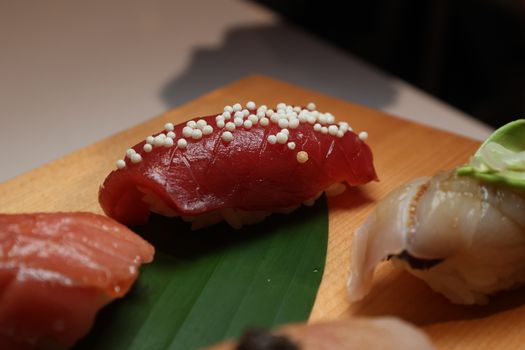
Photo: Kuiyibo Campos / Pexels
Japanese
Tuna Nigiri
The diets react (see scores below)
Common Ingredients
- sushi rice
- sushi-grade tuna
- wasabi
- rice vinegar
- soy sauce
Specific recipes may vary.
Incompatible with 5 of 11 diets
Diet Ratings
Tuna Nigiri is fundamentally incompatible with a ketogenic diet due to its primary ingredient: sushi rice. Sushi rice is a short-grain white rice seasoned with rice vinegar and sugar, making it extremely high in net carbs. A standard serving of 2 pieces of tuna nigiri contains approximately 30-40g of net carbs from the rice alone, which can consume or exceed an entire day's carb budget. While the tuna itself is an excellent keto protein (high protein, omega-3 rich, zero carbs), and wasabi and soy sauce are negligible in carbs, the rice base makes this dish a clear avoid. There is no meaningful way to consume this dish in a keto-compatible form without fundamentally changing it (e.g., substituting cauliflower rice, which would no longer be nigiri).
Tuna Nigiri contains sushi-grade tuna as its primary protein, which is a fish and therefore an animal product. This is a clear violation of vegan dietary principles. The remaining ingredients — sushi rice, wasabi, rice vinegar, and soy sauce — are all plant-based, but the presence of tuna makes the dish definitively non-vegan. There is no meaningful debate within the vegan community on this point: fish is an animal, and consuming it is incompatible with veganism.
Tuna Nigiri is fundamentally incompatible with the paleo diet due to its core ingredients. Sushi rice is a grain and is excluded under strict paleo rules, regardless of its preparation. Rice vinegar, while derived from rice, is also a processed grain product. Soy sauce is a double violation — it contains both soy (a legume) and wheat (a grain), making it firmly off-limits. While the sushi-grade tuna itself is an excellent paleo protein, and wasabi in its pure form (real wasabi root) would be paleo-approved, the foundational components of this dish make it clearly non-compliant. The dish cannot be considered paleo in its traditional form without a complete structural overhaul.
Tuna nigiri features sushi-grade tuna, which is an excellent Mediterranean diet protein — fish and seafood are strongly encouraged 2-3 times weekly. However, the dish is built on sushi rice (white refined rice), which is a refined grain that Mediterranean diet guidelines generally discourage in favor of whole grains. Rice vinegar and wasabi are benign condiments, while soy sauce adds sodium but is not inherently problematic in small amounts. The tuna component is a clear positive, but the refined white rice base prevents a full approval. This is not a traditional Mediterranean dish, and the absence of olive oil, vegetables, or whole grains means it lacks the hallmarks of a Mediterranean meal, though it is not harmful and the fish protein is genuinely valuable.
Some Mediterranean diet practitioners and researchers point out that white rice is a staple in several traditional Mediterranean regions (e.g., parts of Greece, Spain, and the Middle East) and is acceptable in moderation, which would push this dish closer to an approval given the high-quality fish content. Conversely, stricter modern clinical interpretations (e.g., Willett et al., Harvard T.H. Chan School of Public Health) emphasize whole grains exclusively and would score the refined rice more harshly.
Tuna Nigiri is fundamentally incompatible with the carnivore diet. While sushi-grade tuna itself is an excellent carnivore-approved food, the dish as presented contains multiple plant-derived ingredients that disqualify it entirely. Sushi rice is a grain, rice vinegar is plant-derived, wasabi is a plant root, and soy sauce is a fermented soy-and-wheat product — all strictly excluded on carnivore. The dish is essentially a grain-based preparation with fish as a topping rather than a pure animal-product meal.
Tuna Nigiri contains two excluded ingredients. First, sushi rice is a grain (rice), which is explicitly excluded on Whole30. Second, soy sauce contains soy (a legume) and typically wheat (a grain), both of which are excluded. Even if coconut aminos were substituted for soy sauce, the sushi rice alone makes this dish non-compliant. The tuna and wasabi are compliant, and rice vinegar is allowed per Whole30 guidelines, but the foundational element of this dish — the rice — is an excluded grain.
Tuna nigiri is largely low-FODMAP, but soy sauce is the key concern. Traditional soy sauce contains wheat (a source of fructans), making it technically high-FODMAP. However, the quantity used per nigiri piece is very small (a light dip), and fructan levels in such a minimal amount may not trigger symptoms in most people. Sushi rice is made with rice vinegar and a small amount of sugar — rice is low-FODMAP, and rice vinegar is fine. Plain sushi-grade tuna is a protein with no FODMAPs. Wasabi in the trace amounts used as a condiment is generally considered low-FODMAP, though fresh wasabi has not been extensively tested by Monash. The practical risk at a standard restaurant serving of 2–3 nigiri pieces is moderate-low, but the wheat-containing soy sauce prevents a full 'approve' rating during strict elimination.
Monash University rates soy sauce as low-FODMAP at a standard serving (1 tablespoon), as the fructan content after fermentation and dilution is minimal; however, many clinical FODMAP practitioners advise using tamari (wheat-free soy sauce) during the elimination phase to remove all doubt. The standard restaurant-dipping amount of soy sauce is likely below the fructan threshold, but strict eliminators may prefer tamari.
Tuna nigiri has several DASH-positive elements: sushi-grade tuna is an excellent lean protein rich in omega-3 fatty acids, and the portions are inherently small. However, the dish presents notable sodium concerns. Soy sauce is very high in sodium (approximately 900-1,000mg per tablespoon), and even a small dipping amount can contribute significantly toward the DASH daily sodium limit of 2,300mg (or 1,500mg for low-sodium DASH). Sushi rice is typically seasoned with rice vinegar, sugar, and sometimes salt, adding moderate sodium and refined carbohydrate with little fiber — not aligned with the DASH preference for whole grains. Wasabi contributes negligible nutritional concern. As commonly consumed in a restaurant or traditional context, the soy sauce dipping is the primary disqualifier from full approval. If low-sodium soy sauce is substituted and portion is limited to 2-3 pieces, the dish becomes more DASH-compatible.
NIH DASH guidelines emphasize limiting sodium and favoring whole grains over refined grains, which would rate sushi rice and soy sauce negatively. However, some DASH-oriented clinicians note that tuna nigiri in moderate portions (2-3 pieces) with low-sodium soy sauce provides high-quality lean protein and beneficial omega-3s, and consider it an acceptable occasional choice within a broader DASH meal pattern.
Tuna nigiri presents a classic Zone imbalance: the protein component (sushi-grade tuna) is excellent — it's lean, rich in omega-3 fatty acids, and a near-ideal Zone protein source. However, sushi rice is a high-glycemic, white refined carbohydrate that Dr. Sears explicitly classifies as an 'unfavorable' carb. A standard 2-piece nigiri serving contains roughly 30g of sushi rice per piece (60g total), delivering approximately 20-22g of net carbs from a high-GI source with very little fiber to slow absorption. This spikes insulin rapidly, which is precisely what the Zone Diet aims to prevent. The dish is also fat-deficient — there is virtually no fat in tuna nigiri, making the 40/30/30 ratio impossible to achieve without adding a fat source (e.g., avocado, olive oil-based sauce). The condiments (wasabi, soy sauce, rice vinegar) are negligible macronutrient contributors. To incorporate tuna nigiri into a Zone meal, portions must be strictly limited (1-2 pieces max), a monounsaturated fat source must be added, and it should be accompanied by low-GI vegetables to dilute the glycemic load. It is not categorically avoided but requires significant contextual management.
Tuna nigiri has a genuinely mixed anti-inflammatory profile. On the positive side, sushi-grade tuna — particularly bluefin or yellowfin — is a meaningful source of omega-3 fatty acids (EPA and DHA), which are among the most well-documented anti-inflammatory nutrients. Wasabi contains isothiocyanates with demonstrated anti-inflammatory and antioxidant properties. Rice vinegar is benign and may have mild metabolic benefits. However, sushi rice is a refined white rice prepared with added sugar and rice vinegar — it is a high-glycemic refined carbohydrate, which can promote inflammatory signaling (elevated blood glucose, insulin spikes) and is contrary to the whole-grain emphasis in anti-inflammatory frameworks. Soy sauce contributes significant sodium, which at high intake is associated with endothelial inflammation, though in typical nigiri portions it is modest. The dish is minimally processed overall, free of trans fats, added seed oils, or artificial additives. The omega-3 benefit of the tuna is real but somewhat offset by the refined rice base. As a modestly portioned dish within a broader anti-inflammatory dietary pattern, tuna nigiri is acceptable — but the refined rice prevents a full approval.
Some anti-inflammatory practitioners, particularly those following stricter protocols (e.g., Autoimmune Protocol or low-glycemic anti-inflammatory approaches), would rate this lower due to the refined white rice spiking blood glucose and its lack of fiber or micronutrient density. Conversely, Dr. Weil's broader Mediterranean-influenced framework emphasizes fatty fish as a cornerstone food and would likely view a small serving of tuna nigiri favorably, treating the modest white rice as an acceptable cultural food context rather than a disqualifying ingredient.
Tuna nigiri has genuine strengths for GLP-1 patients: sushi-grade tuna is a lean, high-quality protein source with excellent omega-3 fatty acids, and it is very easy to digest. However, the primary drawback is the sushi rice. Sushi rice is a refined, high-glycemic carbohydrate with minimal fiber, prepared with rice vinegar and often sugar — delivering mostly empty calories relative to the small portion size GLP-1 patients can manage. Each piece of nigiri provides roughly 5-7g protein but also ~20g of low-nutrient refined carbs, meaning a realistic serving of 4-6 pieces yields 20-42g protein (positive) but 80-120g refined carbs with near-zero fiber (negative). Soy sauce adds significant sodium, and wasabi may trigger mild reflux or nausea in sensitive patients. The dish is not fried, not high in saturated fat, and is portion-friendly in format, which prevents a lower rating. It is best treated as an occasional option where the tuna protein is the value and the rice is the compromise.
Some GLP-1-focused dietitians accept nigiri regularly because the lean fish protein and omega-3 content are meaningful, the portions are naturally small and controlled, and the meal is easy on the stomach — particularly useful on high-nausea days. Others flag the refined rice as a poor use of limited caloric capacity and recommend sashimi instead to capture the protein benefit without the glycemic load.
*See how scores were generated at our methodology page.
Nutritional profile
Six traits that cut across every diet.
Fiber & Plants
How much whole-plant food and fiber it delivers.
Healthy Fats
The quality of its fats (unsaturated, omega-3).
Whole / Unprocessed
How close it is to its natural, unprocessed form.
Gut Gentle
How easy it is on digestion (low FODMAP, few irritants).
Low Glycemic
How little it spikes your blood sugar.
Protein Density
How much protein it packs per calorie.
Controversy Index
Higher controversy = more disagreement between diets.
Diet-Specific Tips
 Mediterranean — 5/10
View tips
- Sushi-grade tuna is an excellent lean fish protein, strongly aligned with Mediterranean principles
- Sushi rice is a refined grain, not a whole grain — a meaningful negative
- No olive oil present, missing the canonical Mediterranean fat source
- No vegetables or legumes included, limiting plant-based diversity
- Soy sauce adds sodium but is not a disqualifying ingredient in moderate amounts
- Non-Mediterranean cuisine but fish-forward profile partially compensates
 Low-FODMAP — 6/10
View tips
- Sushi rice (white rice) is low-FODMAP and safe
- Plain tuna is a FODMAP-free protein
- Soy sauce contains wheat (fructans) but is used in small dipping quantities — Monash rates 1 tbsp as low-FODMAP after fermentation
- Wasabi used in trace amounts; not extensively Monash-tested but considered low-risk at typical nigiri servings
- Rice vinegar is low-FODMAP
- Tamari (gluten-free soy sauce) is the safer swap during elimination phase
 DASH — 5/10
View tips
- Soy sauce is very high in sodium (~900-1,000mg/tbsp); even light dipping adds significant sodium load
- Sushi rice is refined white rice with added sugar/salt — not a DASH-preferred whole grain
- Sushi-grade tuna is an excellent lean protein with beneficial omega-3 fatty acids
- Inherently small portion size limits caloric and sodium impact per piece
- Low-sodium soy sauce alternative would meaningfully improve DASH compatibility
- No saturated fat, no added sugar beyond sushi rice seasoning, no processed ingredients
 Zone — 5/10
View tips
- Sushi-grade tuna is a lean, omega-3-rich protein — ideal for Zone
- Sushi rice is white, refined, high-glycemic carbohydrate — classified 'unfavorable' in Zone
- Near-zero fat content makes 40/30/30 ratio unachievable without supplementation
- Typical serving size delivers too many high-GI carb blocks relative to protein blocks
- No fiber in sushi rice to buffer glycemic response
- Soy sauce adds sodium but negligible macronutrient impact
- Can be used sparingly in a Zone meal if fat is added and portions are tightly controlled
 Anti-Inflammatory — 6/10
View tips
- Tuna provides EPA and DHA omega-3 fatty acids — potent anti-inflammatory lipids
- Sushi rice is refined white rice with added sugar — high glycemic index, pro-inflammatory at elevated portions
- Wasabi contains isothiocyanates with antioxidant and anti-inflammatory activity
- Soy sauce adds sodium; modest in typical serving sizes but worth noting
- Minimally processed preparation — no trans fats, seed oils, artificial additives, or preservatives
- Mercury content in tuna (especially bluefin/bigeye) is a health consideration for frequent consumption
 GLP-1 Friendly — 5/10
View tips
- Sushi-grade tuna is a lean, high-quality protein with beneficial omega-3 fatty acids
- Sushi rice is a refined, low-fiber carbohydrate with minimal nutritional value per calorie
- Protein per piece is low (~5-7g); adequate protein requires eating multiple pieces
- Naturally small portion format aligns well with GLP-1 reduced appetite
- Very easy to digest — low fat, not fried, no heavy sauces
- Soy sauce contributes high sodium, which may worsen water retention
- Wasabi may irritate GI tract and trigger nausea or reflux in sensitive patients
- Sashimi (tuna without rice) would score significantly higher for GLP-1 patients