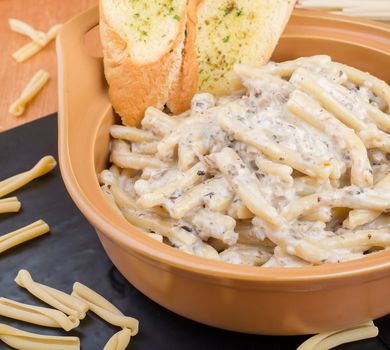
Photo: Shameel mukkath / Pexels
American
Tuna Noodle Casserole
The diets react (see scores below)
Common Ingredients
- canned tuna
- egg noodles
- cream of mushroom soup
- milk
- frozen peas
- onion
- crushed potato chips
- cheddar
Specific recipes may vary.
Incompatible with 7 of 11 diets
Diet Ratings
Tuna Noodle Casserole is fundamentally incompatible with a ketogenic diet. The dish is built around egg noodles, which are a high-carb grain product delivering roughly 30-40g of net carbs per serving on their own. The canned cream of mushroom soup adds thickeners and additional carbs, milk contributes lactose-based carbs, frozen peas are a starchy legume adding more net carbs, and the crushed potato chip topping is pure starch and processed carbohydrate. Even a modest portion would likely exceed the entire daily net carb allowance for strict keto. The only keto-friendly components are the tuna, cheddar, and a small amount of onion. There is no realistic portion size that makes this dish compatible with ketosis.
Tuna Noodle Casserole contains multiple animal-derived ingredients that disqualify it entirely from a vegan diet. Canned tuna is fish — an animal product. Egg noodles contain eggs. Cream of mushroom soup in its standard form typically contains dairy. Milk is a dairy product. Cheddar is a dairy cheese. Every major protein and binding component in this dish is animal-derived, making it incompatible with veganism on multiple independent grounds.
Tuna Noodle Casserole is deeply incompatible with the paleo diet. Nearly every ingredient beyond the tuna and onion violates core paleo principles. Egg noodles are a wheat-based grain product — strictly excluded. Cream of mushroom soup is a heavily processed food containing wheat flour, dairy, and additives. Milk is dairy. Frozen peas are legumes. Crushed potato chips are a processed food likely containing seed oils and added salt. Cheddar is dairy. The only paleo-compliant components are the tuna (though canned tuna may contain additives) and the onion. This dish is a textbook example of modern processed comfort food with virtually no paleo applicability.
Tuna Noodle Casserole is a heavily Americanized comfort dish that conflicts with core Mediterranean diet principles on multiple fronts. While canned tuna and peas are Mediterranean-friendly ingredients, the dish is dominated by problematic components: egg noodles are refined grains with no whole-grain benefit, cream of mushroom soup is a highly processed, sodium-laden ingredient far removed from whole foods, cheddar cheese and milk add saturated fat beyond moderate dairy use, and crushed potato chips as a topping introduce ultra-processed food, refined starch, and unhealthy fats. There is no olive oil, the dish relies on a processed soup base rather than whole ingredients, and the overall structure is antithetical to Mediterranean cooking philosophy. The tuna is the only genuinely endorsed element, and its benefits are largely offset by the surrounding ingredients.
Tuna Noodle Casserole is fundamentally incompatible with the carnivore diet. While canned tuna is a perfectly acceptable carnivore protein source and cheddar/milk are debated-but-tolerated dairy options, the dish is built around multiple plant-based and heavily processed ingredients that disqualify it entirely. Egg noodles are a grain-based pasta — a core exclusion. Cream of mushroom soup contains mushrooms (fungi), flour, starch, and plant-based additives. Frozen peas are a legume/vegetable. Onion is a plant. Crushed potato chips are processed plant food (starch, plant oils, additives). This dish is a classic American comfort casserole that is overwhelmingly plant and grain-derived, with tuna playing a minor supporting role in a sea of forbidden ingredients. No modification short of completely rebuilding the recipe would make it carnivore-compatible.
Tuna Noodle Casserole contains multiple excluded ingredients that make it clearly non-compliant with Whole30. Egg noodles are a grain-based pasta, explicitly excluded. Cream of mushroom soup typically contains dairy, wheat starch/flour, and often MSG or other additives. Milk is dairy, which is excluded. Crushed potato chips are a fried/processed snack food that falls under the excluded 'chips' category per Rule 4. Cheddar cheese is dairy, excluded. Frozen peas are technically a legume (though sugar snap and snow peas are allowed, regular green peas are not an explicit exception). This dish fails on nearly every front and cannot be made Whole30-compliant without fundamentally changing its character.
Tuna Noodle Casserole as traditionally prepared contains multiple high-FODMAP ingredients that make it unsuitable during the elimination phase. Egg noodles are wheat-based, making them high in fructans. Cream of mushroom soup is doubly problematic: mushrooms are high in polyols (mannitol), and canned cream soups typically contain onion and garlic as well as wheat thickeners. Onion is one of the highest-FODMAP foods due to fructans and should be strictly avoided. Milk contributes lactose (high-FODMAP at standard casserole quantities). Frozen peas become high-FODMAP above 1/4 cup due to GOS and fructans. Cheddar cheese is generally low-FODMAP as a hard aged cheese. Canned tuna is low-FODMAP. Crushed potato chips are typically low-FODMAP in small amounts. However, the combination of wheat noodles, cream of mushroom soup, onion, milk, and peas in standard casserole proportions creates a dish with at least four distinct high-FODMAP triggers. There is no realistic way to consume a standard serving of this dish safely during elimination without fundamentally reformulating it.
Tuna noodle casserole contains several DASH-incompatible ingredients that drag down an otherwise lean protein base. Canned tuna is a DASH-friendly lean protein rich in omega-3s, and frozen peas add fiber and potassium — both positives. However, cream of mushroom soup is notoriously high in sodium (typically 800–1,000mg per half-cup serving), and using the full can in a casserole can push a single serving well over the DASH daily sodium target. Cheddar cheese adds saturated fat and additional sodium. Crushed potato chips as a topping contribute both sodium and unhealthy fats — this ingredient alone is a red flag on DASH. Egg noodles are refined carbohydrates rather than whole grains, missing a key DASH emphasis. Milk is acceptable as a low-fat dairy if skim or 1% is used. The combination of multiple high-sodium processed ingredients (canned soup, chips, canned tuna, cheddar) in one dish makes this a borderline 'avoid' in practice, but the lean protein core and vegetables keep it in the caution range. A DASH-adapted version using low-sodium canned tuna, low-sodium soup, reduced-fat cheese, whole-wheat noodles, and a whole-grain breadcrumb topping instead of chips would score considerably higher (7–8).
Tuna Noodle Casserole has a solid Zone-friendly protein foundation in canned tuna, but the overall dish is heavily skewed toward unfavorable carbohydrates and problematic fats. Egg noodles are a high-glycemic refined carbohydrate that spike blood sugar — classified as 'unfavorable' in Zone terminology. Cream of mushroom soup is typically high in sodium and saturated fat with processed ingredients, misaligning with the anti-inflammatory emphasis. The crushed potato chip topping is a Zone red flag: high-glycemic, fried in omega-6-heavy seed oils, and nutritionally empty. Cheddar cheese adds saturated fat beyond Zone's preferred monounsaturated fat profile. The peas and onion are favorable low-glycemic vegetables but are minor contributors in this dish. As served in traditional portions, the carb-to-protein-to-fat ratio likely skews heavily toward carbs (from noodles and chips) with excess saturated fat, making the 40/30/30 block balance very difficult to achieve. A Zone-adapted version would require significant restructuring: replacing egg noodles with spiralized zucchini or reduced portions, eliminating the chip topping, using a lighter sauce base, and increasing the tuna proportion substantially.
Tuna noodle casserole presents a genuinely mixed anti-inflammatory profile. On the positive side, canned tuna is a legitimate source of omega-3 fatty acids (EPA and DHA), which are among the most well-supported anti-inflammatory nutrients. Peas provide fiber, plant protein, and some antioxidants. Onion contributes quercetin, a notable anti-inflammatory flavonoid. However, the rest of the dish works against those benefits. Cream of mushroom soup is a highly processed ingredient loaded with sodium, refined starches, and often trans-fat residues or seed oils — a far cry from the anti-inflammatory mushrooms (shiitake, maitake, etc.) the diet emphasizes. Egg noodles are refined carbohydrates that spike blood glucose and offer little fiber. Cheddar cheese and milk add saturated fat, which in moderate-to-high amounts can elevate inflammatory markers like CRP. The crushed potato chip topping introduces refined vegetable/seed oils (often corn or sunflower), excess sodium, and acrylamide from frying — all pro-inflammatory concerns. The overall architecture of this dish is classic American processed-comfort food: the one genuinely anti-inflammatory ingredient (tuna) is surrounded by refined, processed, and high-saturated-fat components that dilute or counteract its benefit. This is a quintessential 'caution' dish — not categorically harmful, but far from anti-inflammatory in its current form. A modified version using whole grain pasta, homemade mushroom sauce with olive oil, reduced-fat dairy, and a nut/herb crumb topping could shift it toward 'approve.'
Tuna noodle casserole has a genuinely mixed nutritional profile for GLP-1 patients. The canned tuna is an excellent lean protein source, and the peas and onion add modest fiber and micronutrients. However, the cream of mushroom soup base is typically high in sodium and saturated fat, the egg noodles are refined carbohydrates with minimal fiber, the cheddar adds additional saturated fat, and the crushed potato chip topping introduces fried, high-fat, high-sodium empty calories — exactly the type of ingredient GLP-1 patients should minimize. The overall fat load per serving (soup + cheese + chips) may worsen nausea, bloating, or reflux, which are common GLP-1 side effects. Gastric emptying is already slowed on these medications, and a heavy, creamy, starchy dish can sit uncomfortably. Protein per serving is moderate but not high enough to offset the other drawbacks at a typical casserole serving size. A modified version — using Greek yogurt or low-fat milk-based sauce instead of cream of mushroom soup, whole wheat noodles, reduced cheese, and a high-fiber breadcrumb topping instead of chips — would rate significantly higher.
Some GLP-1-focused dietitians accept traditional comfort foods like this in small portions, arguing that palatability and adherence matter more than optimizing every meal, and that the tuna provides meaningful protein in a food patients will actually eat. Others flag the cream-based sauce and chip topping as reliable GI triggers that should be avoided regardless of portion size, particularly in the first months on the medication.
*See how scores were generated at our methodology page.
Nutritional profile
Six traits that cut across every diet.
Fiber & Plants
How much whole-plant food and fiber it delivers.
Healthy Fats
The quality of its fats (unsaturated, omega-3).
Whole / Unprocessed
How close it is to its natural, unprocessed form.
Gut Gentle
How easy it is on digestion (low FODMAP, few irritants).
Low Glycemic
How little it spikes your blood sugar.
Protein Density
How much protein it packs per calorie.
Controversy Index
Higher controversy = more disagreement between diets.
Diet-Specific Tips
 DASH — 4/10
View tips
- Cream of mushroom soup is very high in sodium (~900mg per serving used), a primary DASH concern
- Crushed potato chips topping adds sodium and unhealthy fats — not DASH-aligned
- Cheddar cheese contributes saturated fat and sodium
- Canned tuna is a lean, heart-healthy protein positive for DASH
- Frozen peas provide fiber, potassium, and plant-based nutrients consistent with DASH
- Egg noodles are refined grains; whole-wheat pasta would better align with DASH principles
- Total dish sodium per serving likely exceeds 900–1,200mg, a significant portion of the DASH daily limit
- Low-sodium substitutions (soup, tuna, cheese) could substantially improve DASH compatibility
 Zone — 4/10
View tips
- Canned tuna is an excellent lean Zone protein source — favorable
- Egg noodles are high-glycemic refined carbs, classified 'unfavorable' in Zone
- Crushed potato chips are a Zone avoid ingredient: high-GI, omega-6 seed oils, processed
- Cream of mushroom soup adds saturated fat and processed ingredients, anti-inflammatory concern
- Cheddar cheese contributes saturated fat rather than preferred monounsaturated fat
- Peas and onion are favorable low-glycemic Zone carbohydrates but insufficient to balance the dish
- Traditional portion ratios skew far from 40/30/30, requiring major restructuring to Zone-adapt
 Anti-Inflammatory — 4/10
View tips
- Canned tuna provides omega-3 fatty acids (EPA/DHA) — a genuine anti-inflammatory benefit
- Cream of mushroom soup is highly processed with excess sodium, refined starch, and likely seed oils — pro-inflammatory
- Egg noodles are refined carbohydrates with minimal fiber — neutral to mildly pro-inflammatory
- Crushed potato chip topping adds refined seed oils, sodium, and acrylamide
- Cheddar cheese contributes saturated fat, which in this quantity is a caution flag
- Peas and onion provide modest anti-inflammatory contributions (fiber, quercetin)
- The overall dish is processed-comfort food: beneficial protein source undermined by surrounding ingredients
 GLP-1 Friendly — 4/10
View tips
- Canned tuna is a high-quality lean protein — a genuine positive
- Cream of mushroom soup adds saturated fat and sodium, worsening GI side effect risk
- Egg noodles are refined carbohydrates with minimal fiber — low nutrient density per calorie
- Crushed potato chip topping is fried, high-fat, high-sodium — a clear avoid ingredient
- Cheddar adds additional saturated fat load
- Peas and onion provide modest fiber but not enough to offset the other factors
- Heavy, creamy texture is poorly tolerated by many GLP-1 patients due to slowed gastric emptying
- Dish can be substantially improved with ingredient substitutions