This dish contains raw or undercooked ingredients. Consume at your discretion.
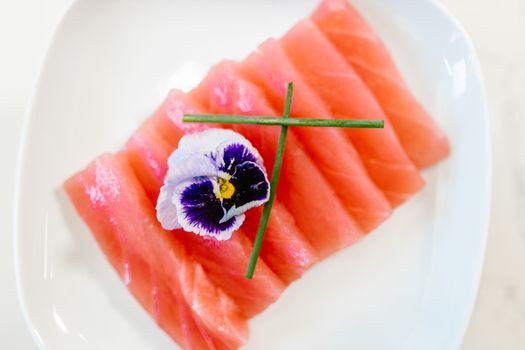
Photo: RDNE Stock project / Pexels
Japanese
Tuna Sashimi
The diets react (see scores below)
Common Ingredients
- sushi-grade tuna
- soy sauce
- wasabi
- pickled ginger
- daikon
Specific recipes may vary.
Incompatible with 4 of 11 diets
Diet Ratings
Tuna sashimi is an excellent keto choice at its core. Sushi-grade tuna is pure high-quality protein with virtually zero carbs and healthy omega-3 fats. Soy sauce adds negligible carbs in typical dipping amounts. Wasabi is used in tiny quantities (trace carbs). The main considerations are pickled ginger, which often contains added sugar and contributes a small but real carb load, and daikon, which is a low-carb radish (~2g net carbs per 100g) and fine in moderate portions. The overall dish remains well within keto macros for a standard serving, with net carbs likely under 5g total.
Some strict keto practitioners flag commercial pickled ginger (gari) due to added sugars used in the pickling process, and note that many soy sauces contain trace wheat/sugar; these adherents recommend requesting plain tuna with tamari and skipping the ginger entirely to avoid any insulin response from hidden sugars.
Tuna sashimi is a fish-based dish with sushi-grade tuna as its primary and defining ingredient. Fish is an animal product and is categorically excluded from a vegan diet. There is no ambiguity here — consuming fish directly contradicts the foundational principle of veganism, which excludes all animal flesh. The accompanying ingredients (soy sauce, wasabi, pickled ginger, daikon) are plant-based, but they cannot offset the central animal ingredient.
Tuna sashimi features sushi-grade tuna as its core ingredient, which is fully paleo-approved as an unprocessed fish. However, the traditional accompaniments disqualify the dish as served. Soy sauce is a fermented soy (legume) and wheat-based condiment — both categories explicitly excluded from paleo. Pickled ginger is typically prepared with added sugar and salt, making it a processed food with non-paleo additives. Wasabi in its commercial form almost always contains horseradish, mustard, starch fillers, and artificial coloring rather than true wasabi root. Daikon radish is a paleo-approved vegetable. Because the dish as traditionally served relies on soy sauce as its primary condiment — a clear paleo exclusion — the overall dish cannot be approved despite the excellent protein source at its center.
Tuna sashimi is primarily lean, high-quality fish — a cornerstone protein in the Mediterranean diet, which recommends fish and seafood 2-3 times per week. The dish is minimally processed, with no added sugars or refined grains. Soy sauce introduces sodium but is used in small dipping quantities. Wasabi, pickled ginger, and daikon are all low-calorie, whole-food accompaniments with negligible dietary impact. The main consideration is that this is a Japanese preparation rather than a traditional Mediterranean one, and it lacks olive oil as a fat source — but the core ingredient (fatty fish, rich in omega-3s) aligns perfectly with Mediterranean principles.
Some strict Mediterranean diet frameworks emphasize not just ingredients but culinary tradition and the overall dietary pattern — notably the absence of olive oil and the presence of soy sauce (a non-Mediterranean condiment high in sodium). Traditional Mediterranean fish preparations (e.g., grilled with olive oil and lemon) are considered more canonical, and purists may rate cross-cultural fish dishes more cautiously.
While the sushi-grade tuna itself is fully carnivore-approved, this dish as served is not carnivore-compatible. The accompaniments — soy sauce (fermented soybean product, a plant-derived legume), wasabi (plant root/rhizome), pickled ginger (plant root with likely sugar and vinegar additives), and daikon (a root vegetable) — are all plant-derived and explicitly excluded from the carnivore diet. Soy sauce alone is a double violation: it is both plant-based (soybeans, wheat) and processed with additives. The dish cannot be scored highly as presented because the condiments and garnishes are integral to how it is served. Eaten as plain raw tuna with nothing else, it would score a 9, but as a dish with these accompaniments it must be rated to avoid.
The primary disqualifying ingredient is soy sauce, which is made from soybeans — a legume explicitly excluded on Whole30. Standard soy sauce also typically contains wheat, adding a second excluded ingredient (grain). The tuna itself is fully compliant, as are daikon and wasabi paste in their pure forms. However, pickled ginger often contains added sugar and sometimes sulfites (though sulfites are no longer excluded per 2024 rules, sugar remains excluded). The dish as commonly served and named includes soy sauce as a core dipping component, making it non-compliant. Substituting coconut aminos for soy sauce and verifying no added sugar in the pickled ginger and wasabi would make this dish compliant.
Tuna sashimi is inherently low-FODMAP — plain sushi-grade tuna contains no FODMAPs. However, the accompanying condiments introduce complexity. Soy sauce contains wheat (fructans) but is used in very small dipping quantities (typically 1–2 tbsp), which Monash rates as low-FODMAP at a standard serve of 2 tablespoons due to the low final fructan content after fermentation. Wasabi is generally low-FODMAP at small serves. Pickled ginger (gari) is the key concern: it is low-FODMAP at around 2 slices (16g) per Monash but can become moderate at larger amounts; additionally, some commercial pickled ginger contains high-FODMAP additives like sorbitol or high-fructose corn syrup. Daikon radish is low-FODMAP at a standard 1/2 cup serve. The dish is largely safe but requires attention to soy sauce type (tamari/gluten-free soy sauce is safer for strict elimination) and commercial pickled ginger ingredients.
Monash University rates standard soy sauce as low-FODMAP at typical dipping quantities, but many clinical FODMAP practitioners recommend substituting with tamari or certified gluten-free soy sauce during the elimination phase to avoid any fructan exposure from wheat. Commercial pickled ginger ingredients vary widely — some products contain sorbitol or HFCS, which would push this dish into 'avoid' territory.
Tuna sashimi features sushi-grade tuna, which is an excellent DASH-compatible lean protein — low in saturated fat, rich in omega-3 fatty acids, potassium, and high-quality protein. The fish itself would earn an 'approve' rating. However, soy sauce is the critical concern: a single tablespoon of regular soy sauce contains approximately 900–1,000mg of sodium, which can rapidly approach or exceed the DASH daily sodium limit (1,500–2,300mg) on its own. Wasabi (in small amounts) and pickled ginger are low-calorie condiments but pickled ginger may contribute modest additional sodium. Daikon is a DASH-friendly vegetable. The dish as commonly consumed — dipped in soy sauce — shifts the rating to 'caution' due to sodium load. If low-sodium soy sauce is substituted and portions are controlled, the dish would score 8–9 and comfortably 'approve.'
NIH DASH guidelines broadly recommend fish as a core protein and limit sodium strictly; the soy sauce pairing creates a meaningful sodium concern under standard DASH. However, some DASH-oriented clinicians note that sashimi diners can control dipping amounts, and substituting low-sodium tamari or soy sauce entirely resolves the issue — making this dish highly DASH-compatible in a modified preparation.
Tuna sashimi is an exceptional Zone Diet food. Sushi-grade tuna is a lean, high-quality protein with an outstanding amino acid profile and virtually zero carbohydrates or fat, making it one of the cleanest protein blocks available. More importantly, tuna is rich in omega-3 fatty acids (EPA and DHA), which aligns perfectly with Dr. Sears' anti-inflammatory emphasis — omega-3s are central to his later Zone writings. The accompaniments are all Zone-friendly: soy sauce adds negligible macros (though sodium is high), wasabi is a polyphenol-rich condiment used in tiny quantities, pickled ginger provides anti-inflammatory gingerols in trace amounts, and daikon is a low-glycemic cruciferous vegetable that contributes minimal carb blocks. The only structural consideration for a complete Zone meal is that tuna sashimi is almost pure protein with very little fat or carbohydrate, so it must be paired with a fat source (e.g., avocado, a drizzle of sesame oil) and low-GI carbohydrates (e.g., additional vegetables or a small amount of fruit) to achieve the 40/30/30 block balance. As a protein component of a Zone meal, however, it scores near-perfectly.
Tuna sashimi is an excellent anti-inflammatory dish overall. Sushi-grade tuna — particularly bluefin and yellowfin — is rich in omega-3 fatty acids (EPA and DHA), which are among the most well-established anti-inflammatory nutrients, directly reducing pro-inflammatory eicosanoids and lowering CRP and IL-6 markers. The dish is lean, high-quality protein with no refined carbohydrates, no added sugars, and no seed oils or trans fats. Accompaniments add further benefit: wasabi (horseradish family) contains isothiocyanates with documented anti-inflammatory and antimicrobial properties; pickled ginger provides gingerols, well-regarded anti-inflammatory compounds; daikon is a cruciferous-adjacent root vegetable with antioxidant and digestive benefits. The main caution is soy sauce, which is high in sodium and contains some additives in commercial versions — though in the small quantities used for dipping, this is unlikely to meaningfully affect inflammatory status. A secondary consideration is mercury: tuna, especially larger species like bluefin and bigeye, can accumulate methylmercury, which at high chronic intake may contribute to oxidative stress. Most anti-inflammatory authorities consider moderate tuna consumption (2–3 servings/week) safe and beneficial, but this is worth noting for frequent consumers.
Most anti-inflammatory frameworks, including Dr. Weil's pyramid, strongly endorse fatty fish like tuna for omega-3 content. However, some integrative practitioners (e.g., functional medicine approaches focused on heavy metal burden) caution that large tuna species bioaccumulate mercury, which can generate reactive oxygen species and counteract omega-3 benefits with very frequent consumption. The FDA and mainstream nutrition science consider tuna safe at moderate intake, distinguishing higher-mercury species (bigeye, albacore) from lower-mercury options like skipjack.
Tuna sashimi is an excellent choice for GLP-1 patients. Sushi-grade tuna is a lean, high-quality protein source — a standard 3 oz (85g) serving delivers roughly 20-25g of protein with very low fat and minimal calories, making it exceptionally nutrient-dense per bite. It contains beneficial omega-3 fatty acids (especially in bluefin cuts) supporting cardiovascular health. The absence of rice, breading, or added fats means no empty calories or digestibility concerns. Soy sauce adds sodium but in the small dipping quantities typical of sashimi this is not a major concern for most patients. Wasabi in small amounts is generally tolerated, though it is a mild irritant. Pickled ginger is low-calorie and may actually support digestion. Daikon is a high-water-content, fiber-containing garnish that supports hydration and gut motility. The dish is naturally small-portion friendly, easy to digest (no heavy fats to slow gastric emptying further), and requires no cooking preparation that would add fat. The one caveat is raw fish — patients who are immunocompromised (a consideration for some diabetic GLP-1 users) should ensure sushi-grade sourcing and proper handling.
Some GLP-1-focused clinicians flag raw fish consumption for patients with type 2 diabetes or compromised immune function due to foodborne illness risk, and a minority of practitioners note that soy sauce's high sodium content may be a concern for patients with hypertension who are liberal with dipping — individual guidance on sodium intake varies.
*See how scores were generated at our methodology page.
Nutritional profile
Six traits that cut across every diet.
Fiber & Plants
How much whole-plant food and fiber it delivers.
Healthy Fats
The quality of its fats (unsaturated, omega-3).
Whole / Unprocessed
How close it is to its natural, unprocessed form.
Gut Gentle
How easy it is on digestion (low FODMAP, few irritants).
Low Glycemic
How little it spikes your blood sugar.
Protein Density
How much protein it packs per calorie.
Controversy Index
Higher controversy = more disagreement between diets.
Diet-Specific Tips
 Keto — 9/10
View tips
- Tuna is zero-carb, high-protein, and rich in omega-3 fatty acids
- Soy sauce contributes minimal carbs in dipping quantities (~1g per tablespoon)
- Pickled ginger often contains added sugar — a caution for strict keto
- Daikon is low net carb and keto-friendly in moderate portions
- Wasabi used in trace amounts poses no meaningful carb concern
- No grains, starches, or high-sugar ingredients in the core dish
 Mediterranean — 8/10
View tips
- Tuna is an excellent source of lean protein and omega-3 fatty acids, fully aligned with Mediterranean fish recommendations
- Minimally processed preparation with no added sugars, refined grains, or unhealthy fats
- Soy sauce adds sodium but in small amounts typical of dipping use
- No olive oil present, which is the canonical Mediterranean fat source
- Daikon, pickled ginger, and wasabi are whole-food accompaniments with health benefits
- Non-Mediterranean culinary tradition but nutritionally compatible core ingredients
 Low-FODMAP — 6/10
View tips
- Plain tuna is completely FODMAP-free
- Soy sauce contains wheat fructans but is typically low-FODMAP at small dipping portions (~2 tbsp)
- Tamari or gluten-free soy sauce recommended for strict elimination phase
- Pickled ginger is low-FODMAP at ~2 slices but commercial varieties may contain polyols (sorbitol) or HFCS
- Daikon radish is low-FODMAP at standard serving
- Wasabi is low-FODMAP at typical condiment quantities
- Overall safety depends heavily on condiment brands and portion control
 DASH — 6/10
View tips
- Tuna is a lean, heart-healthy protein rich in omega-3s and potassium — core DASH food
- Regular soy sauce contributes ~900–1,000mg sodium per tablespoon, a major DASH concern
- Low-sodium soy sauce alternative would significantly improve the sodium profile
- Pickled ginger adds minor additional sodium
- Daikon is a DASH-friendly, low-sodium vegetable
- No saturated fat, no added sugars, no processed ingredients in the fish itself
- As commonly consumed with regular soy sauce, cumulative sodium can approach daily DASH limits in one sitting
 Zone — 9/10
View tips
- Lean, high-quality protein — ideal Zone protein block source
- Rich in omega-3 fatty acids (EPA/DHA), directly supporting Sears' anti-inflammatory Zone protocol
- Nearly zero carbohydrates and minimal fat — needs pairing to complete 40/30/30 ratio
- Daikon is a favorable low-glycemic Zone carbohydrate
- Soy sauce is high in sodium but used in small quantities with negligible macro impact
- No processed ingredients, no trans fats, no high-glycemic carbs
- Wasabi and ginger contribute polyphenols consistent with anti-inflammatory Zone principles
 Anti-Inflammatory — 8/10
View tips
- High omega-3 (EPA/DHA) content from tuna — strongly anti-inflammatory
- Lean protein with no refined carbs, sugars, or pro-inflammatory oils
- Wasabi isothiocyanates add anti-inflammatory benefit
- Ginger (gingerols) is a well-documented anti-inflammatory spice
- Daikon provides antioxidants and digestive support
- Soy sauce contributes sodium; use tamari or low-sodium versions for optimization
- Mercury accumulation in large tuna species is a concern for very frequent consumption
 GLP-1 Friendly — 9/10
View tips
- High lean protein (~20-25g per 3 oz serving)
- Excellent nutrient density per calorie
- Low fat — minimal saturated fat, beneficial omega-3s present
- No refined carbohydrates or added sugars
- Easy to digest — no heavy fats to worsen gastric emptying slowdown
- Small-portion friendly by design
- Daikon and pickled ginger support hydration and digestion
- Raw fish safety consideration for immunocompromised patients
- Soy sauce sodium should be used in moderation