Photo: Jack Baghel / Pexels
The diets react (see scores below)
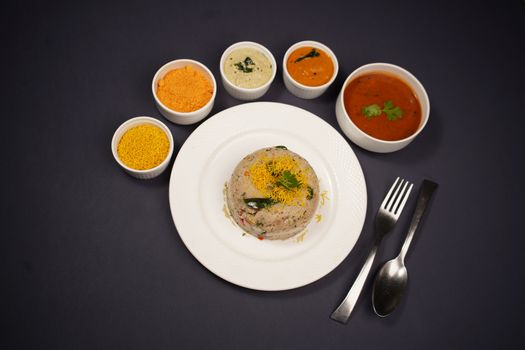
Common Ingredients
- semolina
- onion
- mustard seeds
- curry leaves
- green chilies
- peas
- cashews
- ghee
Specific recipes may vary.
Incompatible with 6 of 11 diets
Diet Ratings
Upma is fundamentally built on semolina (rava/sooji), which is a refined wheat product with extremely high net carbs — approximately 70-75g of net carbs per 100g. A standard serving of upma (200-250g) would deliver well over 50g of net carbs from semolina alone, completely blowing the daily keto carb budget in a single meal. Peas add additional carbs. While ghee, mustard seeds, curry leaves, green chilies, and cashews (in moderation) are individually keto-friendly, they cannot redeem a dish whose primary bulk ingredient is a high-glycemic grain product. This dish is incompatible with ketosis regardless of portion size.
Upma as listed contains ghee, which is clarified butter — a dairy product derived from cow's milk and therefore a clear animal-derived ingredient. All other components (semolina, onion, mustard seeds, curry leaves, green chilies, peas, cashews) are fully plant-based. The dish fails the vegan standard solely due to ghee. A vegan version is easily achievable by substituting ghee with a neutral plant-based oil (coconut, sunflower) or vegan margarine, which is common practice in vegan Indian cooking.
Upma is fundamentally incompatible with the paleo diet. Its primary ingredient, semolina, is a coarse wheat flour — a grain that is unambiguously excluded from paleo. Peas are legumes, also excluded. Ghee occupies a gray area (debated per Cordain's strict school, though widely accepted in modern paleo practice), but it is irrelevant here since the dish is disqualified by its grain and legume base. The remaining ingredients — onion, mustard seeds, curry leaves, green chilies, and cashews — are individually paleo-compatible, but they cannot redeem a dish whose two core components are explicitly off the paleo list.
Upma is made primarily from semolina (rava/sooji), which is a refined grain product — not a whole grain — placing it in tension with Mediterranean diet principles that favor whole grains like bulgur, farro, or whole wheat. However, many of its other components are Mediterranean-friendly: onion, peas, mustard seeds, curry leaves, and green chilies are all plant-based vegetables and aromatics. Cashews are a nutritious nut, consistent with the diet. The key concern is ghee (clarified butter) used as the cooking fat instead of extra virgin olive oil, which is the canonical Mediterranean fat; ghee is a saturated animal fat not traditionally part of the Mediterranean pattern. The combination of refined semolina and ghee pulls this dish away from core Mediterranean principles, though the vegetable and legume content partially compensates. Overall, acceptable occasionally but not a Mediterranean staple.
Some Mediterranean diet interpreters apply broader 'plant-forward whole food' principles and may view semolina-based dishes more leniently if eaten in moderation, noting that semolina is still less processed than many Western refined grain products. Additionally, modern clinical guidelines (e.g., Oldways Mediterranean Diet Pyramid) allow moderate dairy fat, which could extend limited tolerance to ghee in small amounts.
Upma is almost entirely plant-based and grain-based, making it fundamentally incompatible with the carnivore diet. The primary ingredient is semolina, a refined wheat grain, which is strictly excluded from all carnivore protocols. The remaining ingredients — onion, mustard seeds, curry leaves, green chilies, peas, and cashews — are all plant-derived foods (vegetables, seeds, legumes, and nuts) that are categorically banned. The only animal-derived ingredient is ghee, a dairy fat, which while accepted by many carnivore practitioners, cannot redeem a dish that is overwhelmingly plant and grain-based. There is no animal protein present, and the dish provides no meaningful carnivore-compatible nutrition.
Upma is made primarily from semolina, which is a wheat-derived grain product. Grains — including wheat and all wheat derivatives — are explicitly excluded on the Whole30 for the full 30 days. Semolina (durum wheat) is a direct disqualifier regardless of the other ingredients. While ghee, onion, mustard seeds, curry leaves, green chilies, and cashews are all Whole30-compliant, and peas (as a vegetable, not a legume in the Whole30 sense) are generally acceptable, the foundational ingredient — semolina — makes this dish incompatible with the program.
Upma is made primarily from semolina (rava/sooji), which is a wheat-derived ingredient and therefore high in fructans — a major FODMAP category. This alone makes the dish unsuitable during the elimination phase. Compounding the issue, onion is one of the highest-FODMAP foods known, rich in fructans at any serving size. Peas are high in GOS and fructans above very small portions (Monash rates green peas as high-FODMAP at 1/4 cup). Cashews are high-FODMAP above 10 nuts due to GOS and fructans. The combination of semolina, onion, and peas means this dish has multiple high-FODMAP ingredients at standard serving sizes, making it clearly unsuitable during the FODMAP elimination phase. Mustard seeds, curry leaves, green chilies, and ghee are low-FODMAP and pose no concern.
Upma is a semolina-based Indian breakfast dish that sits in a mixed position under DASH guidelines. Semolina (rava) is a refined grain, not a whole grain, which DASH de-emphasizes in favor of whole grains like oats or whole wheat. The dish includes several DASH-positive elements: onions, peas, curry leaves, and green chilies add vegetables, fiber, potassium, and antioxidants. Mustard seeds are DASH-neutral. However, the key concerns are ghee and cashews. Ghee is a clarified butter high in saturated fat, which DASH explicitly limits — it is functionally similar to butter, a food DASH discourages. Cashews, while containing healthy unsaturated fats, are calorie-dense and relatively high in saturated fat compared to other nuts (e.g., almonds, walnuts) that DASH more strongly endorses. Upma is typically low in sodium when home-prepared, which is a positive factor. The dish lacks lean protein and dairy, leaving nutritional gaps. Overall, upma is an acceptable occasional breakfast choice if ghee is minimized or replaced with a small amount of olive or canola oil, and portion size is controlled, but it is not a DASH-core food due to refined grain base and saturated fat from ghee.
NIH DASH guidelines specifically recommend whole grains and limit saturated fat sources like ghee, placing standard upma in the 'caution' category. However, some DASH-oriented dietitians working in South Asian dietary contexts note that upma is far lower in sodium and added sugar than many Western breakfast alternatives, and suggest it can be DASH-compatible if ghee is reduced to a minimal amount and vegetables are increased — emphasizing dietary pattern over individual ingredient purity.
Upma is a semolina-based dish, and semolina (sooji/rava) is a refined wheat product with a moderate-to-high glycemic index, making it an 'unfavorable' carbohydrate in Zone terminology. It is the dominant ingredient and primary calorie source, which creates a macro imbalance — this dish is heavily carbohydrate-skewed with negligible protein. The dish lacks a meaningful protein source (listed as 'none'), which is a significant Zone deficit since every meal requires approximately 25g of lean protein to balance the carb blocks. Ghee is saturated fat, which Zone (especially early Sears) discourages in favor of monounsaturated fats, though it is used in small quantities here. On the positive side, the dish includes favorable components: onion, peas, and green chilies contribute low-glycemic vegetables, and curry leaves and mustard seeds have anti-inflammatory polyphenol value consistent with Sears' later focus. Cashews provide some monounsaturated fat but also add carbohydrates. To make Upma Zone-compatible, one would need to: (1) add a lean protein source (eggs, tofu, or chicken), (2) reduce the semolina portion and increase the vegetable ratio, and (3) substitute ghee with olive oil or limit it heavily. As served traditionally, Upma is a carb-dominant breakfast with no protein balance, making it a 'caution' that requires significant modification.
Upma presents a mixed anti-inflammatory profile. On the positive side, it contains several anti-inflammatory ingredients: mustard seeds (contain omega-3 ALA and glucosinolates), curry leaves (rich in carbazole alkaloids and antioxidants), green chilies (capsaicin, vitamin C), onion (quercetin, prebiotic fiber), and peas (fiber, plant protein, antioxidants). Cashews provide healthy monounsaturated fats and magnesium. Ghee, while a saturated fat that should be limited on an anti-inflammatory diet, is used in small amounts as a cooking fat and contains butyrate, which some research associates with reduced gut inflammation — though it remains a cautionary ingredient overall. The main concern is semolina (durum wheat), which is a refined carbohydrate. It has a moderate-to-high glycemic index, lacks the fiber and phytonutrients of whole grains, and refined carbohydrates are linked to elevated inflammatory markers (CRP, IL-6) in research. Semolina is not equivalent to whole grain and does not qualify as an emphasized food. The dish has no omega-3 protein source, no leafy greens or deeply colored vegetables, and no emphasized anti-inflammatory fats like EVOO. Overall, the anti-inflammatory spice base is genuinely beneficial, but the semolina foundation and use of ghee prevent this from reaching 'approve' territory. It sits comfortably in the 'caution' range — acceptable occasionally, but not a regular anti-inflammatory meal without modification (e.g., substituting whole wheat semolina, adding leafy greens, or using EVOO instead of ghee).
Some integrative nutrition practitioners and Ayurvedic-influenced dietitians consider traditional upma beneficial due to its potent spice base (mustard seeds, curry leaves, chilies) and argue that ghee in small quantities supports gut lining integrity and reduces inflammation, aligning with functional medicine perspectives. However, mainstream anti-inflammatory nutrition research consistently flags refined semolina as a pro-inflammatory refined carbohydrate, and anti-inflammatory protocols like Dr. Weil's pyramid deprioritize refined grains in favor of whole grains.
Upma is made primarily from semolina (rava), a refined grain with moderate glycemic index, low protein, and low fiber compared to whole grain alternatives. It provides reasonable carbohydrate energy but falls short on the two top GLP-1 priorities: protein and fiber. The green chilies may irritate the GI tract in GLP-1 patients prone to nausea or reflux. Ghee and cashews add saturated fat, which can worsen GLP-1 side effects like nausea and bloating. Peas contribute a small amount of protein and fiber, which is a mild positive. Mustard seeds and curry leaves are fine in typical amounts. The dish is relatively easy to digest in small portions and is not fried, which keeps it out of the avoid category. However, without a meaningful protein source, it does not meet the 15-30g per meal protein target and represents a missed nutritional opportunity given reduced appetite on GLP-1 therapy. It is portion-sensitive — a small serving is more tolerable than a full bowl.
Some GLP-1-focused dietitians working with South Asian patients accept upma as a culturally appropriate breakfast when protein is added (e.g., tofu scramble, boiled eggs, or a protein shake alongside), arguing that palatability and adherence matter more than optimizing every meal in isolation. Others flag the refined semolina base as a consistent concern regardless of add-ons, recommending substitution with whole wheat rava or oats-based upma to improve fiber content.
*See how scores were generated at our methodology page.
Nutritional profile
Six traits that cut across every diet.
Fiber & Plants
How much whole-plant food and fiber it delivers.
Healthy Fats
The quality of its fats (unsaturated, omega-3).
Whole / Unprocessed
How close it is to its natural, unprocessed form.
Gut Gentle
How easy it is on digestion (low FODMAP, few irritants).
Low Glycemic
How little it spikes your blood sugar.
Protein Density
How much protein it packs per calorie.
Controversy Index
Higher controversy = more disagreement between diets.
Diet-Specific Tips
 Mediterranean — 5/10
View tips
- Semolina is a refined grain, not a whole grain — conflicts with Mediterranean whole grain preference
- Ghee is a saturated animal fat, not the preferred extra virgin olive oil
- Peas and onion are positive plant-based components
- Cashews align well with the Mediterranean emphasis on nuts
- No red meat or added sugar, which is a positive
- Dish is vegetable-inclusive but lacks fiber-rich whole grain base
 DASH — 5/10
View tips
- Semolina is a refined grain, not a whole grain — DASH emphasizes whole grains
- Ghee is high in saturated fat, a nutrient DASH explicitly limits
- Cashews are higher in saturated fat than DASH-preferred nuts (walnuts, almonds)
- Peas, onions, green chilies, and curry leaves contribute vegetables, fiber, and potassium — DASH-positive
- Typically low in sodium when home-prepared — a significant positive
- No lean protein or low-fat dairy component
- Replacing ghee with olive/canola oil would meaningfully improve DASH compatibility
 Zone — 4/10
View tips
- Semolina is a refined, moderate-to-high glycemic carbohydrate — classified as 'unfavorable' in Zone terminology
- No protein source present — critical Zone imbalance as every meal requires ~25g lean protein
- Dish is heavily carbohydrate-dominant, breaking the 40/30/30 macro ratio significantly
- Ghee is saturated fat, which Zone discourages compared to monounsaturated fats like olive oil
- Positive elements: onion, peas, green chilies are low-glycemic Zone-favorable vegetables
- Cashews provide some monounsaturated fat but also add carb load
- Anti-inflammatory spices (mustard seeds, curry leaves) align with Sears' polyphenol focus
- Easily modified for Zone compliance by adding lean protein and reducing semolina portion
 Anti-Inflammatory — 5/10
View tips
- Semolina is a refined carbohydrate with moderate-to-high glycemic index — not a whole grain, associated with elevated inflammatory markers
- Mustard seeds provide omega-3 ALA and glucosinolates with demonstrated anti-inflammatory properties
- Curry leaves contain carbazole alkaloids and flavonoids with antioxidant and anti-inflammatory activity
- Green chilies contribute capsaicin and vitamin C, both anti-inflammatory
- Onion provides quercetin and prebiotic fiber supporting gut-mediated inflammation reduction
- Ghee is a saturated fat (limit category) but used in small amounts; contains butyrate with some gut anti-inflammatory evidence
- Cashews offer monounsaturated fats and magnesium but are calorie-dense with modest omega-6 content
- Peas add fiber and plant-based nutrition, mildly anti-inflammatory
- No omega-3 protein source, no deeply pigmented vegetables, no EVOO — limiting overall anti-inflammatory score
 GLP-1 Friendly — 4/10
View tips
- Low protein — no primary protein source; peas add only minimal amounts
- Refined semolina base — low fiber, moderate glycemic load, not a nutrient-dense carbohydrate
- Ghee and cashews add saturated fat, increasing risk of nausea and bloating on GLP-1s
- Green chilies may worsen GI side effects including reflux and nausea
- Not fried and moderately easy to digest in small servings — avoids worst category
- Missed nutritional opportunity given severely reduced calorie intake on GLP-1 therapy
- Can be improved significantly by adding a protein source or substituting whole grain base