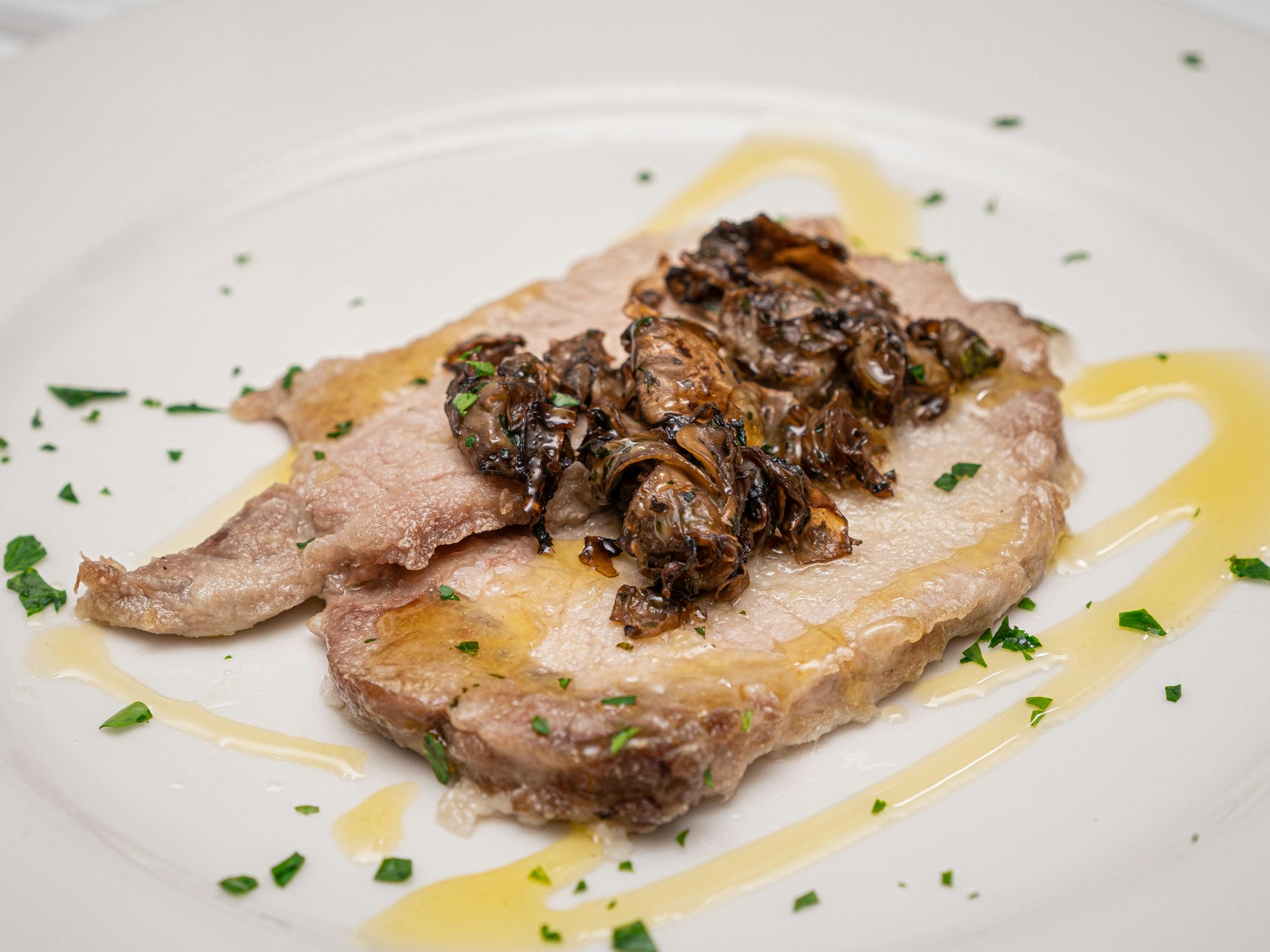
Photo: Luca Luperto / Pexels
Italian
Veal Piccata
The diets react (see scores below)
Common Ingredients
- veal cutlets
- lemon juice
- capers
- white wine
- butter
- flour
- parsley
- chicken broth
Specific recipes may vary.
Incompatible with 5 of 11 diets
Diet Ratings
Veal Piccata is largely keto-compatible but contains one significant problem ingredient: flour, which is used to dredge the veal cutlets before cooking. This coating introduces grain-based carbs and is standard to the traditional recipe. The rest of the dish is excellent for keto — veal is a lean but low-carb protein, butter provides healthy fat, lemon juice and capers add negligible carbs, and white wine contributes only minimal residual carbs in typical cooking quantities. The dish can be made fully keto-compliant with a simple substitution (almond flour or no dredge), but as traditionally prepared, the flour dredge adds enough carbs per serving to warrant caution rather than approval.
Veal Piccata contains multiple animal products that are strictly excluded from a vegan diet. Veal is the flesh of a young calf — a direct animal product. Butter is a dairy derivative. Chicken broth is made from animal bones and flesh. These are not trace contaminants or processing aids; they are primary, intentional ingredients. There is no meaningful debate within the vegan community about any of these ingredients — all are unambiguously non-vegan.
Veal Piccata contains two clear paleo violations that are foundational to the diet. Flour (wheat) is a grain and is strictly excluded from paleo — it's used here to dredge the veal cutlets, forming the dish's characteristic crust. Butter is a dairy product, also excluded under standard paleo guidelines. While the base ingredients are paleo-friendly — veal is unprocessed meat, lemon juice, capers, parsley, and chicken broth are all acceptable, and white wine is a gray area — the flour and butter are structural, not incidental, components of this dish. Removing them would fundamentally change the dish into something other than Piccata. The dish as traditionally prepared cannot be considered paleo-compatible.
Veal Piccata's primary protein is veal, which is red meat and should be consumed only a few times per month on the Mediterranean diet. While the dish incorporates some Mediterranean-friendly elements — lemon juice, capers, parsley, white wine, and chicken broth — the combination of veal with butter and refined flour works against core Mediterranean principles. Butter is not the canonical fat of the Mediterranean diet (olive oil is), and refined flour adds empty refined carbohydrates. The dish scores at the low end of 'avoid' territory due to the red meat foundation and butter, though the bright, herb-forward sauce elements partially redeem it.
Some traditional Italian (particularly Northern Italian) culinary traditions do include veal and butter as legitimate ingredients, and piccata preparations are part of an authentic Italian culinary heritage. A more permissive interpretation of the Mediterranean diet might classify this as an occasional 'caution' dish if portion sizes are small and frequency is limited to once or twice a month, especially if the butter were replaced with olive oil.
Veal Piccata is fundamentally incompatible with the carnivore diet despite its animal protein base. The dish contains multiple plant-derived and processed ingredients that disqualify it: flour (grain) is used to dredge the cutlets, lemon juice (fruit) forms the base of the sauce, capers (plant/brine-pickled buds) add flavor, white wine (fermented plant product) is included, and parsley (herb) is used as garnish. While veal itself is an excellent carnivore food and butter is debated-but-accepted by many practitioners, the overwhelming presence of plant-based components makes this dish a clear avoid. The flour coating alone — a grain product — is a hard disqualifier for any carnivore approach.
Veal Piccata contains two clearly excluded ingredients: butter (dairy, not ghee/clarified butter) and flour (a grain product used for dredging). While veal, lemon juice, capers, white wine, parsley, and chicken broth are all Whole30-compatible, the combination of regular butter and wheat flour makes this dish non-compliant as traditionally prepared. A Whole30-compatible version would require substituting ghee or clarified butter for the regular butter and omitting the flour dredge entirely (or using a compliant alternative like arrowroot powder in very small amounts as a thickener).
Veal Piccata is largely low-FODMAP in its core components — veal is a plain protein with no FODMAPs, lemon juice is low-FODMAP at standard amounts, capers are low-FODMAP, butter is low-FODMAP (fat, negligible lactose), and parsley is low-FODMAP. The two problematic ingredients are flour and chicken broth. Wheat flour (used for dredging) contains fructans; however, when used as a thin coating on cutlets, the actual amount consumed per serving is very small (likely under 1–2 tablespoons per person after cooking), which may fall within a low-FODMAP threshold. White wine is low-FODMAP at small amounts (up to ~150ml) and is used in small quantities here as a sauce component. The bigger concern is chicken broth — commercial or homemade broths frequently contain onion and/or garlic, which are high-FODMAP even in trace amounts due to fructans leaching into liquid. If a certified low-FODMAP or homemade broth (without onion/garlic) is used, and the flour dredge is kept minimal or swapped for a gluten-free alternative (rice flour, cornstarch), this dish becomes very likely low-FODMAP. As written with standard ingredients, the broth and flour create meaningful FODMAP risk.
Monash University indicates wheat flour in very small amounts (as a thin dredge) may stay below the fructan threshold per serving, but many clinical FODMAP practitioners advise avoiding all wheat-based coatings during the elimination phase for simplicity. Additionally, commercial chicken broths nearly universally contain onion and/or garlic, which are high-FODMAP regardless of quantity — a strict elimination-phase dietitian would flag this dish as avoid unless certified low-FODMAP broth is specified.
Veal Piccata presents a mixed DASH profile. Veal itself is a lean red meat — lower in saturated fat than beef — and DASH does not categorically prohibit lean red meat, though it emphasizes limiting red meat in favor of poultry and fish. The lemon juice and parsley are DASH-positive ingredients. However, several factors raise concerns: butter contributes saturated fat, which DASH limits; capers are high in sodium (roughly 200-300mg per tablespoon); chicken broth as commonly used is moderate-to-high in sodium; and white wine adds empty calories. The combination of these sodium sources can push a single serving well toward or beyond DASH daily sodium targets. The flour coating is refined, not whole grain. As typically prepared in restaurants, sodium content could easily exceed 800-1,200mg per serving. Home preparation with low-sodium broth, minimal butter, and rinsed capers would significantly improve the DASH compatibility, potentially raising the score to 6-7.
NIH DASH guidelines classify red meat as a food to limit, which would place veal in a cautious category regardless of preparation. However, updated clinical interpretations note that veal is among the leanest red meats (comparable to skinless chicken thigh in saturated fat), and some DASH-oriented dietitians permit lean veal in modest portions (3-4 oz) as part of the allowed weekly red meat allotment, particularly when prepared with minimal butter and low-sodium broth.
Veal Piccata presents a mixed Zone profile. Veal cutlets are a lean protein source — veal is comparable to lean beef and fits reasonably well as a Zone protein block, providing roughly 7g protein per ounce with relatively low fat. The lemon juice, capers, parsley, white wine, and chicken broth are all Zone-friendly or neutral ingredients with minimal glycemic impact. However, two ingredients create friction: butter (saturated fat, not the preferred monounsaturated fat in Zone methodology) and flour (used for dredging, adding refined high-glycemic carbohydrate). The flour dredging is particularly problematic because it contributes unfavorable carb blocks that are not nutrient-dense or low-glycemic. The butter, while a source of saturated fat that Zone traditionally limits, is typically used in modest amounts in piccata sauce. With careful preparation — minimizing the flour coating or substituting almond flour, reducing butter and supplementing with olive oil — this dish can be adapted into a reasonable Zone meal. As traditionally prepared, however, it scores in caution territory due to the refined flour carbs and saturated fat from butter skewing the Zone ratios unfavorably.
Sears' earlier Zone writings (Enter the Zone) more strictly flagged saturated fat sources like butter as unfavorable, while his later anti-inflammatory work (The Anti-Inflammation Zone) acknowledged that moderate saturated fat is less critical than avoiding omega-6 seed oils and trans fats. Some Zone practitioners would treat the small amounts of butter and flour in piccata as easily portioned around, rating this dish more favorably — especially since veal is a lean, high-quality protein. The verdict shifts depending on whether one applies classic Zone favorable/unfavorable food rules strictly or takes the more flexible ratio-based view.
Veal Piccata presents a mixed anti-inflammatory profile. On the positive side, lemon juice provides vitamin C and flavonoids with antioxidant activity, capers are rich in quercetin and rutin (potent anti-inflammatory flavonoids), parsley contributes apigenin and vitamin K, and white wine in small culinary amounts contributes minimal polyphenols. Chicken broth is largely neutral. However, the dish has notable inflammatory concerns: veal, while leaner than beef, is still red meat and falls under the 'limit' category in anti-inflammatory frameworks due to saturated fat and arachidonic acid content. Butter is a saturated fat that anti-inflammatory guidelines recommend limiting. The flour dredging adds refined carbohydrates, a modest but real pro-inflammatory factor. The dish is not a dietary disaster — the portions of butter and flour are typically modest in this preparation, and veal is leaner than most red meats — but it cannot be considered anti-inflammatory-forward. It is best consumed occasionally rather than regularly. The bright spots (capers, lemon, parsley) are real but insufficient to offset the red meat and butter base.
Some anti-inflammatory practitioners, including those following Dr. Weil's less restrictive framework, would consider occasional lean red meat like veal acceptable and might rate this dish more favorably given the genuinely anti-inflammatory garnish ingredients (capers, lemon, parsley). Stricter anti-inflammatory and AIP-aligned practitioners would flag both the veal and butter more strongly, potentially pushing this toward a low score within the caution range or even an avoid.
Veal piccata is a mixed dish for GLP-1 patients. Veal cutlets are a lean protein source — veal is lower in fat than beef and provides meaningful protein per serving, which is a genuine positive. However, the sauce contains butter, which adds saturated fat and can worsen GLP-1 side effects like nausea and reflux. White wine contributes alcohol, even in small cooked amounts — while much evaporates during cooking, residual alcohol and empty calories remain a mild concern. The flour dredge adds refined carbohydrates with minimal fiber or nutritional value. On the positive side, lemon juice, capers, parsley, and chicken broth are all GLP-1-friendly components that add flavor without significant fat or calories. The dish is not fried, is relatively easy to digest compared to heavier red meat preparations, and portions are typically modest. The overall profile is acceptable in moderation — particularly if butter is reduced or substituted with olive oil, and the flour coating is kept thin or replaced with a lighter alternative.
Some GLP-1-focused dietitians would rate this higher, viewing veal as an underutilized lean protein and the butter quantity in a typical piccata as small enough to be tolerable — particularly for patients who are managing well on their medication. Others flag the butter-wine sauce combination as reliably problematic for patients in early GLP-1 titration phases when GI sensitivity is highest, recommending the dish only for stable, higher-tolerance patients.
*See how scores were generated at our methodology page.
Nutritional profile
Six traits that cut across every diet.
Fiber & Plants
How much whole-plant food and fiber it delivers.
Healthy Fats
The quality of its fats (unsaturated, omega-3).
Whole / Unprocessed
How close it is to its natural, unprocessed form.
Gut Gentle
How easy it is on digestion (low FODMAP, few irritants).
Low Glycemic
How little it spikes your blood sugar.
Protein Density
How much protein it packs per calorie.
Controversy Index
Higher controversy = more disagreement between diets.
Diet-Specific Tips
 Keto — 5/10
View tips
- Flour dredging of veal cutlets introduces grain-based carbs — the primary keto concern
- Butter is a keto-ideal fat source and forms the base of the sauce
- Veal is a clean, low-carb protein with no sugar content
- White wine contributes minimal net carbs after reduction in cooking
- Lemon juice and capers are negligible in net carb contribution
- Easily modified to keto-friendly by substituting almond flour or skipping the dredge entirely
- As traditionally prepared, a standard serving may contribute 5-10g net carbs primarily from flour
 Low-FODMAP — 5/10
View tips
- Veal is a plain protein — zero FODMAPs
- Lemon juice, capers, butter, parsley, and white wine (small quantity) are all low-FODMAP
- Wheat flour dredge contains fructans; amount per serving may be borderline but is a risk during strict elimination
- Commercial chicken broth almost always contains onion/garlic, making it high-FODMAP — this is the biggest concern
- Dish can be made low-FODMAP by substituting rice flour or cornstarch and using certified low-FODMAP or homemade onion/garlic-free broth
- As written with standard ingredients, FODMAP safety is uncertain — caution is warranted
 DASH — 4/10
View tips
- Veal is lean red meat — DASH limits but does not prohibit red meat
- Butter adds saturated fat, which DASH restricts
- Capers are high in sodium and should be rinsed to reduce sodium load
- Standard chicken broth contributes significant sodium; low-sodium broth recommended
- Refined flour coating is not whole grain
- Lemon juice and parsley are DASH-positive ingredients
- Sodium content of typical restaurant preparation likely exceeds DASH targets
- Home preparation with low-sodium broth and minimal butter improves DASH compatibility
 Zone — 5/10
View tips
- Veal is a lean protein, suitable as a Zone protein block at controlled portions (~3 oz per meal)
- Flour dredging adds refined, high-glycemic carbohydrate — an unfavorable Zone carb source
- Butter is a saturated fat, not the preferred monounsaturated fat (olive oil, avocado) in Zone methodology
- Lemon juice, capers, white wine, parsley, and chicken broth are Zone-neutral or favorable ingredients
- Dish lacks meaningful vegetable carbohydrates, requiring significant side dish planning to hit Zone carb targets
- Adaptable: substituting almond flour for dredging and olive oil for butter improves Zone compatibility considerably
 Anti-Inflammatory — 4/10
View tips
- Veal is red meat — falls in the 'limit' category due to saturated fat and arachidonic acid
- Butter adds saturated fat, a pro-inflammatory component anti-inflammatory diets recommend limiting
- Capers are exceptionally rich in quercetin and rutin — strong anti-inflammatory flavonoids
- Lemon juice provides vitamin C and flavonoids with antioxidant properties
- Parsley contributes apigenin and other anti-inflammatory polyphenols
- Flour dredging introduces refined carbohydrates, a mild pro-inflammatory factor
- White wine used in cooking contributes negligible polyphenols at culinary quantities
- Overall profile: lean red meat + saturated fat limits anti-inflammatory potential despite bright garnish ingredients
 GLP-1 Friendly — 5/10
View tips
- Veal is a lean protein source — lower fat than beef, supports muscle preservation
- Butter in the sauce adds saturated fat, a known GLP-1 GI irritant
- White wine contributes residual alcohol and empty calories even after cooking
- Flour dredge is refined carbohydrate with negligible fiber
- Not fried — pan-sautéed preparation is more GLP-1 tolerable than deep-frying
- Lemon juice, capers, and broth are GLP-1-neutral to positive ingredients
- Dish is portion-friendly and not excessively heavy in typical restaurant servings
- Modifiable: olive oil substitution for butter and thin or omitted flour coating would improve the rating