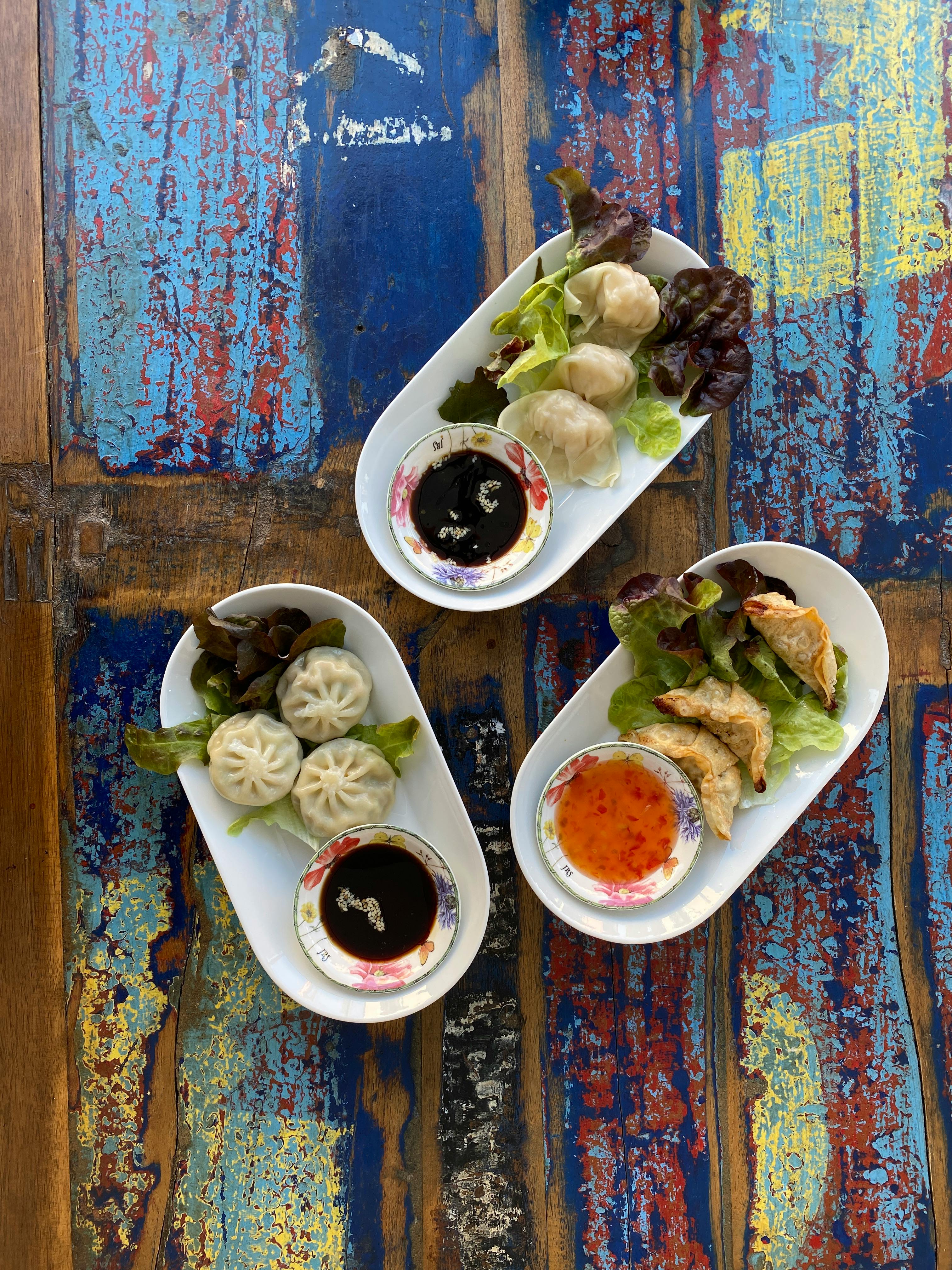
Photo: Gansharm Bdk / Pexels
Chinese
Vegetable Dumplings
The diets react (see scores below)
Common Ingredients
- dumpling wrappers
- Napa cabbage
- shiitake mushrooms
- carrots
- firm tofu
- ginger
- garlic
- sesame oil
Specific recipes may vary.
Incompatible with 5 of 11 diets
Diet Ratings
Vegetable dumplings are fundamentally incompatible with a ketogenic diet, primarily due to the dumpling wrappers, which are made from wheat flour — a refined grain that is a major source of net carbs. A standard serving of 4-6 dumplings can easily contain 30-50g of net carbs from the wrappers alone, which meets or exceeds the entire daily keto carb budget. The filling ingredients (Napa cabbage, shiitake mushrooms, carrots, tofu, ginger, garlic) are a mixed bag: cabbage and tofu are relatively keto-friendly, but carrots add meaningful sugar and net carbs, and mushrooms contribute moderate carbs. However, the filling is largely irrelevant — the wheat-based wrapper is the disqualifying factor. Sesame oil is fine, but cannot offset the carb load of the dish as a whole.
All listed ingredients are fully plant-based. The filling — Napa cabbage, shiitake mushrooms, carrots, firm tofu, ginger, and garlic — consists of whole vegetables, fungi, and minimally processed soy protein. Sesame oil is a plant-derived fat. Dumpling wrappers are typically made from wheat flour and water, with no eggs or dairy. The dish is nutritionally sound, protein-adequate, and representative of traditional plant-forward Chinese cooking. The confidence is medium rather than high solely because standard dumpling wrappers sold commercially are sometimes made with eggs, so the wrapper ingredient should be verified — though the plain flour-and-water version is the default in Chinese cuisine.
Some whole-food plant-based advocates may flag sesame oil as a heavily refined, calorie-dense fat and prefer the dish prepared with less oil, but this is a nutritional preference, not a vegan compliance objection. A small practical concern within vegan circles is that store-bought dumpling wrappers occasionally contain egg, so label-checking is advised.
Vegetable Dumplings contain multiple non-paleo ingredients that disqualify this dish outright. Dumpling wrappers are made from wheat flour, a grain that is strictly excluded from the paleo diet. Tofu is a soy-based product, making it a legume — another category explicitly excluded. Sesame oil is a seed oil, which is also on the avoid list. With three separate hard-exclude violations (grains, legumes, seed oils), this dish scores at the bottom of the scale. The paleo-friendly ingredients — Napa cabbage, shiitake mushrooms, carrots, ginger, and garlic — are irrelevant given the severity of the violations.
Vegetable dumplings feature an excellent filling — tofu, Napa cabbage, shiitake mushrooms, carrots, garlic, and ginger are all plant-forward, nutrient-rich ingredients well aligned with Mediterranean principles. However, the dumpling wrappers are made from refined white flour, a refined grain that Mediterranean diet guidelines discourage in favor of whole grains. Sesame oil, while a healthy unsaturated fat, is not the Mediterranean-canonical extra virgin olive oil. The dish is not processed in a harmful sense and contains no red meat, added sugars, or unhealthy saturated fats, but the refined wrapper and non-traditional fat source prevent a full approval. As a moderate snack or occasional dish, it is acceptable.
Some Mediterranean diet practitioners argue that thin refined-flour wrappers used in modest portions represent a negligible glycemic burden, especially when paired with fiber-rich vegetable fillings that moderate glucose response — this view would push the score closer to 6-7. Conversely, strict whole-grain-only interpretations (as emphasized in modern clinical Mediterranean diet protocols like the PREDIMED guidelines) would maintain that any refined grain wrapper warrants caution.
Vegetable Dumplings are entirely incompatible with the carnivore diet. Every single ingredient is plant-derived or grain-based: dumpling wrappers are made from wheat flour (a grain), Napa cabbage and carrots are vegetables, shiitake mushrooms are fungi, tofu is a soy-based legume product, ginger and garlic are plant aromatics, and sesame oil is a plant-derived oil. There is not a single animal-derived ingredient in this dish. This dish represents the opposite of carnivore principles — it is a plant-forward, grain-wrapped, legume-protein-centered snack with zero animal content.
Vegetable Dumplings contain multiple excluded ingredients. First, dumpling wrappers are made from wheat flour, which is a grain explicitly excluded on the Whole30. Second, tofu is a soy-based product, and soy is a legume explicitly excluded on the Whole30. Either of these ingredients alone would disqualify the dish. The remaining ingredients (Napa cabbage, shiitake mushrooms, carrots, ginger, garlic, sesame oil) are all Whole30-compliant, but the foundational components of this dish make it entirely incompatible with the program.
This dish contains multiple high-FODMAP ingredients that make it unsuitable during the elimination phase. Garlic is one of the highest-FODMAP foods tested by Monash University, rich in fructans, and is a clear avoid at any standard culinary quantity. Shiitake mushrooms are high in polyols (mannitol) and must be avoided during elimination. Traditional dumpling wrappers are made from wheat flour, which is high in fructans. With three significant FODMAP offenders — garlic, shiitake mushrooms, and wheat-based wrappers — this dish cannot be safely consumed during the elimination phase regardless of portion size. Napa cabbage is low-FODMAP at small servings but can become moderate at larger quantities. The remaining ingredients (carrots, firm tofu, ginger, sesame oil) are low-FODMAP and not a concern.
Vegetable dumplings contain predominantly DASH-friendly ingredients — Napa cabbage, carrots, shiitake mushrooms, firm tofu, ginger, and garlic are all excellent DASH foods rich in fiber, potassium, magnesium, and plant-based protein. Sesame oil is an unsaturated vegetable oil, acceptable in small amounts. However, two factors push this into caution territory: (1) Dumpling wrappers are refined white flour, not whole grain, which DASH de-emphasizes. (2) The sodium concern is significant — soy sauce or salt is typically added during preparation (not listed but standard in this dish), and dipping sauces (soy-based) add substantial sodium. Even without soy sauce, dumpling wrappers contribute moderate sodium. The dish as commonly consumed in a Chinese restaurant or home setting likely contains 400–800mg+ sodium per serving of 4–6 dumplings, which must be accounted for within the 1,500–2,300mg daily DASH limit. The filling ingredients themselves are genuinely DASH-supportive, so with portion control, low-sodium preparation (minimal added salt, no soy dipping sauce, or low-sodium soy sauce), this dish can fit within a DASH plan.
NIH DASH guidelines would flag the refined flour wrappers and typical sodium load from standard preparation. However, updated clinical interpretation among DASH-oriented dietitians may approve this dish when homemade with low-sodium soy sauce or tamari and whole wheat wrappers, given the exceptionally DASH-aligned filling of vegetables, legumes (tofu), and mushrooms.
Vegetable dumplings are a workable but imperfect Zone food. The filling is actually quite Zone-friendly: firm tofu provides vegetarian protein, Napa cabbage, shiitake mushrooms, and carrots are low-glycemic favorable vegetables, and ginger and garlic offer polyphenol benefits. Sesame oil is a mixed fat — it contains both monounsaturated and polyunsaturated (omega-6) fatty acids, which Sears would consider less ideal than olive oil or avocado but not disqualifying. The main challenge is the dumpling wrappers, which are made from refined white flour — a high-glycemic, unfavorable carbohydrate in Zone terminology. They add significant starchy carbs with little fiber, making the net carb load per block larger than preferred. As a vegetarian dish, fat blocks are calculated at 3g per block (larger portions needed), and the sesame oil quantity is likely modest. The macro balance will be skewed toward carbohydrates from the wrappers with relatively little protein from tofu per dumpling. To Zone-balance this snack, a small portion (2-3 dumplings) could be paired with additional lean protein, or the ratio of filling to wrapper could be increased. It is usable but requires careful portioning and is not a naturally balanced Zone snack as typically served.
Some Zone practitioners note that Sears' later writings (The OmegaRx Zone, The Anti-Inflammation Zone) place increasing emphasis on polyphenols and anti-inflammatory foods, and the vegetable-heavy filling with ginger, garlic, shiitake mushrooms, and Napa cabbage is rich in these compounds. A strict early-Zone reading would flag the refined flour wrappers more harshly as an unfavorable carb, while later Zone adherents might accept a small portion given the favorable filling profile.
Vegetable dumplings bring together a strong lineup of anti-inflammatory ingredients. Shiitake mushrooms are explicitly emphasized in Dr. Weil's Anti-Inflammatory Food Pyramid as cooked Asian mushrooms with immune-modulating beta-glucans and lentinan. Firm tofu is a whole soy food, also emphasized in anti-inflammatory frameworks for its isoflavones and plant protein. Napa cabbage and carrots supply antioxidants, carotenoids, and fiber. Ginger and garlic are both well-established anti-inflammatory spices with robust research support (gingerols, allicin, organosulfur compounds). Sesame oil adds some omega-6, but in the small culinary amounts typical in Chinese cooking it is not a concern and also contributes sesamol and sesamin, which have antioxidant properties. The main moderating factor is the dumpling wrapper — a refined wheat starch product with minimal fiber or nutritional value, which nudges the dish slightly away from a perfect score. However, the wrapper serves as a delivery vehicle for otherwise high-quality anti-inflammatory fillings, and in typical serving portions the refined carbohydrate load is not excessive. Overall this dish is a net anti-inflammatory choice, especially compared to most snack-category foods.
Mainstream anti-inflammatory nutrition (Dr. Weil, IF Rating system) would likely approve this dish given its whole-food vegetable and tofu filling with medicinal spices. However, practitioners following stricter anti-inflammatory or autoimmune protocols (e.g., AIP, grain-free approaches) would flag the refined wheat wrapper as a source of gluten and refined starch that may trigger inflammatory responses in gluten-sensitive or autoimmune individuals; they would suggest rice paper or lettuce wraps as substitutes.
Vegetable dumplings offer a reasonably nutrient-dense snack with fiber-rich vegetables (Napa cabbage, carrots, shiitake mushrooms) and plant-based protein from firm tofu, making them more GLP-1 compatible than many snack options. However, the protein density per serving is moderate at best — a typical 4–6 dumpling serving delivers roughly 8–12g of protein from tofu, which falls short of the 15–30g per meal target. The refined wheat dumpling wrappers are low in fiber and moderately high in simple carbohydrates, limiting overall nutrient density per calorie. Sesame oil is an unsaturated fat and acceptable in small amounts, but adds caloric density. If steamed (preferred), digestibility is good and fat remains low. If pan-fried or deep-fried, the fat and greasiness increase meaningfully, worsening GLP-1 side effect risk. Portion size matters significantly — a small serving of steamed dumplings is a reasonable snack, but it should not serve as a primary protein source in a meal without augmentation.
Some GLP-1-focused dietitians view tofu-filled steamed dumplings favorably as a gentle, easy-to-digest option when GI side effects are prominent, prioritizing tolerability over protein optimization. Others flag the refined wrapper and low protein-to-calorie ratio as problematic given the need for nutrient density at reduced intake volumes, and would recommend pairing with an additional protein source or substituting higher-protein fillings.
*See how scores were generated at our methodology page.
Nutritional profile
Six traits that cut across every diet.
Fiber & Plants
How much whole-plant food and fiber it delivers.
Healthy Fats
The quality of its fats (unsaturated, omega-3).
Whole / Unprocessed
How close it is to its natural, unprocessed form.
Gut Gentle
How easy it is on digestion (low FODMAP, few irritants).
Low Glycemic
How little it spikes your blood sugar.
Protein Density
How much protein it packs per calorie.
Controversy Index
Higher controversy = more disagreement between diets.
Diet-Specific Tips
 Vegan — 9/10
View tips
- All core ingredients are plant-derived
- Firm tofu provides complete protein without any animal products
- Shiitake mushrooms and Napa cabbage are nutrient-dense whole foods
- Sesame oil is plant-based but refined — minor concern for whole-food advocates
- Standard dumpling wrappers are flour and water, but commercial versions should be checked for egg
- No dairy, no eggs, no meat, no animal-derived additives in the listed recipe
 Mediterranean — 5/10
View tips
- Excellent plant-forward filling: tofu, cabbage, mushrooms, carrots
- Refined white flour dumpling wrappers contradict whole-grain emphasis
- Sesame oil is healthy but not the preferred extra virgin olive oil
- No red meat, no added sugars, no harmful saturated fats
- Non-Mediterranean cuisine but ingredient quality is largely compatible
- Portion-dependent: moderate snack consumption is acceptable
 DASH — 5/10
View tips
- Filling is rich in DASH-approved vegetables (cabbage, carrots, mushrooms) and plant protein (tofu)
- Sesame oil is an unsaturated fat, acceptable in moderation per DASH
- Dumpling wrappers are refined white flour — not whole grain as DASH prefers
- Sodium risk is high when standard preparation includes soy sauce or salt; dipping sauces compound this
- Low-sodium soy sauce and portion control (4–6 dumplings) can make this DASH-compatible
- No saturated fat, no added sugar, no red meat — favorable fat profile
 Zone — 5/10
View tips
- Dumpling wrappers are refined white flour — a high-glycemic unfavorable carb in Zone methodology
- Firm tofu is an approved Zone vegetarian protein source
- Napa cabbage, shiitake mushrooms, and carrots are favorable low-glycemic vegetables
- Sesame oil contains omega-6 fatty acids, less preferred than monounsaturated fats like olive oil
- As vegetarian protein, fat blocks require 3g per block — portion control on sesame oil is important
- Polyphenol-rich ingredients (ginger, garlic, shiitake) align with Sears' anti-inflammatory focus
- Macro balance skews carb-heavy due to wrappers; small portions needed to stay in Zone ratios
 Anti-Inflammatory — 8/10
View tips
- Shiitake mushrooms: anti-inflammatory Asian mushroom with beta-glucans and immune-modulating properties
- Firm tofu: emphasized whole soy food with isoflavones
- Ginger: well-researched anti-inflammatory spice (gingerols, shogaols)
- Garlic: anti-inflammatory organosulfur compounds
- Napa cabbage and carrots: antioxidants, carotenoids, and dietary fiber
- Sesame oil: small culinary amount with antioxidant lignans (sesamol, sesamin)
- Dumpling wrapper: refined wheat starch, low fiber — modest pro-inflammatory consideration
 GLP-1 Friendly — 5/10
View tips
- Moderate protein from tofu — falls short of 15–30g per meal target at typical serving sizes
- Fiber-contributing vegetables (cabbage, carrots, mushrooms) support GI health
- Refined dumpling wrappers are low-fiber, low-nutrient-density carbohydrates
- Sesame oil is an acceptable unsaturated fat but adds caloric density
- Steamed preparation is GLP-1 friendly; pan-fried or deep-fried versions should be avoided
- Small-portion friendly as a snack, but inadequate as a standalone protein source
- Easy to digest when steamed — favorable for patients experiencing nausea or slowed gastric emptying