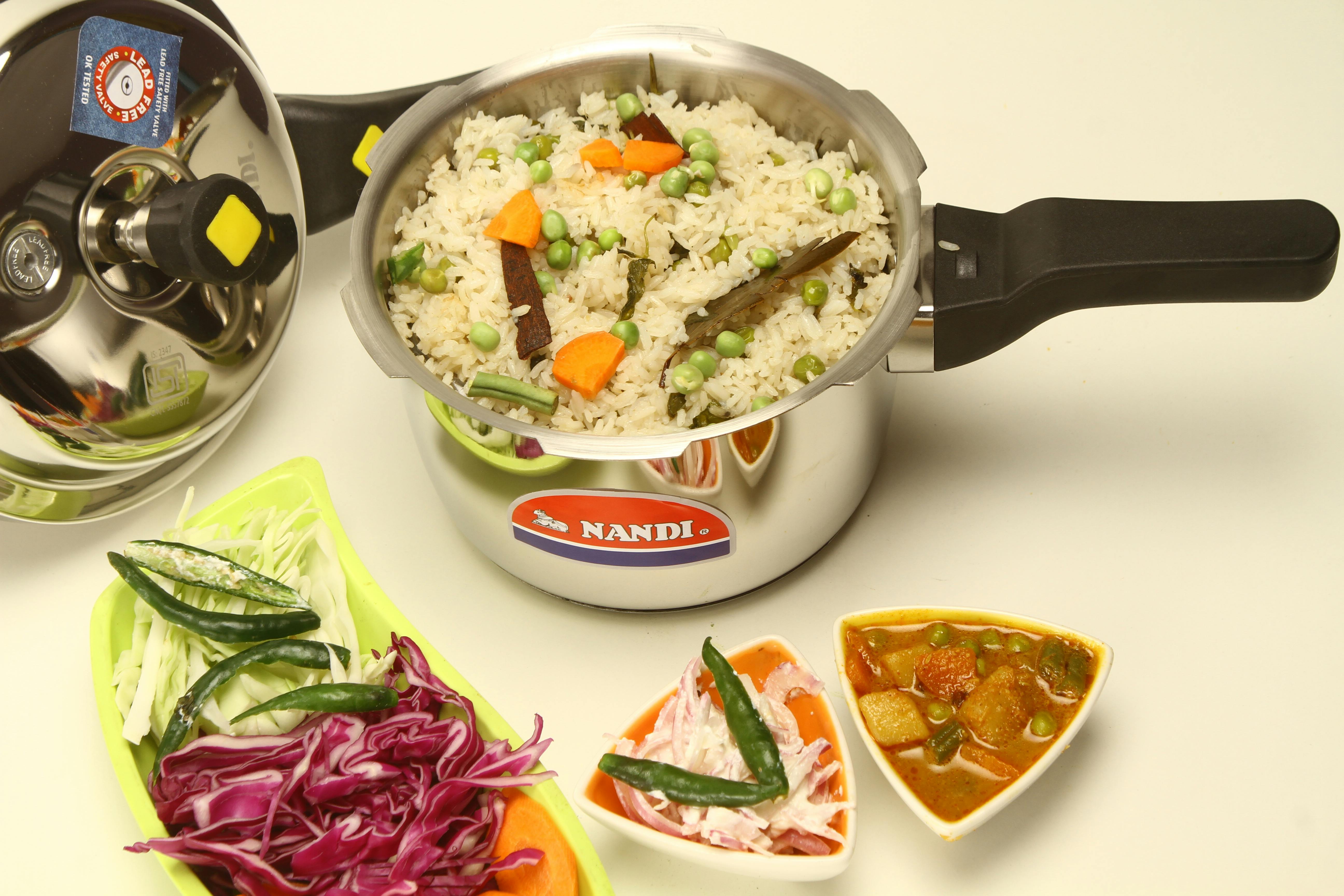
Photo: Milton Das / Pexels
Indian
Vegetable Pulao
The diets react (see scores below)
Common Ingredients
- basmati rice
- carrots
- peas
- green beans
- ghee
- cumin
- cardamom
- bay leaf
Specific recipes may vary.
Incompatible with 5 of 11 diets
Diet Ratings
Vegetable Pulao is built on a foundation of basmati rice, which is a high-glycemic grain containing approximately 45g of net carbs per half-cup cooked serving. A single standard serving of this dish would almost certainly exceed the entire daily net carb allowance for ketosis (20-50g). The addition of peas and carrots further adds starchy, moderate-to-high carb vegetables. While ghee and the spices (cumin, cardamom, bay leaf) are keto-friendly, and green beans are relatively low-carb, they cannot offset the massive carb load from the rice. This dish is fundamentally incompatible with a ketogenic diet in any reasonable portion size.
Vegetable Pulao as listed contains ghee, which is clarified butter — a dairy product derived from cow's milk and therefore a clear animal-derived ingredient. All other ingredients (basmati rice, carrots, peas, green beans, cumin, cardamom, bay leaf) are fully plant-based. The dish fails vegan criteria solely due to ghee. A simple substitution of ghee with a neutral plant-based oil (e.g., coconut oil, sunflower oil) or vegan butter would make this dish fully vegan-compliant and score it an 8–9.
Vegetable Pulao is fundamentally built on basmati rice, a grain that is explicitly excluded from the paleo diet. Grains are among the most clearly non-paleo foods due to their anti-nutrient content (phytates, lectins) and the fact that they require agricultural cultivation unavailable to Paleolithic humans. Beyond the rice, peas and green beans are legumes — also firmly excluded from paleo. While some ingredients are paleo-compliant (carrots, ghee in most modern interpretations, cumin, cardamom, bay leaf), the dish's two foundational components — a grain and legumes — make it incompatible with the paleo diet regardless of preparation method.
Vegetable Pulao contains a good mix of Mediterranean-friendly vegetables (carrots, peas, green beans) cooked with aromatic spices, which aligns well with plant-forward principles. However, the dish uses basmati rice (a refined/white grain rather than a whole grain) and ghee (clarified butter, a saturated animal fat) instead of the Mediterranean staple extra virgin olive oil. The vegetables and spices are positive elements, but the refined grain base and ghee as the cooking fat place this dish in the caution zone rather than an outright approval.
Some Mediterranean diet interpretations allow white rice in moderation, as it appears in traditional Greek and Turkish cuisines (e.g., pilaf dishes). Additionally, ghee, while not canonical, is used sparingly in some regional Mediterranean-adjacent traditions, and a small amount as a flavor enhancer could be considered acceptable by more permissive practitioners.
Vegetable Pulao is almost entirely plant-based and is fundamentally incompatible with the carnivore diet. Basmati rice is a grain and a primary carbohydrate source explicitly excluded from carnivore. Carrots, peas, and green beans are vegetables — all plant foods strictly forbidden. Cumin, cardamom, and bay leaf are plant-derived spices, also excluded. The only ingredient with any carnivore relevance is ghee, a clarified butter derivative that some practitioners include, but one acceptable ingredient cannot redeem a dish that is overwhelmingly and categorically plant-based. There is no animal protein whatsoever. This dish represents virtually everything the carnivore diet eliminates.
Basmati rice is a grain, and grains are explicitly excluded on the Whole30 program. Regardless of the other ingredients being compliant (ghee is the allowed dairy exception, green beans are the allowed legume exception, carrots, peas, cumin, cardamom, and bay leaf are all fine), the presence of basmati rice makes this dish non-compliant. There is no workaround or exception for rice on Whole30.
Vegetable Pulao is mostly low-FODMAP but contains one significant problem ingredient: peas. Green peas are high in GOS and fructans and are rated high-FODMAP by Monash University at a standard serving (around 75g or 1/2 cup), though very small quantities (around 1/4 cup or fewer than 15 pods) are considered borderline. In a pulao, peas are typically present in a meaningful quantity, pushing this dish into caution territory. Basmati rice is clearly low-FODMAP and a staple of the diet. Carrots are low-FODMAP at standard servings (up to 1 medium carrot). Green beans are low-FODMAP at up to 15 beans (about 75g) per Monash. Ghee is low-FODMAP as it is essentially pure fat with negligible lactose. Cumin, cardamom, and bay leaf are used in small culinary amounts and are considered low-FODMAP at typical spice quantities. The dish would be approvable if peas were omitted or replaced with a low-FODMAP vegetable such as zucchini or bell pepper. As traditionally prepared with a standard quantity of peas, caution is warranted.
Monash University rates peas as high-FODMAP at standard servings due to GOS content, but some clinical FODMAP practitioners suggest that very small amounts of peas (under 15 pods) dispersed across a larger dish may be tolerated by some individuals — however, this level of restriction makes the dish practically difficult to enjoy and is not recommended during strict elimination phase.
Vegetable Pulao is a moderately DASH-compatible dish. The vegetables (carrots, peas, green beans) are excellent DASH foods, providing potassium, magnesium, fiber, and micronutrients. Basmati rice is a refined grain — white basmati is not a whole grain, which DASH de-emphasizes in favor of whole grains, though it is low in sodium and fat. The primary concern is ghee, which is clarified butter and a saturated fat source. DASH guidelines explicitly limit saturated fat and full-fat dairy-derived fats. However, the amount of ghee in a typical pulao is relatively modest (1-2 tablespoons for 4 servings), and the dish is low in sodium and contains no processed or added sugar. The spices (cumin, cardamom, bay leaf) are DASH-neutral and beneficial. Overall, this is a vegetable-forward, low-sodium dish that falls short of a full approval primarily due to the refined grain base and ghee content.
NIH DASH guidelines specify whole grains and limit saturated fat from sources like ghee. However, some DASH-oriented dietitians note that basmati rice has a lower glycemic index than other white rices and that small amounts of ghee in an otherwise vegetable-rich, low-sodium dish may not meaningfully impact cardiovascular risk — particularly if portion sizes are controlled.
Vegetable Pulao is a rice-dominant dish that presents significant Zone Diet challenges. Basmati rice, while lower-glycemic than white rice, is still a high-carbohydrate grain that Dr. Sears classifies as an 'unfavorable' carb — allowed in limited quantities (0-1 grain servings/day) but not as the primary component of a meal. A typical serving of pulao would deliver far too many carb blocks relative to protein and fat blocks, severely distorting the 40/30/30 ratio. The vegetables (carrots, peas, green beans) are favorable Zone carbs, but they are clearly subordinate to the rice in this dish. Ghee is a saturated fat source, not the monounsaturated fat the Zone prefers, though it serves as the fat block. Most critically, this dish lacks any protein source whatsoever — making it impossible to achieve Zone balance as served. To fit Zone principles, it would need to be served in a very small portion alongside a substantial lean protein source, with rice minimized and vegetables maximized. The spices (cumin, cardamom, bay leaf) are neutral to beneficial due to polyphenol content. As a standalone main, it fails the Zone ratio test.
Vegetable Pulao is a mixed anti-inflammatory profile dish. On the positive side, it contains colorful vegetables — carrots (beta-carotene, antioxidants), peas (fiber, plant protein, polyphenols), and green beans (vitamins, flavonoids) — all of which support an anti-inflammatory diet. The spices are a clear strength: cumin has antioxidant and anti-inflammatory properties, cardamom is associated with reduced inflammatory markers, and bay leaf contains eugenol and other compounds with anti-inflammatory activity. However, two factors limit the rating. First, basmati rice is a refined or semi-refined grain with a relatively high glycemic index compared to whole grains; it lacks the fiber and phytonutrients of brown rice or other whole grains, and refined carbohydrates are on the 'limit' list in anti-inflammatory frameworks. Second, ghee (clarified butter) is a saturated fat, which the anti-inflammatory framework places in the 'limit' category alongside butter and full-fat dairy. While some integrative and Ayurvedic traditions — and even a few modern researchers — argue ghee has unique short-chain fatty acids (butyrate) with gut anti-inflammatory benefits, mainstream anti-inflammatory nutrition (including Dr. Weil's framework) treats it as a saturated fat to moderate. The vegetable and spice components push the dish toward acceptable, but the ghee and white basmati rice prevent a full approval. Substituting brown basmati and using extra virgin olive oil would meaningfully improve the profile.
Ghee is contested: mainstream anti-inflammatory nutrition (Dr. Weil's pyramid, AHA) places saturated fats like ghee in the 'limit' category due to LDL and inflammatory potential, but Ayurvedic and some integrative medicine proponents argue ghee's butyric acid content is gut-protective and anti-inflammatory, and a small number of modern studies support a neutral-to-positive role for ghee in moderation. On basmati rice, some anti-inflammatory practitioners distinguish basmati from other white rices due to its lower glycemic index relative to other refined grains, viewing it as acceptable in the context of a vegetable-rich dish.
Vegetable Pulao is a low-protein, moderate-fiber rice dish cooked with ghee (a saturated fat). While the vegetables (carrots, peas, green beans) add some fiber and micronutrients, and basmati rice is relatively easy to digest, the dish falls short on the two highest GLP-1 priorities. Protein content is essentially negligible — there is no meaningful protein source in the ingredient list, which is a significant problem for GLP-1 patients who need 15-30g of protein per meal to prevent muscle loss. Basmati rice is a refined-to-semi-refined starch with a moderate glycemic index, contributing primarily carbohydrate calories. Ghee adds saturated fat, which should be limited. The dish is aromatic and gentle on digestion — the spices (cumin, cardamom, bay leaf) are mild and well-tolerated — and the small portion friendliness of rice works reasonably well. However, as a standalone main dish it is nutritionally incomplete for a GLP-1 patient. It could be upgraded to caution-acceptable if paired with a high-protein side (grilled chicken, paneer, lentils, or chickpeas) and kept to a small portion, treating it as a side rather than a main.
*See how scores were generated at our methodology page.
Nutritional profile
Six traits that cut across every diet.
Fiber & Plants
How much whole-plant food and fiber it delivers.
Healthy Fats
The quality of its fats (unsaturated, omega-3).
Whole / Unprocessed
How close it is to its natural, unprocessed form.
Gut Gentle
How easy it is on digestion (low FODMAP, few irritants).
Low Glycemic
How little it spikes your blood sugar.
Protein Density
How much protein it packs per calorie.
Controversy Index
Higher controversy = more disagreement between diets.
Diet-Specific Tips
 Mediterranean — 5/10
View tips
- Basmati rice is a refined/white grain, not a whole grain — modern Mediterranean guidelines prefer whole grains
- Ghee is a saturated animal fat, contrasting with extra virgin olive oil as the preferred fat source
- Carrots, peas, and green beans are strongly Mediterranean-compatible vegetables
- No added sugars or heavily processed ingredients
- Aromatic spices (cumin, cardamom, bay leaf) are compatible and health-supportive
- Could be improved by substituting brown rice or farro and replacing ghee with olive oil
 Low-FODMAP — 5/10
View tips
- Peas are high-FODMAP (GOS/fructans) at standard servings — the primary concern in this dish
- Basmati rice is clearly low-FODMAP and forms the bulk of the dish
- Carrots and green beans are low-FODMAP at standard serving sizes
- Ghee is low-FODMAP (pure fat, negligible lactose)
- Spices (cumin, cardamom, bay leaf) are low-FODMAP at typical culinary quantities
- Dish would be safe during elimination phase if peas are removed or strictly limited
 DASH — 6/10
View tips
- Carrots, peas, and green beans are excellent DASH-approved vegetables rich in potassium, magnesium, and fiber
- Ghee is a saturated fat source, which DASH guidelines explicitly limit
- White basmati rice is a refined grain; DASH prefers whole grains like brown rice
- Dish is naturally low in sodium, which strongly aligns with DASH principles
- No added sugar, processed ingredients, or high-sodium condiments
- Spices are DASH-neutral and add flavor without sodium
- Modest ghee quantity per serving partially mitigates saturated fat concern
- Substituting brown basmati rice and using a small amount of olive or canola oil would improve the DASH score
 Zone — 4/10
View tips
- Basmati rice is an 'unfavorable' high-glycemic grain in Zone terminology — limited to 0-1 servings/day
- No protein source present — impossible to achieve 30% protein ratio as served
- Ghee is saturated fat, not the preferred monounsaturated fat (olive oil, avocado, almonds)
- Vegetables (carrots, peas, green beans) are favorable Zone carbs but are minor components of this dish
- Carbohydrate blocks would be heavily dominated by rice, not low-glycemic vegetables
- Could only approach Zone compliance as a very small side portion paired with lean protein and a monounsaturated fat source
- Spices provide anti-inflammatory polyphenols, a minor positive
 Anti-Inflammatory — 5/10
View tips
- Colorful vegetables (carrots, peas, green beans) provide antioxidants, carotenoids, and fiber
- Cumin, cardamom, and bay leaf are all anti-inflammatory spices with documented bioactive compounds
- Ghee is a saturated fat — categorized as 'limit' in anti-inflammatory frameworks
- Basmati rice is a refined/semi-refined grain with a moderately high glycemic index, not a whole grain
- No omega-3 sources, no legumes or whole soy, no olive oil — missed opportunities for anti-inflammatory enhancement
- Overall dish is vegetable-forward and spice-rich, which partially offsets the less favorable starch and fat components
 GLP-1 Friendly — 4/10
View tips
- Negligible protein — fails the #1 GLP-1 dietary priority entirely as a standalone dish
- Moderate fiber from peas, green beans, and carrots, but not high-fiber overall
- Ghee adds saturated fat, which should be limited on GLP-1 medications
- Basmati rice is relatively easy to digest and lower GI than many other white rices, which is a mild positive
- Mild spices are well-tolerated and do not worsen GI side effects
- Must be paired with a substantial protein source to be appropriate for a GLP-1 patient meal
- Small portions recommended — rice is calorie-dense relative to its nutritional contribution