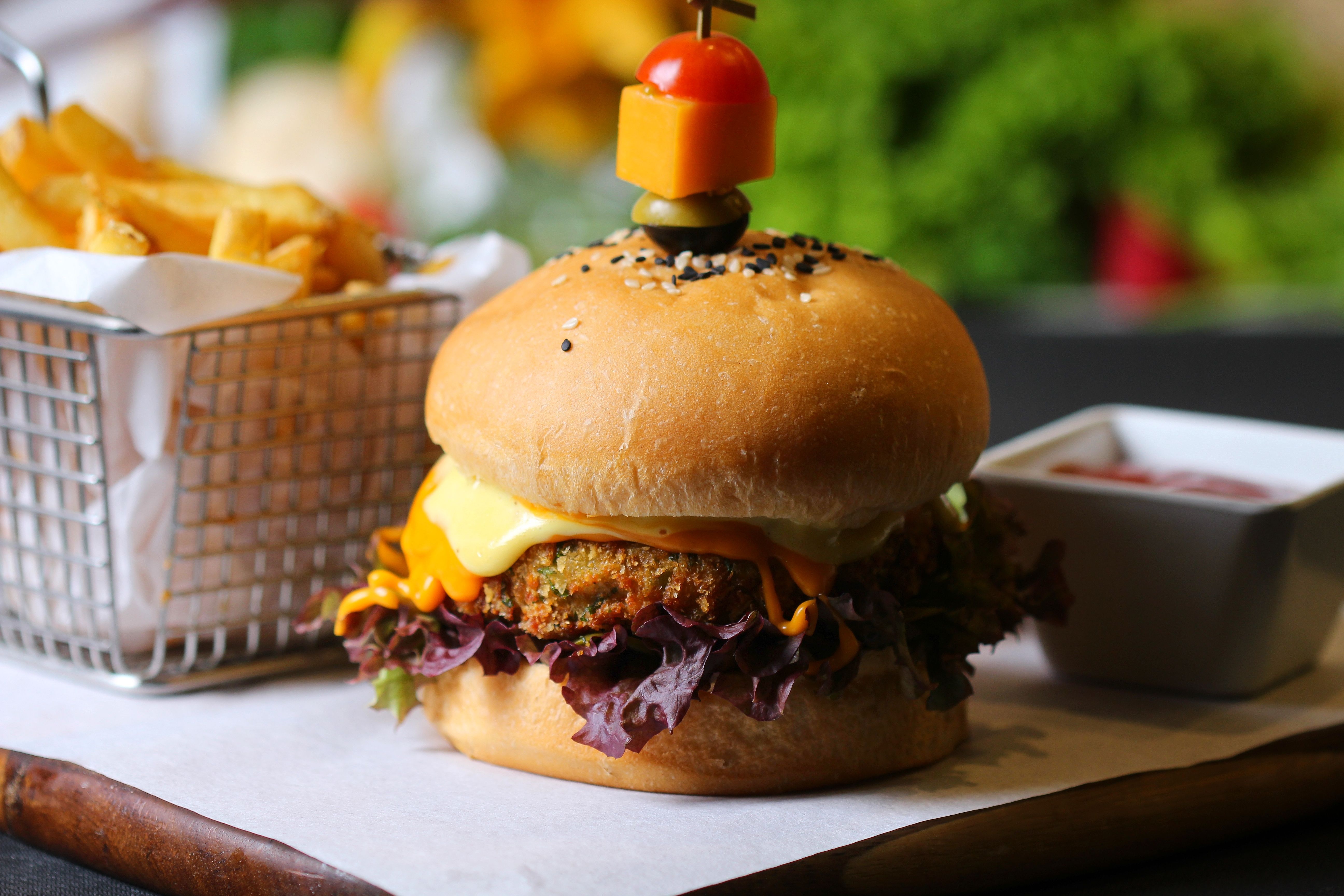
Photo: Shameel mukkath / Pexels
American
Veggie Burger
The diets react (see scores below)
Common Ingredients
- black beans
- quinoa
- onion
- garlic
- oats
- brioche bun
- lettuce
- tomato
Specific recipes may vary.
Incompatible with 5 of 11 diets
Diet Ratings
The veggie burger as described is fundamentally incompatible with ketogenic eating. Nearly every structural ingredient violates keto principles: the brioche bun alone contributes ~30-40g net carbs, black beans add ~20-25g net carbs per half-cup serving, quinoa adds another ~17-20g net carbs per half-cup, and oats contribute additional starch. Combined, this dish easily delivers 70-100g+ net carbs in a single serving — three to five times the entire daily keto allowance. The protein sources (black beans, pea protein) are high-carb legumes or processed plant proteins rather than the high-fat animal proteins preferred on keto. Even the patty alone, without the bun, would exceed most people's daily carb limit. Lettuce and tomato are negligible carb contributors but cannot offset the macronutrient profile of the rest of the dish.
The burger patty ingredients (black beans, quinoa, onion, garlic, oats) are entirely plant-based and wholesome. However, the brioche bun is the critical problem: traditional brioche is made with eggs and butter, making it non-vegan by default. The dish as listed must be rated on its ingredients as given, and brioche is not a vegan bread. That said, vegan brioche-style buns do exist, so the dish can be made vegan with a substitution. The patty itself would score highly (8-9) as a whole-food plant-based preparation, but the bun as listed prevents a full approve verdict. A caution rating reflects that this dish is nearly vegan but requires a bun swap to be fully compliant.
Some plant-based health advocates focus exclusively on the patty when evaluating a veggie burger's nutritional profile, treating the bun as a modifiable component and effectively approving the dish with the implicit assumption that a vegan bun would be chosen. Strict ingredient-list vegans, however, would flag brioche as an automatic disqualifier requiring an explicit substitution note.
The Veggie Burger is fundamentally incompatible with the Paleo diet. Every core component of the dish violates Paleo principles: black beans are a legume (explicitly excluded), quinoa and oats are grains (explicitly excluded), and the brioche bun is a refined grain-based processed food (doubly excluded). The primary protein sources listed — black beans and pea protein — are both legumes. Pea protein is additionally a processed, isolated supplement that contradicts the whole-food philosophy of Paleo. The only Paleo-compliant ingredients in the entire dish are onion, garlic, lettuce, and tomato. With the majority of the dish's structure, protein, and carbohydrate base built on avoided food groups, there is no meaningful way to adapt this dish while retaining its identity.
The veggie burger patty itself is built on Mediterranean-friendly ingredients: black beans and quinoa are excellent plant-based protein and fiber sources, oats add whole grain content, and aromatics like onion and garlic are staples. Lettuce and tomato toppings are fully aligned. However, the brioche bun is a refined, enriched bread made with butter and eggs — a processed, refined grain product not typical of Mediterranean eating. The format (processed patty, refined bun) is American fast-food in style rather than Mediterranean in tradition. Swapping the brioche for a whole-grain or whole-wheat bun would significantly improve the rating. As served, the dish is acceptable in moderation — the plant-based core is strong, but the refined bun drags it down from a full approval.
Some Mediterranean diet interpretations, particularly those focused on the overall dietary pattern rather than individual meals, would view this as a healthy plant-forward choice worth encouraging regardless of bun type, arguing that the legume-and-grain base closely mirrors traditional Mediterranean bean dishes like falafel or fagioli preparations served in bread.
The Veggie Burger is entirely plant-based and contains zero animal products. Every single ingredient — black beans, quinoa, onion, garlic, oats, brioche bun, lettuce, and tomato — is explicitly excluded on the carnivore diet. Black beans and quinoa are legumes and grains respectively, oats are a grain, the brioche bun is a processed grain product, and the vegetables are all forbidden plant foods. This dish represents the antithesis of the carnivore diet, which requires exclusive consumption of animal products. There is unanimous consensus across all carnivore diet tiers and authorities that this food is completely incompatible.
This veggie burger contains multiple Whole30-excluded ingredients. Black beans are legumes (explicitly excluded), quinoa is a grain (explicitly excluded), oats are a grain (explicitly excluded), and the brioche bun is both a grain-based bread product and falls under the 'no recreating baked goods' rule. There is no compliant path for this dish as described — the core components of the patty itself (black beans, quinoa, oats) are all excluded, and the bun compounds the violation further.
This veggie burger contains multiple high-FODMAP ingredients that make it clearly unsuitable during the elimination phase. Black beans are high in GOS (galacto-oligosaccharides) and are high-FODMAP at any reasonable serving size used in a burger patty — a standard serve of canned black beans (approximately 1/4 cup or 40g) already exceeds safe thresholds. Onion and garlic are among the highest-FODMAP foods tested by Monash University, both rich in fructans, and even small amounts used in cooking are problematic during elimination. The brioche bun is made from wheat and likely contains enriched ingredients (milk, honey), making it high in fructans and potentially lactose. Oats are low-FODMAP at a small serving (52g), but combined with all other high-FODMAP ingredients, the cumulative load is significant. Quinoa, lettuce, and tomato are low-FODMAP and would not be concerns on their own. The combination of black beans (GOS), onion (fructans), garlic (fructans), and a wheat-based brioche bun creates an unambiguously high-FODMAP dish with no realistic modification path short of rebuilding the recipe from scratch.
This veggie burger contains several strong DASH-aligned ingredients: black beans (high in potassium, magnesium, and fiber), quinoa (whole grain, complete protein), oats (whole grain, soluble fiber), onion, garlic, lettuce, and tomato. These components are textbook DASH foods. However, the brioche bun introduces refined white flour, added sugar, butter/eggs, and likely elevated sodium — significantly less ideal than a whole-grain bun would be. Brioche is an enriched bread with saturated fat content, which DASH limits. The overall dish is still plant-forward and avoids red meat, tropical oils, and heavy saturated fat from the patty itself, but the bun pulls the score down. Sodium content will vary by preparation and any condiments added, which are not listed but commonly accompany burgers and can substantially increase sodium load.
NIH DASH guidelines strongly favor legumes, whole grains, and vegetables — making the black bean-quinoa patty highly aligned. However, some DASH clinicians would rate this higher if the brioche bun were swapped for a 100% whole-grain option, while others note that the brioche bun alone doesn't make this dish incompatible with DASH if consumed in the context of an otherwise low-sodium, low-saturated-fat day.
The veggie burger has some Zone-friendly elements but presents notable challenges. The black beans and quinoa provide incomplete but usable protein (black beans are actually classified as a carb block in Zone, not a protein block, since their protein-to-carb ratio skews heavily carbohydrate). Quinoa similarly is a carb source with modest protein. The lettuce, tomato, onion, and garlic are excellent low-glycemic Zone vegetables. The primary Zone concern is the brioche bun — a refined, high-glycemic carbohydrate that is an 'unfavorable' carb in Zone terminology, adding significant glycemic load with little fiber benefit. Oats in the patty are a moderate-GI carb but more favorable than the bun. The overall carb load is high relative to the available protein, making it difficult to hit 40/30/30 without intervention. To Zone-balance this meal, one would ideally swap the brioche bun for a lettuce wrap or a whole-grain low-GI alternative, add a dedicated lean protein source (egg whites, tofu, or tempeh in the patty), and add a monounsaturated fat like avocado or a drizzle of olive oil. As served, the protein block count from black beans is undermined by the concurrent carb load they carry, and the brioche bun pushes the glycemic index further unfavorable. Usable in the Zone with significant modifications.
Some Zone practitioners count black beans as a dual protein/carb source and argue that plant-based meals inherently shift the fat block multiplier (3g fat per block for vegetarian protein vs. 1.5g for animal protein), giving more flexibility. In Sears' later writings on polyphenols and anti-inflammatory eating, the bean-and-vegetable base would be viewed positively for its polyphenol and fiber content, and he has softened his stance on legumes as viable Zone protein-carb hybrids. The bun remains the main sticking point across all interpretations.
This veggie burger has a genuinely strong anti-inflammatory core: black beans provide fiber, polyphenols, and plant protein; quinoa is a complete protein with anti-inflammatory flavonoids (quercetin, kaempferol); garlic and onion contain organosulfur compounds and quercetin with well-documented anti-inflammatory activity; oats offer beta-glucan fiber that reduces CRP. Lettuce and tomato add antioxidants and lycopene. However, the brioche bun is the main limiting factor — made with refined white flour, eggs, butter, and sugar, it is a refined carbohydrate with a high glycemic index that can spike blood sugar and promote low-grade inflammation. If the bun were a whole-grain option, this dish would likely score 7-8 and earn an approve. The overall dish lands in cautious territory: the filling is anti-inflammatory, but the delivery vehicle partially undermines it. Swapping to a whole-grain or sprouted grain bun, or serving open-faced, would shift the verdict to approve.
Most anti-inflammatory guidance would rate the bean-and-grain filling highly, but some practitioners (particularly those following low-lectin protocols like Dr. Steven Gundry's approach) caution against legumes and grains due to lectin content potentially irritating the gut lining. Mainstream anti-inflammatory authorities including Dr. Weil strongly endorse beans and whole grains as foundational foods, making the lectin concern a minority position.
This veggie burger has a solid nutritional foundation — black beans and quinoa provide plant-based protein and meaningful fiber, oats add additional fiber and digestive bulk, and the vegetable toppings (lettuce, tomato, onion, garlic) contribute micronutrients and water content with minimal calories. However, the brioche bun is a significant drawback for GLP-1 patients: it is a refined, enriched bread made with butter and eggs, contributing extra saturated fat and low-fiber refined carbohydrates that offer little nutritional return on a reduced-calorie budget. The protein yield from a standard black bean veggie patty is modest — typically 8–12g per patty — which is below the 15–30g per meal target and would need to be supplemented. The combination of beans, oats, and a bun also represents a high-carbohydrate load that may cause bloating or GI discomfort given GLP-1-slowed gastric emptying. Swapping the brioche bun for a whole grain or lettuce wrap would improve the score meaningfully.
Some GLP-1-focused dietitians view legume-based veggie burgers favorably as a high-fiber, plant-protein option that supports gut health and satiety, accepting the modest protein yield as adequate when paired with a fiber-rich side. Others caution that the refined bun and carbohydrate density make this a poor caloric investment for patients eating significantly reduced volumes, and recommend deconstructions or lettuce wraps to preserve the nutrient benefits without the glycemic and GI load.
*See how scores were generated at our methodology page.
Nutritional profile
Six traits that cut across every diet.
Fiber & Plants
How much whole-plant food and fiber it delivers.
Healthy Fats
The quality of its fats (unsaturated, omega-3).
Whole / Unprocessed
How close it is to its natural, unprocessed form.
Gut Gentle
How easy it is on digestion (low FODMAP, few irritants).
Low Glycemic
How little it spikes your blood sugar.
Protein Density
How much protein it packs per calorie.
Controversy Index
Higher controversy = more disagreement between diets.
Diet-Specific Tips
 Vegan — 6/10
View tips
- Brioche bun contains eggs and butter by default — not vegan as listed
- Black bean and quinoa patty is whole-food plant-based and highly nutritious
- All other ingredients (lettuce, tomato, onion, garlic, oats) are fully plant-based
- Dish can be made fully vegan by substituting a standard or whole-grain bun
- No hidden animal derivatives in the patty ingredients
 Mediterranean — 6/10
View tips
- Black beans and quinoa are excellent Mediterranean plant-based protein sources
- Oats provide whole grain nutrition
- Onion and garlic are Mediterranean staples
- Brioche bun is a refined, enriched grain — not Mediterranean-aligned
- No red meat — fully plant-based protein is a strong positive
- American fast-food format contrasts with traditional Mediterranean eating patterns
- Whole-grain bun substitution would elevate this to an approved dish
 DASH — 6/10
View tips
- Black beans: excellent DASH food — high fiber, potassium, magnesium, plant protein
- Quinoa and oats: whole grains aligned with DASH whole grain servings
- Brioche bun: refined flour, added sugar, butter-enriched — not DASH-ideal; whole-grain bun would score significantly higher
- Lettuce and tomato: core DASH vegetables
- No high-sodium processed cheese, bacon, or condiments listed — sodium risk is moderate but conditional
- Plant-based patty avoids red meat and saturated fat concerns
- Portion control matters: this counts toward grain and legume servings for the day
 Zone — 5/10
View tips
- Brioche bun is a high-glycemic refined carbohydrate — unfavorable Zone carb that elevates glycemic load significantly
- Black beans count primarily as a carb block in Zone (not protein), creating carb-heavy imbalance
- Quinoa adds additional carbohydrate load on top of beans and bun
- Lettuce, tomato, onion, garlic are favorable low-GI Zone vegetables
- No dedicated lean protein source — protein deficit relative to Zone 40/30/30 target
- No explicit monounsaturated fat source in the recipe (Zone-friendly fix: add avocado)
- Oats in patty are moderate-GI, more favorable than refined grains but still carb-dense
- Easily improved for Zone compatibility by swapping bun, adding lean protein, and adding avocado
 Anti-Inflammatory — 6/10
View tips
- Black beans: rich in fiber, polyphenols, and plant protein — strongly anti-inflammatory
- Quinoa: complete protein with quercetin and kaempferol — anti-inflammatory flavonoids
- Garlic and onion: organosulfur compounds (allicin, quercetin) with documented anti-inflammatory effects
- Oats: beta-glucan fiber shown to reduce CRP and IL-6
- Brioche bun: refined white flour + added sugar + butter = pro-inflammatory refined carbohydrate, main detractor
- Tomato: lycopene and vitamin C — antioxidant benefit
- No seed oils or artificial additives listed — avoids common anti-inflammatory pitfalls
 GLP-1 Friendly — 5/10
View tips
- Black beans and quinoa provide plant-based protein and fiber but total protein per serving is typically 8–12g, below the 15–30g per meal target
- Brioche bun adds refined carbohydrates and saturated fat with low nutritional value — a poor caloric trade-off on a reduced appetite budget
- High combined carbohydrate load (beans, oats, bun) may worsen GLP-1-related bloating and delayed gastric emptying
- Good fiber contribution from black beans, oats, and vegetable toppings supports digestion and constipation prevention
- Low-fat patty base is appropriate; no fried components, no high-fat processed additives listed
- Easily improved: substituting a whole grain bun or lettuce wrap and pairing with a lean protein supplement would move this toward approve