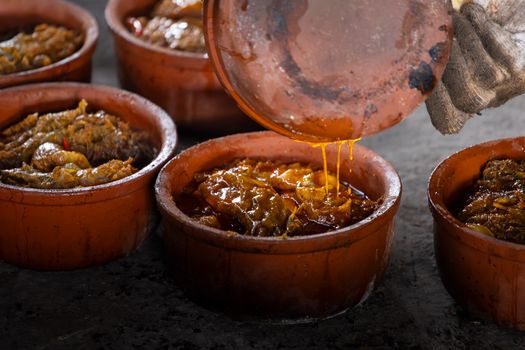
Photo: Hồng Quang Official / Pexels
Vietnamese
Cá Kho (Clay Pot Fish)
The diets react (see scores below)
Common Ingredients
- fish
- caramel sauce
- fish sauce
- shallots
- garlic
- ginger
- scallions
- black pepper
Specific recipes may vary.
Incompatible with 5 of 11 diets
Diet Ratings
Cá Kho is fundamentally a fish dish, and fish itself is excellent for keto — high protein, often high fat, zero carbs. However, the defining ingredient is the caramel sauce (nước màu), made by cooking sugar until it caramelizes. This introduces a significant amount of added sugar, which is a direct keto concern. Fish sauce also contains a small amount of sugar/carbs but is used in modest quantities. The remaining aromatics — shallots, garlic, ginger, scallions — contribute minor carbs and are used in relatively small amounts. The dish is not inherently disqualifying if the caramel sauce is reduced or substituted (e.g., using a small amount of soy sauce or omitted entirely for a strict approach), but in its traditional form, the sugar content from caramelization makes it a cautionary item. A typical serving likely contains 8–15g net carbs depending on sauce quantity, placing it in a manageable but portion-sensitive zone.
Strict keto practitioners would argue any caramel/sugar-based sauce is a hard avoid regardless of portion size, as added sugars can spike insulin and disrupt ketosis even in small amounts. They would recommend outright avoidance rather than portion control.
Cá Kho contains multiple animal-derived ingredients that are categorically incompatible with a vegan diet. Fish is a direct animal product, and fish sauce is made from fermented fish — both are explicitly excluded under all definitions of veganism. There is no meaningful debate within the vegan community about either ingredient.
Cá Kho is a flavorful Vietnamese dish, but it contains two significant non-paleo ingredients that disqualify it from approval. First, the caramel sauce is made by burning refined sugar, which is explicitly excluded from the paleo diet. Second, fish sauce — while derived from fish — is a fermented, heavily processed condiment loaded with added salt, which is also excluded under strict paleo guidelines. The base protein (fish) is excellent and paleo-approved, and the aromatics (shallots, garlic, ginger, scallions, black pepper) are all fully paleo-compliant. However, the caramel sauce and fish sauce are foundational to the dish's identity and flavor profile, not optional garnishes. Without them, this would not be recognizable as Cá Kho. The dish as traditionally prepared must be rated avoid.
Cá Kho features fish as the primary protein, which is strongly encouraged in the Mediterranean diet (2-3 times weekly). The aromatics — shallots, garlic, ginger, scallions, and black pepper — are all whole, plant-based ingredients fully compatible with Mediterranean principles. However, two ingredients introduce concern: fish sauce is high in sodium and is a processed condiment not traditionally part of Mediterranean eating, and the caramel sauce adds refined sugar, which the Mediterranean diet advises minimizing. The dish lacks olive oil as a fat source, relying instead on a sugar-based braising liquid. Overall, the fish base is excellent, but the added sugar and high-sodium fish sauce push this dish into 'caution' territory rather than a full approval.
Some modern Mediterranean diet practitioners take a flexible, whole-food-forward view, arguing that a fish-centered dish with abundant aromatics and minimal processed additives aligns well enough with the diet's spirit — particularly if the caramel sauce is used in small quantities for depth of flavor rather than as a primary ingredient. Regional Mediterranean cuisines also use preserved, salty condiments (e.g., anchovies, preserved lemons) that parallel fish sauce's role here.
While fish is a carnivore-approved protein, Cá Kho as traditionally prepared contains numerous plant-derived and processed ingredients that disqualify it from the carnivore diet. Caramel sauce introduces sugar, which is explicitly excluded. Fish sauce, while animal-derived, often contains added sugar and fermented plant matter. Shallots, garlic, ginger, scallions, and black pepper are all plant-based aromatics excluded from the carnivore diet. The dish is fundamentally a plant-seasoned, sugar-based preparation that violates core carnivore principles despite having fish as its protein base.
Cá Kho traditionally relies on caramel sauce (nước màu), which is made by cooking sugar until it caramelizes. Added sugar in any form — including caramelized sugar used as a coloring and flavoring agent — is explicitly excluded on the Whole30 program. All other ingredients (fish, fish sauce, shallots, garlic, ginger, scallions, black pepper) are individually compliant, but the caramel sauce is a core, non-negotiable component of this dish and cannot be omitted without fundamentally changing the recipe. Fish sauce should be checked for compliant brands (no added sugar), but the caramel sauce alone disqualifies the dish as traditionally prepared.
Cá Kho contains two high-FODMAP ingredients that make it unsuitable during the elimination phase: garlic (high in fructans at any culinary amount) and shallots (also high in fructans). Both are used as core flavoring ingredients in this dish, not merely traces. Fish sauce itself is generally low-FODMAP in typical serving amounts. Caramel sauce made from plain sugar is low-FODMAP, but if it contains high-fructose corn syrup or honey, it would add excess fructose. Ginger is low-FODMAP at standard culinary doses (up to ~1 tsp fresh). Scallions are low-FODMAP when only the green tops are used, but the white bulb portion is high in fructans. Black pepper is low-FODMAP. The fish protein itself is entirely low-FODMAP. The disqualifying factors are garlic and shallots, which are both high-FODMAP at any meaningful culinary quantity and are integral to the dish's flavor profile — they cannot be simply reduced to a 'safe' portion in this context.
Cá Kho features fish as the primary protein, which is strongly encouraged by DASH guidelines. However, the dish's defining flavor profile relies heavily on fish sauce, which is extremely high in sodium (approximately 1,200–1,500mg per tablespoon), making it a significant concern for DASH adherents. The caramel sauce adds notable amounts of sugar. Together, these two ingredients can push a single serving well over the DASH daily sodium limit and add considerable added sugar, both of which DASH explicitly limits. The remaining ingredients — shallots, garlic, ginger, scallions, and black pepper — are DASH-friendly aromatics. The fish itself (lean protein, omega-3 fatty acids) aligns well with DASH principles. The dish is not categorically off-limits but requires meaningful modification — specifically reducing or substituting fish sauce with a low-sodium alternative and minimizing caramel — to be DASH-compatible.
Cá Kho (Clay Pot Fish) has a solid Zone-friendly foundation: fish is an excellent lean protein source rich in omega-3s, and aromatics like shallots, garlic, ginger, and scallions are favorable low-glycemic carbohydrates with polyphenol benefits. However, the caramel sauce is the primary concern — it introduces significant added sugar, which is a high-glycemic carbohydrate that conflicts with Zone principles. Fish sauce also contributes some sugar in traditional preparations. The overall dish can still fit into a Zone meal plan if the caramel sauce quantity is minimized (which varies widely by recipe), and the fish portion is measured to approximately one Zone protein block (~25g protein). Since fish is a cornerstone Zone protein and the aromatics are largely favorable, the dish avoids a low score. The sugar load from caramel is real but typically modest per serving relative to the protein content, making this a workable Zone food with portion awareness rather than an outright avoid.
Some Zone practitioners would rate this more favorably, arguing that the caramel sauce used in traditional Cá Kho is relatively small in absolute grams per serving and can be counted within the carbohydrate block allocation for a meal — treating it similarly to how Dr. Sears treats condiments with small sugar amounts. Others would score it lower, emphasizing that caramelized sugar is among the least favorable carbohydrate sources in Zone methodology and should be minimized or substituted with a low-sugar alternative.
Cá Kho is a Vietnamese braised fish dish with a genuinely mixed anti-inflammatory profile. On the positive side, fish (particularly fatty fish like catfish or snakehead, commonly used) provides lean protein and some omega-3 fatty acids. The aromatic base — garlic, shallots, ginger, scallions, and black pepper — is a strong anti-inflammatory combination, with garlic and ginger both well-supported as inflammation-reducing ingredients. These aromatics help push the dish toward approval. However, the caramel sauce is a significant concern: it is typically made by cooking sugar until it darkens, and together with fish sauce (which is high in sodium), it adds a meaningful load of added sugar and sodium to the dish. Refined sugar promotes glycation and can elevate inflammatory markers like CRP and IL-6 with regular intake. Fish sauce itself is fermented and contains some beneficial compounds, but the sodium content is high and it's typically used in quantity in this dish. The net result is a dish with excellent anti-inflammatory ingredients (fish, aromatics) substantially offset by added sugar from the caramelization process. Prepared with reduced sugar and high-quality fish (especially fatty fish like mackerel or salmon in a modern interpretation), this dish would score higher. As traditionally prepared, it sits in the moderate/caution range.
Some anti-inflammatory practitioners, including those following Dr. Weil's broader dietary framework, would note that the dish's omega-3 content from fish and its rich anti-inflammatory aromatics outweigh the modest sugar load in a single serving, particularly if consumed occasionally. Conversely, stricter anti-inflammatory and blood sugar-focused protocols (such as those targeting insulin resistance) would rate this lower due to the caramel sauce contributing to glycemic load and potential AGE formation during high-heat cooking of sugar.
Cá Kho is a protein-rich Vietnamese braised fish dish with genuinely strong GLP-1 credentials — fish is a lean, high-quality protein source with omega-3 fats, and aromatics like garlic, ginger, and shallots are nutrient-dense and easy to digest. However, the caramel sauce introduces a meaningful amount of added sugar, which is a concern for GLP-1 patients both for blood sugar stability and empty calorie density. Fish sauce adds significant sodium, which can contribute to water retention and is worth monitoring. The black pepper and aromatics are generally well-tolerated, though in some GLP-1 patients with heightened reflux sensitivity, the combination of fish sauce, pepper, and caramelized sugar may provoke mild GI discomfort. The dish scores well on protein density, digestibility (braised fish is soft and easy on the stomach), and low saturated fat, but the sugar content prevents a full approve rating. Portion size matters: a small serving over rice with vegetables can be well-balanced, but the caramel sauce concentration scales with serving size.
Some GLP-1-focused dietitians would approve this dish outright, arguing that the sugar quantity in a typical serving of caramel sauce is modest relative to the protein and micronutrient payoff of braised fish, and that traditional preparations use far less sugar than Westernized versions. Others caution more strongly given that GLP-1 patients have reduced caloric intake and any added sugar represents a proportionally higher share of their daily sugar budget.
*See how scores were generated at our methodology page.
Nutritional profile
Six traits that cut across every diet.
Fiber & Plants
How much whole-plant food and fiber it delivers.
Healthy Fats
The quality of its fats (unsaturated, omega-3).
Whole / Unprocessed
How close it is to its natural, unprocessed form.
Gut Gentle
How easy it is on digestion (low FODMAP, few irritants).
Low Glycemic
How little it spikes your blood sugar.
Protein Density
How much protein it packs per calorie.
Controversy Index
Higher controversy = more disagreement between diets.
Diet-Specific Tips
 Keto — 4/10
View tips
- Caramel sauce contains significant added sugar — primary keto concern
- Fish is a zero-carb, high-quality protein source compatible with keto
- Fish sauce adds minimal but non-zero carbs/sugar
- Aromatics (shallots, garlic, ginger) contribute small amounts of net carbs
- Traditional preparation not keto-friendly, but modification (reducing/omitting caramel) makes it viable
- Portion control critical — sauce quantity determines net carb load
 Mediterranean — 5/10
View tips
- Fish is the primary protein — strongly encouraged by Mediterranean diet guidelines
- Caramel sauce introduces added refined sugar, which the Mediterranean diet minimizes
- Fish sauce is high in sodium and not a traditional Mediterranean ingredient
- Aromatics (garlic, shallots, ginger, scallions, black pepper) are whole plant foods — fully compatible
- No olive oil used as cooking fat — a core Mediterranean diet staple is absent
- No refined grains or red meat — avoids two key 'avoid' categories
 DASH — 4/10
View tips
- Fish sauce is very high in sodium, potentially exceeding the DASH daily limit in a single serving
- Caramel sauce contributes added sugar, which DASH limits
- Fish (lean protein, omega-3s) is a core DASH-recommended protein source
- Aromatics (garlic, ginger, shallots, scallions) are DASH-friendly with no sodium concern
- Low-sodium fish sauce substitution would significantly improve the DASH score
- Standard preparation as commonly consumed in Vietnamese cuisine makes this a high-sodium dish
 Zone — 6/10
View tips
- Fish is a top-tier Zone protein — lean, omega-3 rich, and ideal for the 30% protein target
- Caramel sauce introduces high-glycemic added sugar, conflicting with Zone's low-glycemic carbohydrate preference
- Fish sauce adds sodium and minor sugars; flavoring impact is generally small in terms of macro contribution
- Aromatics (shallots, garlic, ginger, scallions) are favorable Zone carbohydrates with anti-inflammatory polyphenol benefits
- No added fat source listed — dish is naturally low in fat, which may require pairing with a monounsaturated fat source to hit the 30% fat target
- Portion control of caramel sauce is critical — traditional recipes vary widely in sugar content
 Anti-Inflammatory — 6/10
View tips
- Fish provides lean protein and some omega-3 fatty acids — anti-inflammatory benefit
- Garlic, ginger, shallots, and scallions are potent anti-inflammatory aromatics
- Black pepper enhances bioavailability of anti-inflammatory compounds
- Caramel sauce adds refined sugar, a pro-inflammatory ingredient linked to elevated CRP
- Fish sauce contributes high sodium, which may promote inflammation in excess
- Braising method is gentle and does not introduce oxidized fats or trans fats
- Net profile depends heavily on fish variety and quantity of caramel sugar used
 GLP-1 Friendly — 6/10
View tips
- High-quality lean fish protein supports muscle preservation goal
- Braised preparation is soft and easy to digest — well-suited for slowed gastric emptying
- Caramel sauce adds notable sugar — concern for blood sugar stability and empty calories
- Fish sauce is very high in sodium — relevant for fluid retention and cardiovascular considerations
- Ginger is a known anti-nausea ingredient, mildly beneficial for GLP-1 side effect management
- No significant saturated fat if white fish is used; omega-3 benefit if fatty fish like catfish or mackerel is used
- Black pepper and fish sauce combination may aggravate reflux in sensitive GLP-1 patients
- Small portion over fiber-rich vegetables or whole grain rice improves overall meal profile