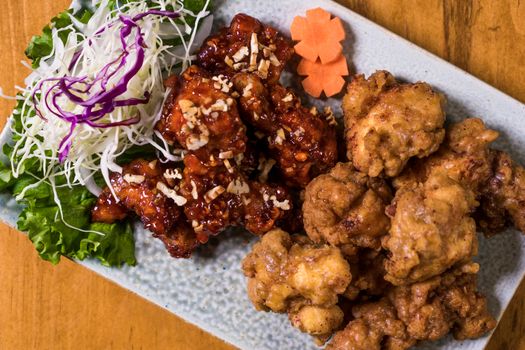
Photo: Luis Becerra Fotógrafo / Pexels
Korean
Yangnyeom Chicken (Sweet & Spicy Fried Chicken)
The diets react (see scores below)
Common Ingredients
- chicken
- gochujang
- ketchup
- honey
- garlic
- soy sauce
- sesame seeds
- ginger
Specific recipes may vary.
Incompatible with 9 of 11 diets
Diet Ratings
Yangnyeom Chicken is fundamentally incompatible with ketogenic eating. The signature sauce combines multiple high-sugar ingredients: honey is nearly pure sugar, ketchup contains added sugars, and gochujang (fermented chili paste) is loaded with sugar and rice — together these easily push a single serving well past the 20-50g daily net carb ceiling. While the chicken itself is keto-friendly and garlic, ginger, sesame seeds, and soy sauce contribute only modest carbs, the yangnyeom sauce is the defining feature of this dish and cannot be reduced to a trace amount without fundamentally changing it. The battered, fried coating typical of this dish also adds significant starch-based carbs. There is no realistic portion size that makes this dish compatible with ketosis.
Yangnyeom Chicken contains chicken as its primary protein, which is poultry and a direct animal product — categorically excluded from a vegan diet. There is no ambiguity here. Additionally, honey is used in the sauce, which the majority of vegan organizations (Vegan Society, PETA) also classify as a non-vegan animal-derived ingredient. This dish fails vegan criteria on at least two counts.
Yangnyeom Chicken contains multiple non-paleo ingredients that disqualify it. Soy sauce is a soy-based, grain-processed condiment explicitly excluded from the paleo diet. Gochujang is a fermented Korean chili paste that typically contains rice flour and sometimes wheat, making it grain-based and non-paleo. Ketchup is a processed condiment commonly containing refined sugar, added salt, and preservatives. Sesame seeds, while seeds, are borderline but the real disqualifiers here are clear: soy sauce, gochujang (grains/legumes), and ketchup (refined sugar, additives). The chicken, garlic, ginger, and honey themselves could be paleo-friendly, but the dish as traditionally prepared relies heavily on non-paleo sauces and condiments that are foundational to its flavor profile, not incidental additions.
Yangnyeom Chicken is a Korean-style fried chicken dish that conflicts with several core Mediterranean diet principles simultaneously. While chicken itself is an acceptable moderate protein source, this preparation involves deep-frying (adding significant refined oil and calories outside the olive oil framework), and the signature sauce combines ketchup and honey — both sources of added sugars — creating a high-sugar, highly processed coating. The dish is non-traditional, non-Mediterranean in origin, and the cooking method and sauce profile represent the kind of processed, sugar-laden preparation the Mediterranean diet specifically discourages. The positive elements (garlic, ginger, sesame seeds) are minor and insufficient to offset the deep-frying and sweet processed sauce.
Yangnyeom Chicken is fundamentally incompatible with the carnivore diet. While chicken itself is an acceptable animal protein, virtually every other ingredient in this dish is plant-derived or heavily processed with non-carnivore components. Gochujang is a fermented chili paste containing rice, chili, and sugar. Ketchup contains tomatoes, sugar, and vinegar. Honey, while animal-produced, is accompanied here by multiple disqualifying ingredients. Soy sauce is a fermented grain and legume product. Garlic, ginger, and sesame seeds are all plant-derived. The dish is essentially a sweet, spicy, sugar-laden sauce coating fried chicken — the sauce alone contains multiple avoid-tier ingredients including grains, legumes, refined sugars, and plant compounds. This is a heavily processed, plant-additive-dominant preparation with no meaningful path to carnivore modification.
Yangnyeom Chicken contains multiple Whole30-excluded ingredients. Soy sauce is a soy product and is explicitly excluded from the Whole30 program. Honey is an added sugar and is excluded. Ketchup almost universally contains added sugar (typically high-fructose corn syrup or cane sugar), making it non-compliant in its standard form. Gochujang (Korean fermented chili paste) typically contains rice flour or other grains as well as added sugar, making it non-compliant. Even if individual compliant substitutes were sourced (e.g., coconut aminos for soy sauce, date-sweetened ketchup), the sweet-glazed, fried chicken format also tests the spirit of the program by recreating an indulgent comfort food experience. The dish as traditionally prepared is firmly non-compliant.
Yangnyeom Chicken contains multiple high-FODMAP ingredients that make it unsuitable during the elimination phase. Garlic is one of the highest-FODMAP foods tested by Monash University (fructans) and is a primary ingredient. Honey is high in excess fructose and must be avoided. Gochujang (Korean fermented chili paste) typically contains garlic and sometimes wheat, adding further fructan load. Soy sauce in larger amounts contains wheat-based fructans (though tamari in small amounts may be acceptable). The combination of garlic, honey, and gochujang creates a dish that is definitively high-FODMAP at any standard serving size. Even if individual portions of some ingredients were controlled, the cumulative FODMAP stacking from multiple high-FODMAP sources makes this dish a clear avoid during elimination.
Yangnyeom Chicken is a deep-fried chicken dish coated in a sweet and spicy sauce made with gochujang, soy sauce, ketchup, and honey. This combination creates multiple DASH diet concerns. First, it is deep-fried, introducing high levels of total fat and potentially saturated fat depending on the frying oil. Second, the sauce is high in sodium: gochujang and soy sauce are both concentrated sodium sources, and together with ketchup they can easily push a single serving well beyond acceptable DASH sodium thresholds. Third, honey and ketchup contribute significant added sugars, which DASH limits. The overall preparation style — deep-fried and heavily sauced — places this dish firmly in the 'avoid' category under DASH guidelines, which emphasize low-sodium, low-fat, minimally processed foods. While chicken itself is a lean protein encouraged by DASH, the preparation method negates those benefits entirely.
Yangnyeom Chicken presents a mixed Zone Diet picture. The base ingredient — chicken — is an ideal lean Zone protein source. However, the signature sauce is where Zone compliance breaks down. Gochujang, ketchup, and honey are all sugar-dense, high-glycemic ingredients that collectively create a high-sugar coating. Honey is a concentrated simple sugar, ketchup adds high-fructose corn syrup in most commercial versions, and gochujang contains significant added sugar and rice — all of which spike glycemic load. Additionally, traditional preparation involves deep-frying the chicken, introducing omega-6-heavy vegetable oils that conflict with the Zone's anti-inflammatory emphasis. The garlic, ginger, and sesame seeds are Zone-friendly (polyphenols, monounsaturated fats respectively), but they are minor components. To work within Zone methodology, one would need to dramatically reduce sauce quantity, substitute honey with a lower-glycemic sweetener, skip the frying or use an air fryer, and carefully account for the carbohydrate blocks from the sauce. In a typical restaurant portion, the sugar load from the glaze makes it very difficult to balance the 40/30/30 ratio without the carb blocks being dominated by simple sugars rather than favorable low-glycemic vegetables.
Some Zone practitioners note that if the chicken portion is kept to roughly one Zone block (~28g protein) and the sauce is treated as the carbohydrate block contribution — with vegetables added as the primary carb source — a small serving could technically fit within a Zone meal. The anti-inflammatory spices (ginger, garlic, gochujang's capsaicin) also offer polyphenol benefits Sears emphasizes in his later writings, slightly offsetting the high-glycemic sauce concern.
Yangnyeom Chicken presents a genuinely mixed anti-inflammatory profile. On the positive side, the dish contains several strongly anti-inflammatory ingredients: gochujang and garlic provide capsaicin and allicin respectively, both with well-documented anti-inflammatory effects; ginger contributes gingerols and shogaols that inhibit inflammatory pathways; sesame seeds offer lignans and a modest amount of beneficial fats; and soy sauce adds some fermented compounds. Chicken as a lean protein is acceptable under anti-inflammatory guidelines. However, several factors pull in the pro-inflammatory direction. The dish is deep-fried, which introduces potentially oxidized oils (likely refined seed oils high in omega-6s), adds significant saturated/trans fat risk depending on frying oil, and increases caloric density. Honey adds appreciable sugar load. Ketchup typically contains added sugar and sometimes high-fructose corn syrup. The yangnyeom sauce as a whole — combining ketchup, honey, and gochujang — creates a high-sugar, high-glycemic coating that partially offsets the anti-inflammatory spice benefits. The frying method is the primary concern: even if the ingredient list has redeeming qualities, the cooking technique introduces oils and oxidation products that conflict with anti-inflammatory principles. If baked or air-fried with a clean oil, the score would be notably higher.
Some anti-inflammatory practitioners would score this more favorably, emphasizing the cumulative benefit of gochujang (capsaicin), garlic, and ginger as meaningful anti-inflammatory contributors that can offset moderate sugar content — particularly if prepared with higher-quality oils. Conversely, strict anti-inflammatory protocols would score it lower, flagging the deep-frying method, refined seed oil exposure, and combined sugar load from honey and ketchup as clearly problematic regardless of the spice benefits.
Yangnyeom Chicken is a deep-fried dish coated in a sweet, spicy, sticky sauce — a combination that presents multiple significant concerns for GLP-1 patients. The frying method adds substantial fat content, which worsens nausea, bloating, and reflux that are already common GLP-1 side effects. The sauce is high in sugar (honey, ketchup) contributing empty calories with minimal nutritional value — especially problematic given reduced appetite and the need for nutrient density per bite. Gochujang adds meaningful spice, which can exacerbate GLP-1-related nausea and acid reflux. While the base ingredient is chicken (a good protein source), the preparation method and sauce profile override that benefit entirely. The coating also slows gastric emptying further on top of the GLP-1 effect, increasing discomfort risk. Sesame seeds and garlic are minor positives but inconsequential against the overall profile.
*See how scores were generated at our methodology page.
Nutritional profile
Six traits that cut across every diet.
Fiber & Plants
How much whole-plant food and fiber it delivers.
Healthy Fats
The quality of its fats (unsaturated, omega-3).
Whole / Unprocessed
How close it is to its natural, unprocessed form.
Gut Gentle
How easy it is on digestion (low FODMAP, few irritants).
Low Glycemic
How little it spikes your blood sugar.
Protein Density
How much protein it packs per calorie.
Controversy Index
Higher controversy = more disagreement between diets.
Diet-Specific Tips
 Zone — 4/10
View tips
- Chicken is an ideal lean Zone protein — a significant positive
- Honey is a concentrated simple sugar, raising glycemic load substantially
- Gochujang and ketchup both contain added sugars, compounding the high-glycemic sauce issue
- Deep-frying introduces omega-6 seed oils, conflicting with Zone's anti-inflammatory focus
- Garlic and ginger contribute beneficial polyphenols aligned with Sears' anti-inflammatory emphasis
- Sesame seeds provide small amounts of monounsaturated fat but also omega-6 in quantity
- Sauce-to-protein ratio in typical servings makes 40/30/30 block balancing very challenging
- Could be adapted for Zone compliance with air-frying, reduced sauce, and side vegetables
 Anti-Inflammatory — 4/10
View tips
- Deep-frying introduces oxidized seed oils high in omega-6 fatty acids, a core concern for anti-inflammatory eating
- Gochujang, garlic, and ginger are anti-inflammatory spices with evidence-backed benefits (capsaicin, allicin, gingerols)
- Honey and ketchup contribute added sugars that can raise blood glucose and promote inflammatory markers
- Chicken is an acceptable lean protein under anti-inflammatory guidelines
- Sesame seeds add modest lignans and beneficial micronutrients
- Fermented elements in gochujang and soy sauce offer some gut-health benefit
- Cooking method (deep-frying) is a major modifier — baking or air-frying would substantially improve the inflammatory profile