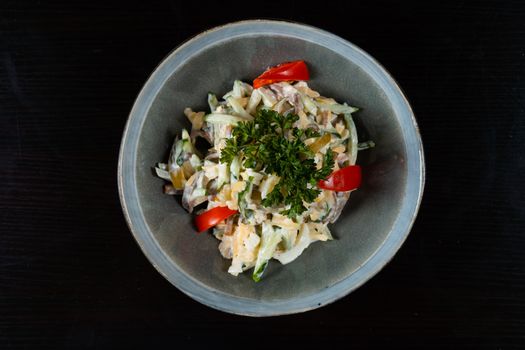
Photo: Collab Media / Pexels
Thai
Yum Nua (Thai Beef Salad)
The diets react (see scores below)
Common Ingredients
- beef
- lime juice
- fish sauce
- mint
- cilantro
- Thai chiles
- shallots
- cucumber
Specific recipes may vary.
Incompatible with 3 of 11 diets
Diet Ratings
Yum Nua is largely keto-compatible in its core components: beef provides high-quality protein and fat, while herbs, Thai chiles, and cucumber contribute minimal net carbs. The primary concern is fish sauce, which often contains added sugar in traditional and commercial preparations, and lime juice, which adds a modest carb load. Shallots are higher in carbs than most alliums. In a standard restaurant serving, the cumulative carbs from lime juice, fish sauce (with sugar), and shallots could push the dish into a borderline range—likely 8–15g net carbs per serving. Homemade versions using sugar-free fish sauce and controlling lime and shallot quantities can bring this solidly into keto territory. Portion awareness is key.
Some stricter keto practitioners flag fish sauce almost universally due to its near-universal inclusion of added sugar in commercial brands, and argue that the shallot and lime combination makes this dish unreliable without full ingredient control—recommending avoidance in restaurant settings.
Yum Nua contains two clear animal-derived ingredients: beef (mammal flesh) and fish sauce (made from fermented fish). Both are unambiguously non-vegan. The remaining ingredients — lime juice, mint, cilantro, Thai chiles, shallots, and cucumber — are all plant-based, but the presence of beef and fish sauce makes this dish entirely incompatible with a vegan diet. There is no meaningful debate within the vegan community about either ingredient.
Yum Nua is largely paleo-friendly, built around grass-fed beef, fresh herbs (mint, cilantro), vegetables (cucumber, shallots, Thai chiles), and citrus (lime juice). The primary concern is fish sauce, which is a fermented, processed condiment that typically contains added salt and sometimes sugar or preservatives — both excluded under strict paleo rules. While fish sauce is derived from a paleo-approved base ingredient (fish), its processing, added salt content, and potential additives place it in a gray zone. Strict paleo authorities would flag it, while many practical paleo adherents accept high-quality, minimal-ingredient fish sauce (anchovies, salt only) as a reasonable flavoring. The dish scores well on protein and vegetable content, but the fish sauce dependency keeps it from a full approval.
Many modern paleo practitioners and resources (e.g., Nom Nom Paleo, Practical Paleo) explicitly permit high-quality fish sauce (Red Boat brand, for example) as an acceptable condiment, arguing that fermented fish is ancestrally consistent and the salt content is negligible at typical serving amounts. Strict Cordain-school paleo, however, excludes added salt and processed condiments entirely.
Yum Nua centers on beef as the primary protein, which the Mediterranean diet restricts to only a few times per month. While the dish has genuinely positive elements — fresh herbs (mint, cilantro), vegetables (cucumber, shallots, chiles), and acidic dressing (lime juice) that align well with Mediterranean principles — the beef centerpiece places it in the 'avoid' category. Fish sauce is a non-traditional ingredient but is essentially a fermented condiment used in small amounts, not a major concern. The dish is not processed and contains no refined grains or added sugars, which is a point in its favor, but the beef limitation is the dominant factor.
Some Mediterranean diet practitioners argue that lean beef consumed occasionally (a few times per month) is permissible, and this dish's abundant fresh vegetables, herbs, and light acid-based dressing make it a far healthier beef preparation than, say, a burger or steak with heavy sauces. In that interpretation, this could edge into 'caution' territory (score 4-5) when consumed infrequently.
Yum Nua is fundamentally incompatible with the carnivore diet. While the beef itself is carnivore-approved, the dish is built around a heavy array of plant-based ingredients: lime juice, mint, cilantro, Thai chiles, shallots, and cucumber. These are not minor seasonings but core structural components of the dish. Fish sauce is animal-derived and carnivore-friendly, but it cannot offset the overwhelmingly plant-based nature of this salad. The dish is essentially a plant-forward preparation that uses beef as a supporting ingredient rather than the focus. No meaningful adaptation short of removing every non-beef ingredient would make this dish carnivore-compliant, at which point it would simply be grilled beef — not Yum Nua.
Yum Nua (Thai Beef Salad) is composed entirely of Whole30-compliant ingredients. Beef is an allowed protein, lime juice is a compliant acid/flavoring, fish sauce is a fermented seafood-based condiment with no excluded additives (in its standard form of anchovies, salt, and water), and mint, cilantro, Thai chiles, shallots, and cucumber are all whole vegetables/herbs explicitly permitted on the program. The dish is a genuine whole-food salad with no grains, legumes, dairy, added sugars, or other excluded ingredients. The only label-reading caution is that some commercial fish sauces may contain added sugar, so verifying a compliant brand (e.g., Red Boat) is recommended, but the dish as described is fully compliant.
Yum Nua contains mostly low-FODMAP ingredients — grilled beef, lime juice, fish sauce, mint, cilantro, Thai chiles, and cucumber are all safe. The critical concern is shallots, which are high-FODMAP due to fructans and GOS even in small amounts, similar to onion. However, in a shared salad dressing or tossed salad, shallots may be present only in small quantities, and some FODMAP-tolerant individuals or practitioners allow minimal shallot use. Fish sauce is generally low-FODMAP in typical serving quantities (1-2 tbsp) as it contains minimal fermentable carbohydrates. The dish scores in 'caution' territory because shallots are a near-unavoidable component of authentic Yum Nua and their quantity is variable and often significant.
Monash University lists shallots as high-FODMAP even at small serves (>15g triggers symptoms), and clinical FODMAP practitioners typically advise avoiding any dish where shallots cannot be confirmed absent or substituted during the elimination phase. Some practitioners would advise a full 'avoid' rating unless the dish is prepared at home with shallots omitted or replaced with the green tops of spring onions.
Yum Nua sits in a gray zone for DASH. The salad base is excellent — fresh vegetables (cucumber, shallots, herbs like mint and cilantro), bright lime juice, and lean beef in moderate portions align with DASH principles of vegetables, lean protein, and potassium-rich foods. However, fish sauce is the critical concern: a typical Thai beef salad uses 2-4 tablespoons of fish sauce, contributing roughly 1,200-2,400mg of sodium per serving — a substantial portion of or exceeding the DASH sodium ceiling (1,500-2,300mg/day). Beef, while a lean protein when using cuts like sirloin or flank steak, is still red meat, which DASH recommends limiting. The dish is not inherently high in saturated fat or added sugars, and the vegetable and herb components are genuinely DASH-friendly. With sodium reduction (halving fish sauce, adding low-sodium soy sauce or extra lime), this dish could score considerably higher.
NIH DASH guidelines specifically flag high-sodium condiments like fish sauce as problematic and limit red meat. However, some updated DASH clinical interpretations note that lean beef in small portions (3oz) is within DASH guidelines, and that the high potassium, fiber, and micronutrient content of this vegetable-forward dish may partially offset concerns — particularly for non-hypertensive individuals on standard (not low-sodium) DASH.
Yum Nua is a strong Zone-compatible dish overall. The lean beef provides a solid protein source that can be portioned to roughly 25g protein per serving (approximately 3 Zone protein blocks). The carbohydrate base — cucumber, shallots, lime juice, fresh herbs, and Thai chiles — consists almost entirely of low-glycemic, colorful vegetables and aromatics that are ideal Zone carb choices. Fish sauce and lime juice add minimal calories and negligible glycemic impact. The dish is naturally low in fat, which means a small drizzle of a monounsaturated fat source (like a touch of sesame or olive oil) would complete the Zone ratio, though the dish as described may run slightly low on fat blocks. The main Zone concern is the beef itself: Zone methodology favors lean cuts (sirloin, flank steak trimmed of fat) over fattier cuts, as saturated fat is discouraged. If a lean cut is used, this dish fits Zone principles very well. The herb and chile profile also aligns with Sears' emphasis on polyphenol-rich, anti-inflammatory foods.
In Sears' earlier Zone writings, red meat was treated with caution due to saturated fat and arachidonic acid content, which promotes pro-inflammatory eicosanoids — a core Zone concern. However, in later works including The OmegaRx Zone, Sears acknowledged that lean red meat in controlled portions is acceptable. Some strict Zone practitioners would still prefer poultry or fish as the protein base, which would push the score higher. Additionally, the fat content of this dish as written is quite low, which may make hitting the 30% fat target challenging without adding a fat source not in the original recipe.
Yum Nua presents a genuinely mixed anti-inflammatory profile. On the positive side, the dish is loaded with potent anti-inflammatory herbs and aromatics: fresh mint and cilantro provide flavonoids and polyphenols, Thai chiles deliver capsaicin (a well-established anti-inflammatory compound), shallots offer quercetin, and lime juice supplies vitamin C and antioxidants. Cucumber adds hydration and mild antioxidants. Fish sauce, while high in sodium, is a fermented condiment used in small quantities and does not meaningfully alter the inflammatory profile. The dish is also light, low in refined carbohydrates, and contains no seed oils, trans fats, or added sugars — all positives. The limiting factor is beef, which the anti-inflammatory framework classifies as a food to limit due to saturated fat content and pro-inflammatory arachidonic acid. However, Yum Nua typically uses a modest amount of lean grilled beef (often sirloin or flank), which softens the concern considerably. The portion of beef relative to the herb-forward, vegetable-rich base is important: a smaller beef portion in a large herb-and-vegetable salad tilts the dish closer to acceptable. This dish sits in 'caution' territory — it's significantly better than most red meat preparations due to the absence of inflammatory co-ingredients and the presence of numerous beneficial compounds, but the beef prevents a full approval under strict anti-inflammatory guidelines.
Dr. Andrew Weil's framework allows red meat occasionally and in modest portions, and given the anti-inflammatory herb density here, some practitioners would approve this dish outright as a 'best case' red meat scenario. Conversely, stricter anti-inflammatory and autoimmune protocols (e.g., AIP-adjacent approaches) would flag both the beef (arachidonic acid, saturated fat) and fish sauce (high sodium, potential additives) as reasons to avoid or heavily restrict the dish.
Yum Nua (Thai Beef Salad) is a mixed profile for GLP-1 patients. On the positive side, beef provides meaningful protein (roughly 20-25g per standard serving), and the salad base of cucumber, shallots, mint, and cilantro contributes fiber, micronutrients, and high water content — all beneficial on GLP-1 medications. The lime juice and fish sauce dressing is low in fat and adds flavor without significant calories. However, the beef cut matters significantly: traditional Yum Nua often uses grilled flank or sirloin, which are leaner cuts acceptable in moderation, but fat content varies. The primary concerns are the Thai chiles, which can worsen nausea and reflux — common GLP-1 side effects — and the choice of beef over leaner proteins like chicken or fish. Saturated fat in beef, even lean cuts, is a moderate drawback. The dish is portion-sensitive: a small serving of lean beef with the vegetable components is reasonable, but a large portion of fattier beef with heavy spice could trigger GI distress. Overall, this dish is acceptable in moderation with lean beef and reduced chile heat.
Some GLP-1-focused dietitians accept lean beef as a quality protein source given its complete amino acid profile and iron content, particularly for patients at risk of anemia during caloric restriction. Others recommend avoiding beef entirely in favor of lower-fat proteins due to the higher saturated fat load and the increased GI sensitivity many patients experience on GLP-1 medications, especially early in treatment.
*See how scores were generated at our methodology page.
Nutritional profile
Six traits that cut across every diet.
Fiber & Plants
How much whole-plant food and fiber it delivers.
Healthy Fats
The quality of its fats (unsaturated, omega-3).
Whole / Unprocessed
How close it is to its natural, unprocessed form.
Gut Gentle
How easy it is on digestion (low FODMAP, few irritants).
Low Glycemic
How little it spikes your blood sugar.
Protein Density
How much protein it packs per calorie.
Controversy Index
Higher controversy = more disagreement between diets.
Diet-Specific Tips
 Keto — 6/10
View tips
- Beef is high-protein, moderate-fat, zero-carb — strongly keto-positive
- Fish sauce frequently contains added sugar, raising hidden carb count
- Lime juice contributes ~5–8g net carbs depending on quantity used
- Shallots are higher in net carbs than onions; portion should be limited
- Herbs (mint, cilantro), Thai chiles, and cucumber are negligible in net carbs
- Homemade preparation with sugar-free fish sauce makes this dish approvable
- Restaurant versions are harder to control and may exceed carb thresholds
 Paleo — 6/10
View tips
- Beef is a fully approved paleo protein
- Lime juice, mint, cilantro, Thai chiles, and cucumber are all paleo-approved whole foods
- Fish sauce is processed and contains added salt, which is excluded under strict paleo rules
- Shallots are paleo-approved alliums
- No grains, legumes, dairy, or seed oils present
- Fish sauce quality varies — minimal-ingredient versions (anchovies + salt only) are more acceptable to many paleo adherents
 Whole30 — 9/10
View tips
- Beef is explicitly allowed as a protein source
- Lime juice is a compliant acid and flavor component
- Fish sauce is compliant in pure form (anchovy + salt); verify no added sugar on label
- Mint, cilantro, Thai chiles, shallots, and cucumber are all whole, compliant plant foods
- No grains, legumes, dairy, or excluded additives present
- Dish is a genuine whole-food salad, not a recreation of a junk/comfort food
 Low-FODMAP — 5/10
View tips
- Shallots are high-FODMAP (fructans/GOS) and a core ingredient in traditional Yum Nua
- Beef is low-FODMAP and safe as primary protein
- Lime juice, fish sauce, mint, cilantro, and cucumber are all low-FODMAP
- Thai chiles are low-FODMAP in typical culinary quantities
- Fish sauce safe at standard serving sizes (1-2 tbsp)
- Dish can be made low-FODMAP at home by substituting shallots with green scallion tops
- Restaurant preparation makes shallot quantity unpredictable
 DASH — 5/10
View tips
- Fish sauce is very high in sodium (~1,400mg per 2 tbsp), potentially exceeding daily DASH sodium limits in one dish
- Red meat (beef) is limited on DASH; lean cuts like flank or sirloin are acceptable in small portions (≤6oz/day)
- Excellent vegetable and herb base (cucumber, shallots, mint, cilantro) strongly aligned with DASH
- No added sugars, saturated fat, or processed ingredients beyond fish sauce
- Lime juice provides potassium and replaces need for added salt
- Low-sodium substitution (reduce fish sauce, increase lime) would significantly improve DASH compatibility
 Zone — 7/10
View tips
- Lean beef provides adequate Zone protein blocks when trimmed and portioned correctly
- Low-glycemic vegetable and herb base (cucumber, shallots, cilantro, mint, chiles) is ideal for Zone carb blocks
- Fish sauce and lime juice add flavor with minimal macronutrient disruption
- Dish is naturally low in fat — a monounsaturated fat addition (avocado, olive oil drizzle) would improve Zone balance
- Beef's saturated fat and arachidonic acid content is a mild Zone caution, mitigated by using lean cuts
- High polyphenol content from fresh herbs and chiles aligns with Sears' anti-inflammatory focus
 Anti-Inflammatory — 5/10
View tips
- Beef is a red meat — the anti-inflammatory framework recommends limiting due to saturated fat and arachidonic acid content
- Thai chiles provide capsaicin, a well-researched anti-inflammatory compound
- Fresh mint and cilantro are rich in flavonoids and polyphenols
- Shallots contain quercetin, a potent anti-inflammatory flavonoid
- Lime juice adds vitamin C and antioxidants
- No refined carbohydrates, seed oils, trans fats, or added sugars
- Fish sauce is used as a condiment in small quantities — high sodium but not meaningfully pro-inflammatory at typical doses
- Lean cut and modest beef portion relative to herb-and-vegetable base mitigates red meat concerns
 GLP-1 Friendly — 5/10
View tips
- Beef provides complete protein (~20-25g per serving) but carries saturated fat load compared to leaner options
- Thai chiles may worsen nausea and reflux, which are common GLP-1 side effects
- Lime juice, fish sauce, cucumber, and fresh herbs are low-fat, nutrient-dense components well-suited to GLP-1 patients
- High water content from cucumber and herbs supports hydration — a GLP-1 priority
- Fat content is highly dependent on beef cut chosen — flank or sirloin preferred over ribeye
- Portion-sensitive: small serving of lean beef is acceptable; large portion of fatty beef is not
- No refined grains, added sugar, or fried components — a meaningful positive