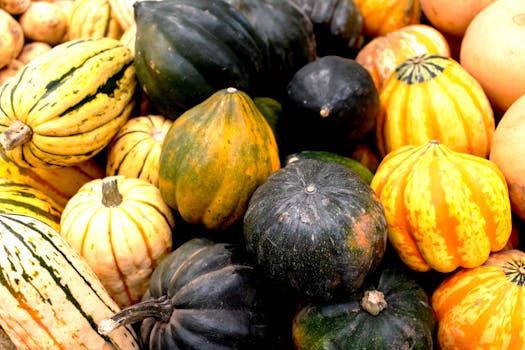
The diets react (see scores below)
Diet Ratings
Acorn squash is a starchy vegetable with ~7g net carbs per 100g. A typical serving (150g) provides 10-11g net carbs, incompatible with keto limits.
Whole plant food with no processing. Rich in fiber, vitamins A and C, and potassium. Fully compliant with vegan diet and whole-food principles.
Tuber/squash, unprocessed, nutrient-dense, available to Paleolithic humans. Moderate carbohydrate content. Widely accepted in paleo community.
Whole plant food, excellent source of fiber, vitamins, and minerals. Winter squashes are traditional Mediterranean vegetables. Naturally sweet, satisfying, and can be roasted with olive oil.
Plant-derived vegetable/gourd with high carbohydrate content. All vegetables and plant foods are excluded from carnivore diet. No animal products present.
Whole, unprocessed vegetable with no excluded ingredients. Acorn squash is a compliant starchy vegetable encouraged on Whole30.
Acorn squash is high in polyols (sorbitol) per Monash University testing. High-FODMAP at any reasonable serving size.
Whole grain-like starch, rich in potassium (450mg per cup), magnesium, fiber, and beta-carotene. Minimal sodium, naturally sweet. Excellent DASH vegetable.
Higher-glycemic vegetable (~15g net carbs per 100g). Contains natural sugars; glycemic index moderate-to-high. Usable but requires strict portioning (small servings only). Better alternatives exist (zucchini, bell peppers). Counts toward carb blocks but less efficient than non-starchy vegetables.
Winter squash rich in antioxidants (beta-carotene, vitamin C), fiber, and polyphenols. Low glycemic index, anti-inflammatory compounds. Excellent vegetable choice for anti-inflammatory diet.
Nutrient-dense (vitamins A/C, potassium, fiber ~5.6g per cup cooked), but carbohydrate-heavy (~15g net carbs per cup) and calorie-dense (~56 cal per cup). Minimal protein (~1g per cup). On GLP-1, reduced appetite means every calorie should deliver protein or critical micronutrients. Acceptable in small portions as a side, but not a priority food.
Nutritional profile
Six traits that cut across every diet.
Fiber & Plants
How much whole-plant food and fiber it delivers.
Healthy Fats
The quality of its fats (unsaturated, omega-3).
Whole / Unprocessed
How close it is to its natural, unprocessed form.
Gut Gentle
How easy it is on digestion (low FODMAP, few irritants).
Low Glycemic
How little it spikes your blood sugar.
Protein Density
How much protein it packs per calorie.
Controversy Index
Score range: 1–10/10. Higher controversy = more disagreement between diets.
Diet-Specific Tips for Acorn squash
 Vegan — 10/10
- Whole plant food
- Nutrient-dense
- Sustainable crop
- No animal products or processing
 Paleo — 8/10
- Whole food tuber
- Nutrient-dense
- Moderate carbs
- No anti-nutrients
 Mediterranean — 8/10
- Whole plant food
- High fiber and nutrients
- Traditional Mediterranean vegetable
- Versatile preparation methods
 Whole30 — 9/10
- Whole vegetable
- No excluded ingredients
- Nutrient-dense starch
 DASH — 8/10
- High potassium
- Good fiber content
- Low sodium
- Rich in antioxidants
 Zone — 4/10
- moderate-to-high glycemic index
- natural sugars
- portion-dependent
- less efficient carb source
- starchy vegetable
 Anti-Inflammatory — 8/10
- high antioxidant content (beta-carotene, vitamin C)
- fiber-rich
- polyphenols and anti-inflammatory compounds
- low glycemic index
- emphasized in Weil's pyramid
 GLP-1 Friendly — 5/10
- high carbohydrate content
- minimal protein
- nutrient-dense
- calorie-dense relative to protein
- portion-dependent value