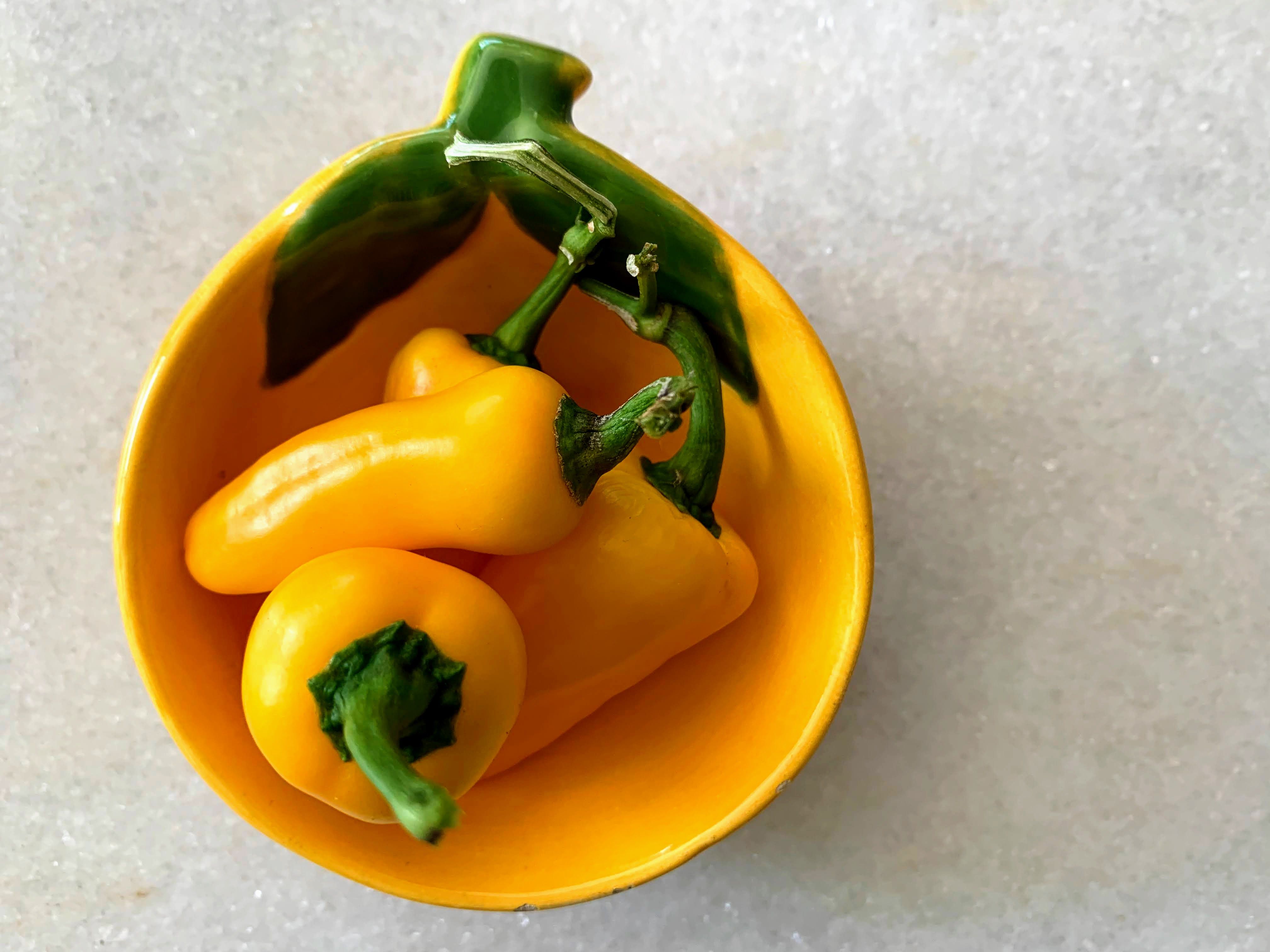
The diets react (see scores below)
Diet Ratings
Ají amarillo (yellow chili pepper) is a low-carb vegetable with approximately 3-4g net carbs per 100g. It adds flavor and minimal carbohydrate impact, fitting well within keto macros when used as a seasoning or ingredient.
Ají amarillo is a yellow chili pepper used in Peruvian cuisine. It is a whole plant food with no animal products or derivatives.
Ají amarillo is a yellow chili pepper used as a spice and flavoring. Peppers are vegetables available to hunter-gatherers and contain no anti-nutrients or problematic compounds. It is unprocessed and nutrient-dense.
Yellow chili pepper, a whole plant food rich in vitamin C and antioxidants. Aligns with Mediterranean emphasis on vegetables and spices for flavor without added fats or sugars.
Ají amarillo is a yellow chili pepper, a plant-derived food. Carnivore diet excludes all vegetables, fruits, and plant-based foods including peppers and spices derived from plants.
Ají amarillo is a yellow chili pepper used as a spice or seasoning. It is a whole, unprocessed plant-based ingredient with no excluded components. Herbs and spices are explicitly allowed on Whole30.
Ají amarillo (yellow chili pepper) is a low-FODMAP ingredient. Peppers in general are low in FODMAPs. Monash University rates peppers as low-FODMAP at typical serving sizes. Ají amarillo paste or fresh peppers are safe during the elimination phase.
Yellow chili pepper rich in vitamin C, potassium, and antioxidants. Low sodium, low calorie, fits DASH emphasis on vegetables and plant-based foods.
Ají amarillo (yellow chili pepper) is a low-glycemic vegetable with minimal carbohydrates and calories. It provides polyphenols and anti-inflammatory compounds aligned with Zone principles. Can be used freely as a vegetable component in meals.
Ají amarillo (yellow chili pepper) is a whole food rich in vitamin C, carotenoids, and capsaicinoids. Capsaicin has documented anti-inflammatory and analgesic properties. High in antioxidants and polyphenols. Supports the anti-inflammatory framework's emphasis on colorful vegetables and chili peppers.
Yellow chili pepper with minimal calories, high vitamin C, and mild spice profile. Adds flavor without fat or sugar. Supports nutrient density in small portions. Not excessively spicy, so unlikely to trigger reflux or nausea in typical amounts.
Nutritional profile
Six traits that cut across every diet.
Fiber & Plants
How much whole-plant food and fiber it delivers.
Healthy Fats
The quality of its fats (unsaturated, omega-3).
Whole / Unprocessed
How close it is to its natural, unprocessed form.
Gut Gentle
How easy it is on digestion (low FODMAP, few irritants).
Low Glycemic
How little it spikes your blood sugar.
Protein Density
How much protein it packs per calorie.
Controversy Index
Score range: 1–10/10. Higher controversy = more disagreement between diets.
Diet-Specific Tips for Ají amarillo
 Keto — 8/10
- 3-4g net carbs per 100g
- Low glycemic impact
- Nutrient-dense
- Suitable for flavoring dishes
 Vegan — 10/10
- Whole plant food
- No processing or animal ingredients
- Nutrient-dense vegetable
 Paleo — 9/10
- Whole vegetable/spice
- No processing
- Nutrient-dense
- Anti-inflammatory compounds
 Mediterranean — 8/10
- whole vegetable
- nutrient-dense
- minimal processing
- flavor enhancement
 Whole30 — 9/10
- whole spice/seasoning
- no added ingredients
- plant-based
 Low-FODMAP — 8/10
- Pepper-based ingredient
- Low FODMAP content across typical servings
- Safe for elimination phase
 DASH — 8/10
- Rich in vitamin C and potassium
- Low sodium
- Low calorie
- Vegetable-based
 Zone — 8/10
- low glycemic index
- minimal net carbs
- polyphenol-rich
- anti-inflammatory
- favorable vegetable
 Anti-Inflammatory — 8/10
- capsaicinoids
- vitamin C
- carotenoids
- antioxidants
- polyphenols
 GLP-1 Friendly — 8/10
- nutrient-dense
- low calorie
- mild spice
- flavor support
- high water content