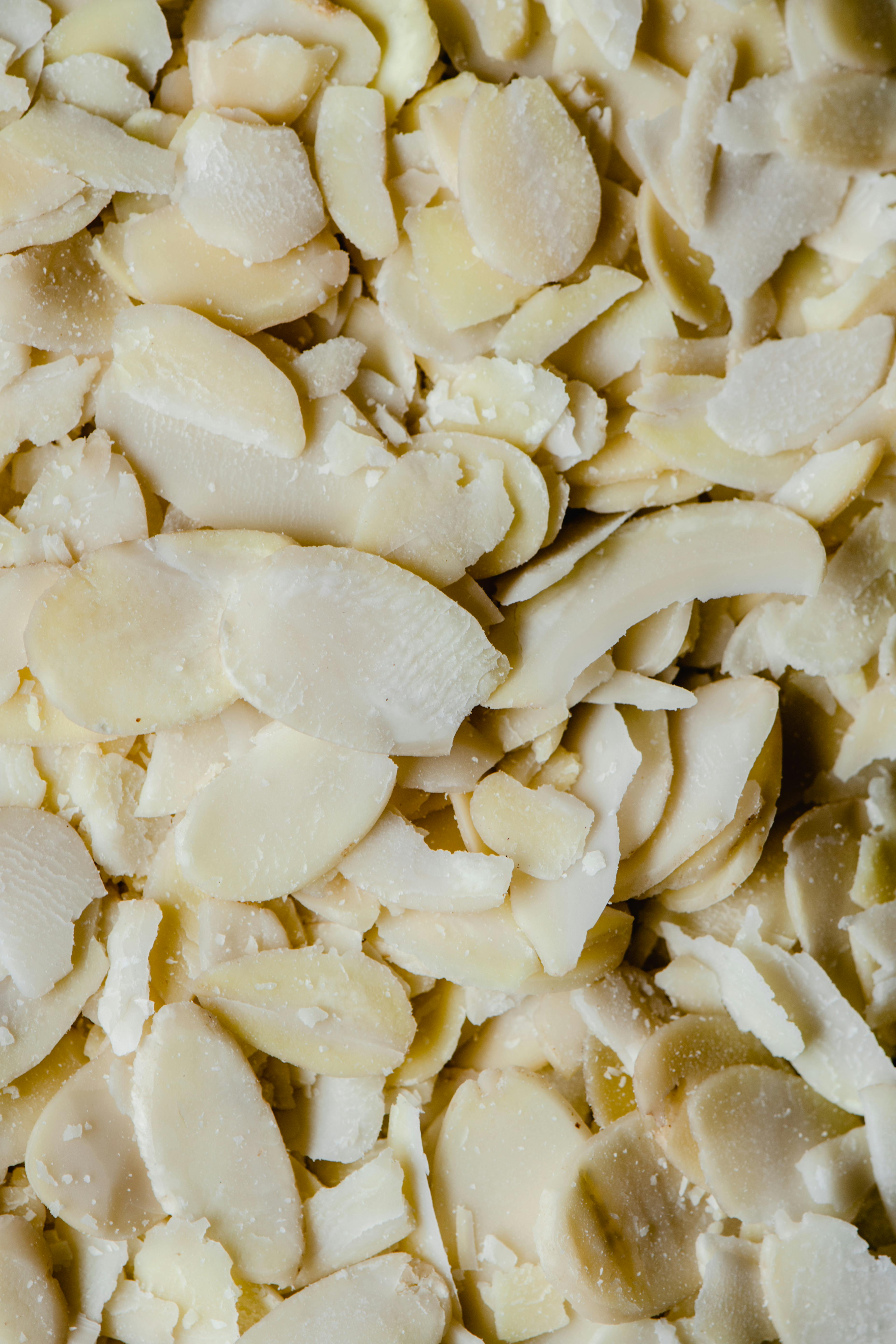
Almond (blanched/slivered)
Rated by 11 diets
The diets react (see scores below)
Diet Ratings
Blanched almonds contain 2.7g net carbs per 28g serving. High fat and protein. Whole food. Portion control recommended to avoid exceeding daily carb limits.
Blanched and slivered almonds are whole plant foods with no animal products or derivatives. Minimally processed, nutrient-dense, and fully vegan-compliant.
Almonds are tree nuts available to Paleolithic humans. Blanching (removing skin) is a simple mechanical process that does not compromise paleo status. Almonds are nutrient-dense and widely approved.
Almonds are a staple Mediterranean nut, rich in healthy monounsaturated fats, fiber, and protein. Blanched/slivered forms retain nutritional benefits. Nuts should be eaten multiple times weekly as part of the Mediterranean diet. Portion control recommended due to caloric density.
Almonds are plant seeds, explicitly excluded from carnivore diet. Blanching or slicing does not change their plant origin. No carnivore authority accepts nuts as compatible.
Blanched and slivered almonds are whole nuts with only the skin removed. Nuts are explicitly allowed on Whole30. No added ingredients or processing that would exclude them.
Almonds are low-FODMAP at standard serving sizes. Monash University rates almonds as low-FODMAP at 23 almonds (approximately 23g). Blanching and slicing do not alter FODMAP content. No fructans, GOS, or polyols at typical portions.
Excellent DASH food. Rich in magnesium, potassium, fiber, and unsaturated fats. Low sodium. Supports cardiovascular health. Portion control recommended due to calorie density.
Excellent monounsaturated fat source (~9g fat per 1 oz, ~70% monounsaturated). Also provides ~6g protein and ~3g net carbs per 1 oz. One of Dr. Sears' preferred fat blocks. Fits Zone perfectly as a fat component and contributes to anti-inflammatory profile via polyphenols.
Excellent source of vitamin E, magnesium, and polyphenols. Contains beneficial monounsaturated fats and some omega-3s. Blanching removes the skin but retains most nutritional benefits. Strong anti-inflammatory profile supported by extensive research.
Almonds are nutrient-dense with good protein (21g per 100g), fiber (12.5g per 100g), and healthy unsaturated fats. However, they're very calorie-dense (579 cal per 100g) and high in total fat (50g per 100g). Portion control is critical—a small handful (1 oz/23 almonds) is appropriate, but easy to overeat. Best used as a snack or salad topper in measured amounts.
Nutritional profile
Six traits that cut across every diet.
Fiber & Plants
How much whole-plant food and fiber it delivers.
Healthy Fats
The quality of its fats (unsaturated, omega-3).
Whole / Unprocessed
How close it is to its natural, unprocessed form.
Gut Gentle
How easy it is on digestion (low FODMAP, few irritants).
Low Glycemic
How little it spikes your blood sugar.
Protein Density
How much protein it packs per calorie.
Controversy Index
Score range: 1–9/10. Higher controversy = more disagreement between diets.
Diet-Specific Tips for Almond (blanched/slivered)
 Keto — 8/10
- 2.7g net carbs per 28g serving
- High fat and protein
- Whole food
- Portion-sensitive due to carb density
 Vegan — 9/10
- Whole plant food
- No animal products
- Minimally processed
- Nutrient-dense
 Paleo — 8/10
- Tree nut
- Unprocessed form
- Nutrient-dense
- No additives
 Mediterranean — 8/10
- Healthy monounsaturated fats
- High in fiber and protein
- Traditional Mediterranean nut
- Nutrient-dense whole food
 Whole30 — 9/10
- Whole food
- Nuts explicitly allowed
- Minimal processing
- No added ingredients
 Low-FODMAP — 8/10
- Low-FODMAP at 23 almonds (23g)
- No fructans or GOS
- Processing method does not affect FODMAP status
 DASH — 8/10
- Rich in magnesium
- Good potassium source
- Unsaturated fats
- High fiber
- Low sodium
 Zone — 8/10
- High monounsaturated fat
- Polyphenol-rich
- Moderate protein contribution
- Low net carbs
- Dr. Sears' recommended fat source
 Anti-Inflammatory — 8/10
- High vitamin E
- Polyphenol-rich
- Monounsaturated fats
- Magnesium content
- Moderate omega-6 (acceptable in context)
 GLP-1 Friendly — 6/10
- good protein density
- good fiber content
- unsaturated fats (healthy)
- very high caloric density
- portion control essential