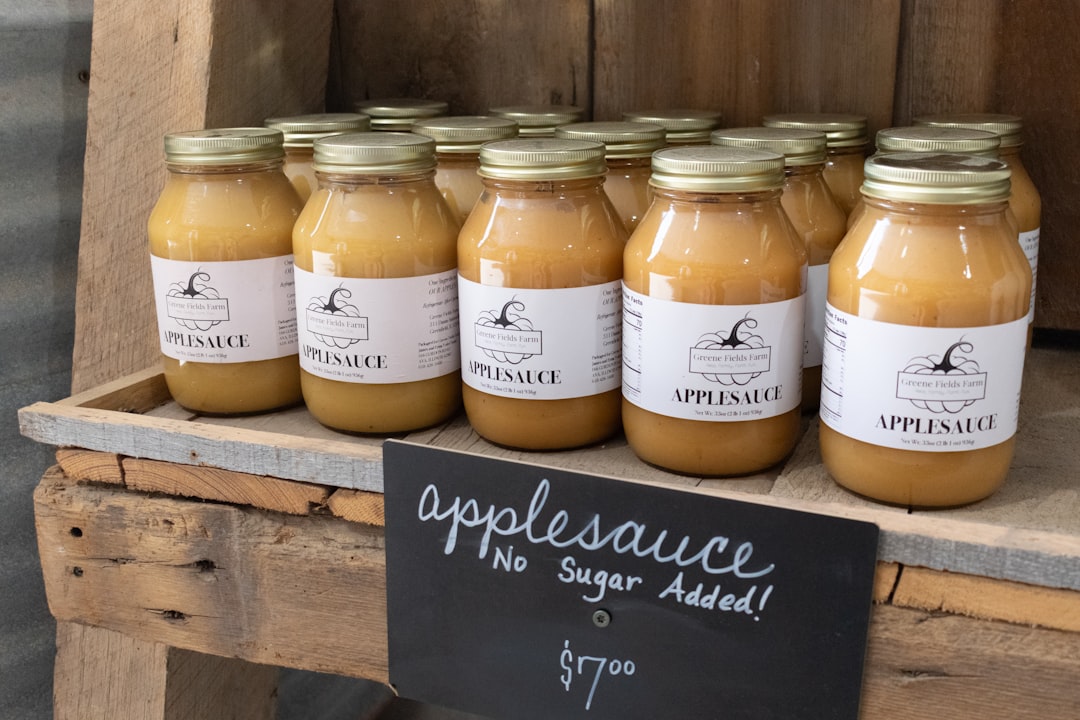
The diets react (see scores below)
Diet Ratings
Unsweetened applesauce contains ~9-10g net carbs per 100g due to concentrated fruit sugars. Even small portions quickly consume daily carb allowance. No added sugar does not make it keto-compatible.
Plant-based fruit product with minimal processing. Unsweetened variant avoids added sugars and potential non-vegan additives.
Unsweetened applesauce is fruit-based and contains no added sugars, but processing (cooking, pureeing) removes fiber structure and concentrates natural sugars. Whole apples are preferred. Acceptable in moderation but not ideal paleo.
Some paleo practitioners accept unsweetened applesauce as a convenient fruit source equivalent to whole fruit, particularly for digestive ease or post-workout carbs.
Unsweetened applesauce aligns with Mediterranean principles as a minimally processed fruit product. Provides fiber and natural nutrients without added sugars, though whole apples are preferred.
Plant-derived fruit product. Even unsweetened versions contain natural fruit sugars and carbohydrates. Fundamentally incompatible with carnivore diet principles.
Unsweetened applesauce contains only apples with no added sugar or excluded ingredients. Compliant as a whole food product.
Applesauce is high in excess fructose and sorbitol (a polyol). Even unsweetened versions concentrate these FODMAPs. Monash University rates applesauce as high-FODMAP at any standard serving.
Core DASH fruit product. Unsweetened version contains no added sugars. Good source of fiber and potassium. Low sodium. Supports cardiovascular health when consumed without added sweeteners.
Unsweetened applesauce is processed fruit with concentrated natural sugars and minimal fiber (fiber removed during processing). Even without added sugar, it has a high glycemic load. Zone protocol prefers whole fruits or vegetables over processed fruit products. Difficult to portion accurately for Zone ratios.
Unsweetened applesauce provides pectin fiber and polyphenols from apples. No added sugars. Cooked apples may have slightly reduced antioxidants compared to fresh, but still anti-inflammatory.
Low protein (0.3g per 100g), moderate fiber (1.5g per 100g), easy to digest, but lacks satiety support. High water content aids hydration. Works best paired with protein source. Some GLP-1 patients report fruit purees trigger nausea due to concentrated sweetness and rapid gastric transit.
Some RDs recommend applesauce as a gentle, fiber-supporting side to protein meals; others caution that the concentrated natural sugars and lack of protein make it less ideal than whole fruit, especially early in GLP-1 treatment when GI tolerance is low.
Nutritional profile
Six traits that cut across every diet.
Fiber & Plants
How much whole-plant food and fiber it delivers.
Healthy Fats
The quality of its fats (unsaturated, omega-3).
Whole / Unprocessed
How close it is to its natural, unprocessed form.
Gut Gentle
How easy it is on digestion (low FODMAP, few irritants).
Low Glycemic
How little it spikes your blood sugar.
Protein Density
How much protein it packs per calorie.
Controversy Index
Score range: 1–8/10. Higher controversy = more disagreement between diets.
Diet-Specific Tips for Applesauce (unsweetened)
 Vegan — 8/10
- Fruit-based
- No added sweeteners
- Minimal processing
 Paleo — 5/10
- Processed fruit product
- Fiber reduction through pureeing
- Natural sugars concentrated
- No added ingredients if truly unsweetened
 Mediterranean — 7/10
- no added sugar
- fruit-based
- minimal processing
- whole fruit preferred
 Whole30 — 8/10
- No added sugar
- Minimal processing
- Fruit-based
 DASH — 8/10
- No added sugar
- Good fiber source
- Potassium content
- Low sodium
- Convenient fruit option
 Zone — 4/10
- Processed fruit (fiber removed)
- Concentrated natural sugars
- High glycemic load despite no added sugar
- Poor satiety compared to whole fruit
 Anti-Inflammatory — 7/10
- No added sugars
- Pectin fiber
- Polyphenols
- Cooked preparation reduces some antioxidants
 GLP-1 Friendly — 5/10
- low protein
- moderate fiber
- easy to digest
- high water content
- requires pairing with protein