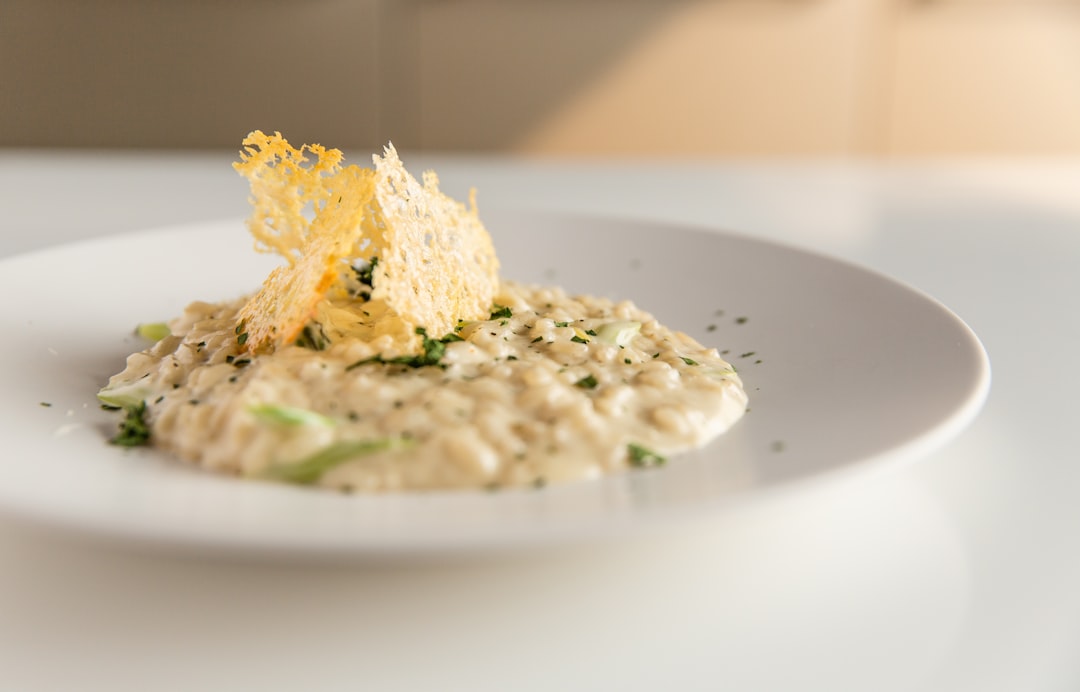
The diets react (see scores below)
Diet Ratings
Arborio rice contains ~28g net carbs per 100g cooked. A typical risotto serving (150g) contains ~42g net carbs, exceeding daily keto limits. Starch-based grain fundamentally incompatible with ketosis.
Rice grain itself is fully vegan. Score reflects that risotto preparation often uses butter and cheese; the rice ingredient alone is plant-based.
Arborio rice is a grain product and grains are excluded from paleo. However, Paul Jaminet's Perfect Health Diet (respected in paleo community) specifically endorses white rice as a 'safe starch' with lower anti-nutrient content. Standard paleo excludes all rice.
Paul Jaminet's Perfect Health Diet — a paleo-adjacent protocol with significant paleo community following — specifically includes white rice as a safe starch, arguing it is lower in anti-nutrients than other grains and provides beneficial resistant starch when cooled.
Arborio rice is a refined grain with high starch content and lower fiber than whole grains. While risotto is prepared with olive oil and vegetables in Mediterranean tradition, the refined rice limits its nutritional value.
Italian Mediterranean traditions, particularly in Northern Italy, embrace risotto as a traditional dish prepared with olive oil, vegetables, and broth, making it acceptable despite refined grain content.
Grain-derived rice product. High carbohydrate, plant-origin. Carnivore diet excludes all grains and grain-based foods without exception.
Arborio rice is a grain, and all grains including rice are excluded on Whole30. Risotto is a grain-based dish.
Arborio rice is a refined grain with negligible FODMAP content. Monash University confirms rice is low-FODMAP at standard serving sizes. The preparation method (risotto) does not introduce FODMAPs if made with low-FODMAP broth and butter.
Refined white rice with minimal fiber and micronutrients. Risotto preparation typically involves high saturated fat (butter, cream) and high sodium (broth). Contradicts DASH principles on whole grains, saturated fat, and sodium restriction.
Arborio rice is a refined, high-starch rice variety with high glycemic index (~90) and minimal fiber. It is explicitly excluded from Zone protocol, which avoids white rice and refined grains. The creamy texture of risotto typically comes from butter and cheese, adding saturated fat without anti-inflammatory benefit. Zone requires low-glycemic carbs.
Arborio is a refined white rice with high glycemic index and minimal fiber. Risotto preparation typically involves butter and cheese, increasing saturated fat. Neutral to slightly pro-inflammatory.
Refined white rice (17g carbs per 45g uncooked serving), minimal protein (1.5g per serving), minimal fiber (0.3g per serving). Risotto typically prepared with butter, cream, and cheese, adding 10-15g fat per serving. High calorie density, poor satiety, triggers rapid blood sugar spike. Displaces protein and fiber in limited calorie budget.
Nutritional profile
Six traits that cut across every diet.
Fiber & Plants
How much whole-plant food and fiber it delivers.
Healthy Fats
The quality of its fats (unsaturated, omega-3).
Whole / Unprocessed
How close it is to its natural, unprocessed form.
Gut Gentle
How easy it is on digestion (low FODMAP, few irritants).
Low Glycemic
How little it spikes your blood sugar.
Protein Density
How much protein it packs per calorie.
Controversy Index
Score range: 1–9/10. Higher controversy = more disagreement between diets.
Diet-Specific Tips for Arborio rice (risotto)
 Vegan — 7/10
- Rice is plant-based
- Cooking method affects final dish
- Typically prepared with dairy
 Mediterranean — 5/10
- refined grain
- traditional Italian preparation
- prepared with olive oil
- high glycemic index
 Low-FODMAP — 9/10
- Refined grain, minimal fermentable carbohydrates
- No fructans, lactose, or polyols
- Safe at standard portions
 Anti-Inflammatory — 4/10
- Refined white rice
- High glycemic index
- Low fiber
- Often prepared with butter and cheese
- High saturated fat in traditional preparation