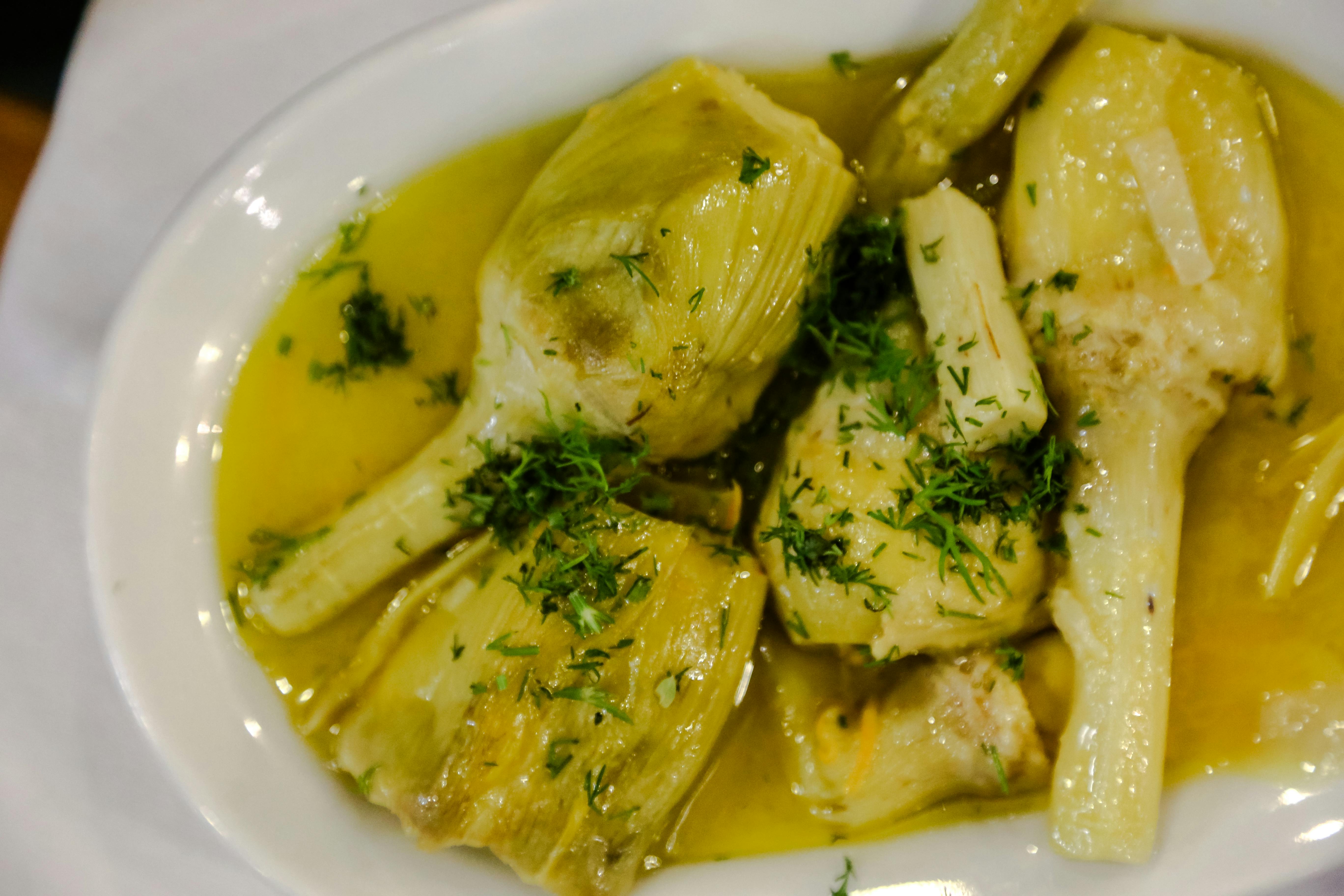
Artichoke hearts (canned)
Rated by 11 diets
The diets react (see scores below)
Diet Ratings
Artichoke hearts contain approximately 5g net carbs per 100g. Moderate portions (3-4 oz) fit within daily limits, but they require tracking. Some keto practitioners freely include them; others prefer lower-carb alternatives to preserve carb budget.
Strict keto followers often avoid artichokes to maximize carb allowance for nutrient-dense foods, while mainstream keto practitioners consider them acceptable in measured portions due to high fiber content.
Plant-based vegetable with no animal products or derivatives. Canning uses plant-based ingredients. Fully vegan-compliant.
Artichokes are paleo-approved vegetables, but canning adds processing, preservatives, and often sodium. Fresh artichoke hearts would be approved; canned version compromises the philosophy of whole, unprocessed foods.
Some paleo practitioners accept canned artichoke hearts if no added sugars or problematic additives are present, viewing the nutritional content as sufficient to outweigh minimal processing.
Canned artichoke hearts retain nutritional value but contain added sodium and are processed. Fresh artichokes are preferred in Mediterranean diet. Canned acceptable occasionally if sodium is monitored.
Some Mediterranean diet authorities accept canned artichoke hearts as convenient alternatives to fresh, particularly when packed in water without excessive sodium, given artichokes' strong Mediterranean heritage.
Artichokes are plant-derived vegetables and excluded on carnivore diet. Canned versions often contain plant-based additives and preservatives. No animal-derived content.
Whole vegetable in minimally processed form. Compliant if packed in water or oil with no added sugars or excluded ingredients.
Monash University rates artichoke hearts as high-FODMAP due to high fructan content. Even small portions (30g) exceed low-FODMAP thresholds. Canning does not reduce FODMAP load significantly.
Nutrient-dense vegetable with excellent fiber and potassium, but canned versions contain 300-500mg sodium per cup. Rinse thoroughly or choose low-sodium/no-salt-added varieties. Fresh preferred.
Low-glycemic vegetable (~7g net carbs per 100g). High fiber (inulin), prebiotic benefits, anti-inflammatory polyphenols. Canned versions retain nutritional value. Excellent Zone vegetable choice. Fits easily into daily vegetable servings.
Excellent source of inulin (prebiotic fiber), polyphenols, and antioxidants. Strong anti-inflammatory properties. Supports liver health and healthy cholesterol. Canned version retains most nutritional benefits though fresh is slightly superior. Check for added sodium.
Excellent fiber source (5.2g per 100g) with low carbs (7g per 100g) and moderate protein (2.7g per 100g). Nutrient-dense with inulin (prebiotic fiber) supporting gut health and digestion. Canned versions are convenient. Low calorie density (28 calories per 100g). Ideal GLP-1 vegetable choice.
Nutritional profile
Six traits that cut across every diet.
Fiber & Plants
How much whole-plant food and fiber it delivers.
Healthy Fats
The quality of its fats (unsaturated, omega-3).
Whole / Unprocessed
How close it is to its natural, unprocessed form.
Gut Gentle
How easy it is on digestion (low FODMAP, few irritants).
Low Glycemic
How little it spikes your blood sugar.
Protein Density
How much protein it packs per calorie.
Controversy Index
Score range: 1–8/10. Higher controversy = more disagreement between diets.
Diet-Specific Tips for Artichoke hearts (canned)
 Keto — 6/10
- 5g net carbs per 100g
- High fiber content
- Requires portion awareness
- Check canned versions for added sugars
 Vegan — 8/10
- Plant-based
- No animal products
- Minimal processing
- Canned in plant-based liquid
 Paleo — 6/10
- Paleo vegetable base
- Processed/canned
- Added sodium likely
- Preservatives present
 Mediterranean — 6/10
- processed food
- added sodium
- nutrient retention
- Mediterranean staple in fresh form
 Whole30 — 8/10
- Whole food source
- Check ingredient label for added sugars
- Oil-packed versions acceptable if oil is compliant
 DASH — 6/10
- high sodium in standard canned form
- exceptional fiber content
- high potassium
- requires thorough rinsing
- fresh artichokes preferred
 Zone — 8/10
- Low net carbs
- High fiber/prebiotic
- Anti-inflammatory polyphenols
- Convenient canned form
 Anti-Inflammatory — 7/10
- High in inulin (prebiotic fiber)
- Rich in polyphenols and antioxidants
- Supports liver function
- Anti-inflammatory compounds
- Check sodium content in canned form
 GLP-1 Friendly — 8/10
- High fiber content
- Low carbohydrate load
- Moderate protein
- Prebiotic fiber supports digestion
- Convenient canned option
- Low calorie density