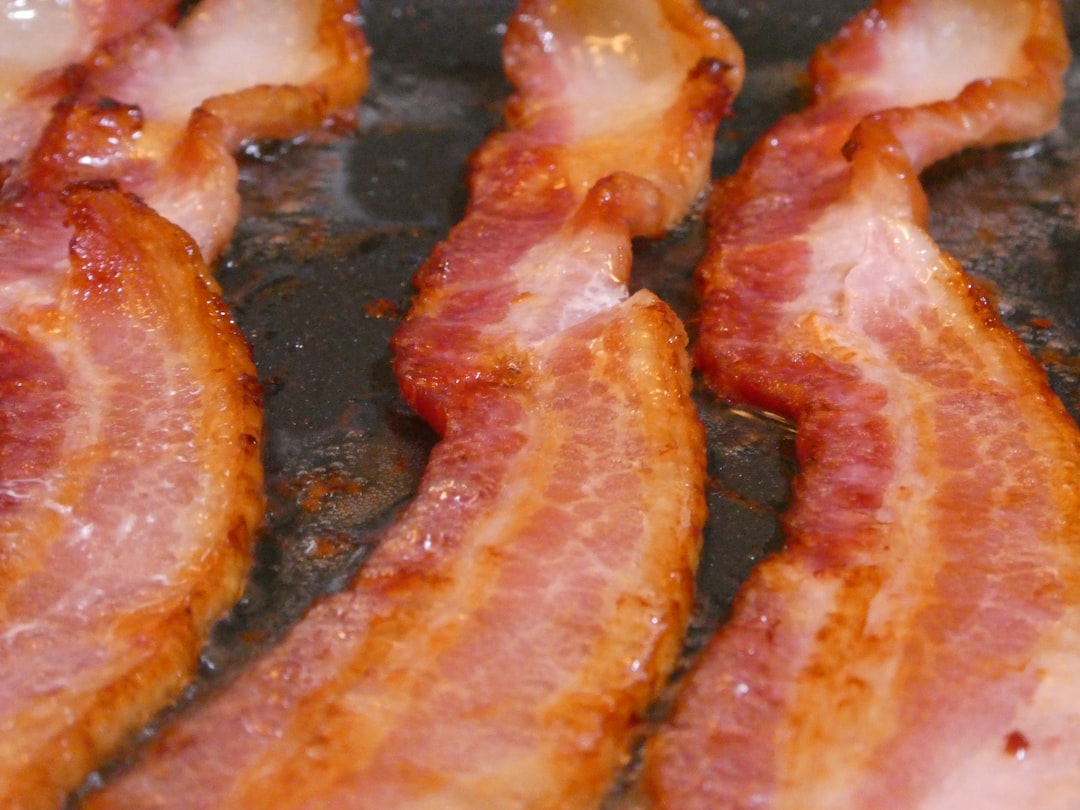
Bacon fat/drippings
Rated by 11 diets
The diets react (see scores below)
Diet Ratings
Pure fat with zero carbs. Ideal for cooking and adding to meals. Supports high fat macros. Whole food source.
Bacon fat is rendered from pork, an animal product. Directly derived from animal flesh and therefore incompatible with veganism.
Rendered animal fat is paleo-approved, but bacon is typically cured with salt and nitrates/nitrites (preservatives). If from uncured, unsalted bacon, it would be approved. Most commercial bacon contains additives.
Some paleo practitioners accept conventional bacon in moderation, arguing that small amounts of curing salts are acceptable. Others source nitrate-free bacon specifically to avoid additives.
Bacon fat is high in saturated fat and sodium, derived from processed red meat. Mediterranean diet emphasizes extra virgin olive oil as primary fat source. Bacon fat contradicts core principles and should be replaced with olive oil for cooking and flavoring.
Pure animal fat rendered from pork. Bacon fat/drippings are universally approved in carnivore diet as a nutrient-dense cooking fat and caloric source. Minimal processing, no additives if from quality bacon.
Rendered animal fat from bacon is a natural fat and fully Whole30 compliant. Ensure bacon itself is compliant (no added sugar in the curing process) and fat is pure without additives.
Pure fat contains no FODMAPs. Bacon fat is rendered animal fat with negligible carbohydrates. No fermentable components.
Nearly 100% saturated fat and cholesterol. DASH explicitly limits saturated fat and red meat products. No nutritional benefit for DASH goals. Contradicts core hypertension management principles.
Bacon fat is primarily saturated fat (not the monounsaturated preference) and contains inflammatory omega-6. While usable as a fat block, it contradicts Zone's anti-inflammatory focus and monounsaturated fat emphasis. Dr. Sears recommends olive oil and avocado over animal fats.
Bacon fat is predominantly saturated fat with high omega-6 content and inflammatory compounds formed during curing and cooking (nitrates, advanced glycation end products). Directly contradicts anti-inflammatory guidelines. Should be strictly avoided.
Nearly 100% saturated fat (14g per tbsp), zero protein, zero fiber. Extremely high calorie density (120 cal per tbsp) with no nutritional value for GLP-1 goals. Known to worsen nausea, bloating, and reflux. No place in GLP-1 diet.
Nutritional profile
Six traits that cut across every diet.
Fiber & Plants
How much whole-plant food and fiber it delivers.
Healthy Fats
The quality of its fats (unsaturated, omega-3).
Whole / Unprocessed
How close it is to its natural, unprocessed form.
Gut Gentle
How easy it is on digestion (low FODMAP, few irritants).
Low Glycemic
How little it spikes your blood sugar.
Protein Density
How much protein it packs per calorie.
Controversy Index
Score range: 1–9/10. Higher controversy = more disagreement between diets.
Diet-Specific Tips for Bacon fat/drippings
 Keto — 9/10
- 0g net carbs
- 100% fat
- Flavorful cooking medium
- Minimal processing
 Paleo — 6/10
- animal fat source
- processing method
- curing salts
- nitrate content
- source quality matters
 Carnivore — 9/10
- pure animal fat
- minimal processing
- nutrient-dense
- excellent cooking medium
 Whole30 — 9/10
- Natural fat
- Animal-derived
- Whole food
 Low-FODMAP — 9/10
- Pure fat source
- Zero fermentable carbohydrates
- No FODMAP-containing ingredients
 Zone — 4/10
- Saturated fat dominant (not monounsaturated)
- Inflammatory omega-6 content
- Contradicts anti-inflammatory protocol
- Acceptable only as occasional cooking medium