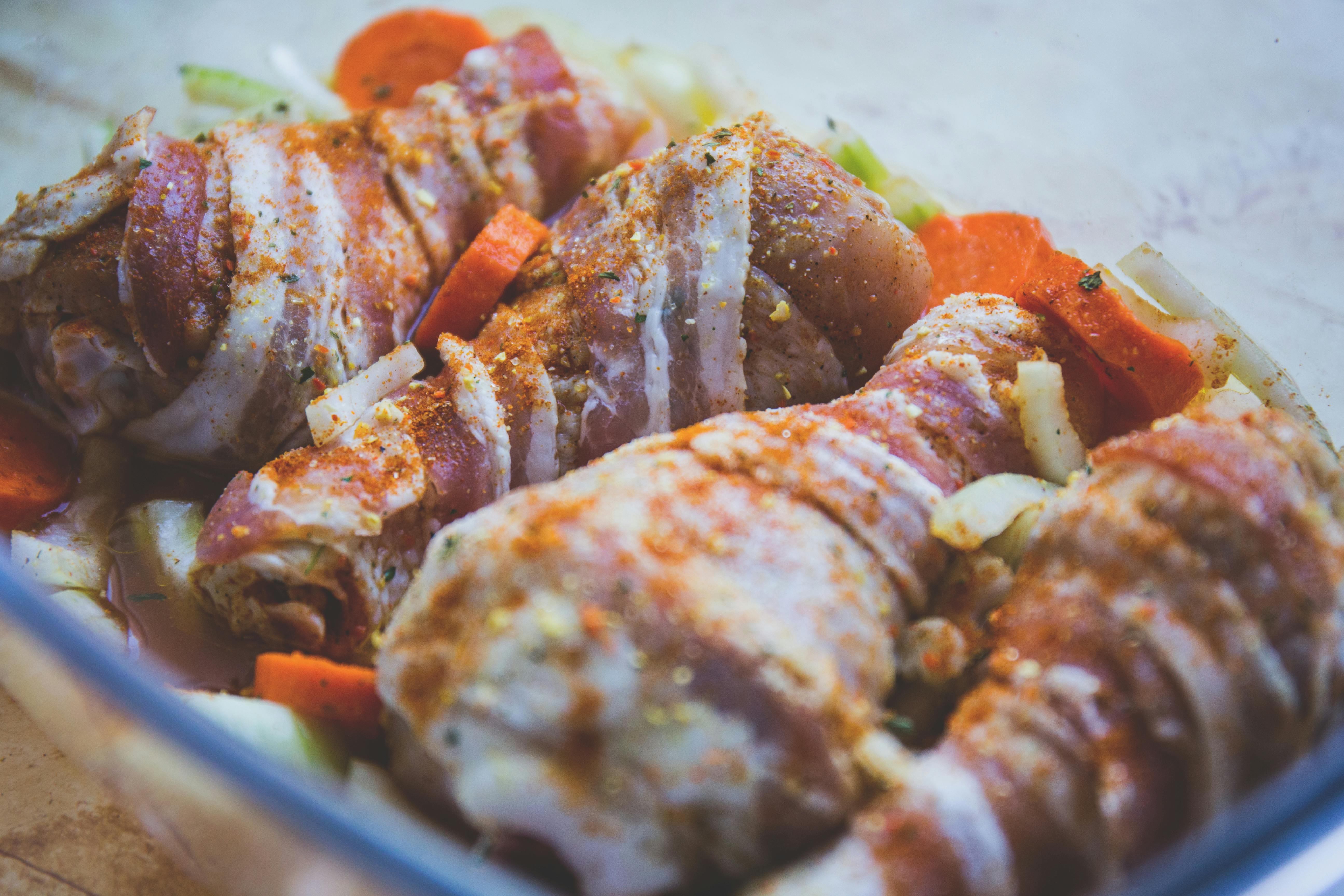
The diets react (see scores below)
Diet Ratings
Lower fat than pork bacon with ~0.5g net carbs per serving. Acceptable but less ideal than pork bacon due to lower fat content and potential additives. Quality varies by brand.
Strict whole-food keto advocates prefer pork bacon for superior fat content and fewer additives, while mainstream keto accepts turkey bacon as a leaner alternative.
Turkey bacon is poultry meat, a direct animal product prohibited in vegan diets.
Turkey bacon is processed meat cured with sodium nitrite/nitrate and added salt. While the base protein is paleo-compliant, the processing and additives are problematic. Uncured, unsalted turkey bacon would be approvable, but commercial versions typically contain these additives.
Some paleo practitioners accept occasional consumption of nitrite-cured bacon as a practical compromise, while stricter adherents avoid all processed meats including bacon due to additives and processing.
Processed cured meat high in sodium and saturated fat. While turkey is poultry, the processing method and curing contradicts Mediterranean principles. Minimal nutritional advantage over whole poultry.
Turkey bacon is processed poultry. Quality varies significantly: some brands contain only turkey, salt, and smoke; others include sugar, soy, and plant oils. Poultry is also less preferred than ruminant meat. Requires careful ingredient verification.
Most carnivore practitioners accept quality bacon (pork or turkey) with minimal additives, but strict adherents argue poultry is suboptimal and processed meat should be avoided entirely in favor of whole cuts.
Turkey bacon is processed and often contains added sugar, soy, and other additives. Some brands are cleaner than others. Requires careful label checking. Whole30 generally prefers unprocessed pork bacon when bacon is consumed.
Some community members accept turkey bacon if it contains no added sugar or soy, while official Whole30 guidance leans toward unprocessed pork bacon as the preferred option due to processing concerns.
Turkey bacon, when plain and without added garlic or onion, is low-FODMAP. The curing process and smoke flavoring do not introduce FODMAPs. Standard portions are safe.
Turkey bacon is leaner than pork bacon (1g saturated fat vs 3g per slice) but still contains 310-360mg sodium per 2 slices. Processed meat with added sodium and nitrates. Acceptable occasionally but not a regular DASH staple due to sodium and processing.
Turkey bacon is leaner than pork bacon but still processed. Contains ~6-8g fat per 2 slices with moderate sodium. Acceptable as occasional flavoring agent but not as primary protein source. Requires careful portioning within fat block allocation.
Even turkey bacon is a processed meat with nitrates, high sodium, and inflammatory additives. Processing and curing methods create pro-inflammatory compounds regardless of poultry source.
Turkey bacon is leaner than pork bacon (~6-8g fat per 2 slices vs. 10-12g for pork) and provides some protein (~6g per 2 slices). However, it's still processed, high in sodium, and the fat-to-protein ratio is suboptimal. Some RDs allow small amounts as a flavor enhancer; others recommend avoiding all processed cured meats on GLP-1.
Some GLP-1 specialists permit turkey bacon in small amounts (1-2 slices) as a flavor addition to eggs or vegetables, viewing the modest fat as acceptable in context; others recommend eliminating all cured/processed meats due to sodium load and processing concerns.
Nutritional profile
Six traits that cut across every diet.
Fiber & Plants
How much whole-plant food and fiber it delivers.
Healthy Fats
The quality of its fats (unsaturated, omega-3).
Whole / Unprocessed
How close it is to its natural, unprocessed form.
Gut Gentle
How easy it is on digestion (low FODMAP, few irritants).
Low Glycemic
How little it spikes your blood sugar.
Protein Density
How much protein it packs per calorie.
Controversy Index
Score range: 1–8/10. Higher controversy = more disagreement between diets.
Diet-Specific Tips for Bacon (turkey)
 Keto — 6/10
- 0.5g net carbs per serving
- Lower fat than pork bacon
- Processed meat
- Brand-dependent quality
 Paleo — 4/10
- Processed meat product
- Sodium nitrite/nitrate curing
- Added salt
- Processing contradicts paleo philosophy
- Uncured versions would be acceptable
 Carnivore — 5/10
- Processed meat (requires ingredient check)
- Poultry source (lower priority)
- Potential sugar and additives
- Smoking process acceptable if no plant oils
 Whole30 — 5/10
- Processed meat
- Often contains added sugar
- May contain soy
- Label verification required
 Low-FODMAP — 8/10
- Processed but minimal additives in plain varieties
- No garlic or onion in standard turkey bacon
- Salt and smoke flavoring are FODMAP-safe
- Verify label for added ingredients
 DASH — 4/10
- Lower saturated fat than pork bacon
- High sodium from curing/processing
- Processed meat category
- Nitrates present
 Zone — 5/10
- Processed meat
- Moderate fat content
- High sodium
- Better than pork bacon but not ideal
 GLP-1 Friendly — 4/10
- processed meat
- moderate fat content
- high sodium
- small portion use only