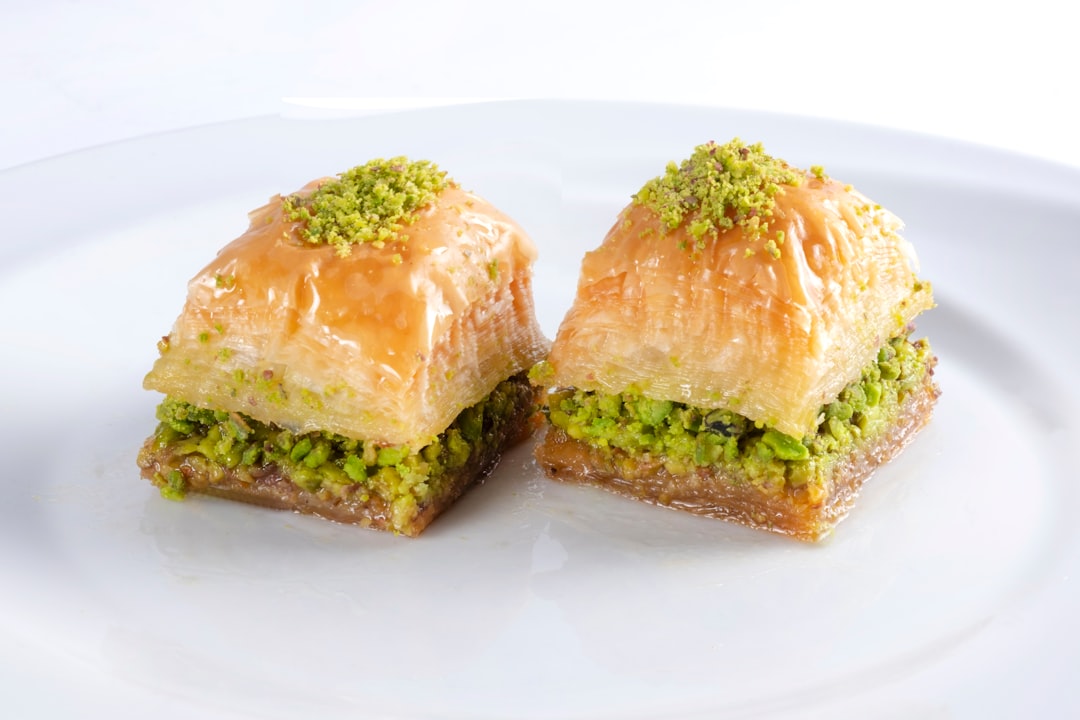
The diets react (see scores below)
Diet Ratings
Phyllo dough (grain-based) layered with nuts and soaked in honey/sugar syrup. ~40-50g net carbs per piece. Completely incompatible with ketosis.
Traditional baklava contains butter (dairy) in phyllo dough and honey as sweetener. Both are non-vegan. Some modern vegan versions use oil and agave, but standard recipes are not vegan.
Vegan baklava made with oil and plant-based sweeteners exists, so specific recipe matters significantly.
Baklava contains wheat flour (grain), honey or refined sugar, butter/dairy, and is deep-fried in seed oils. While nuts are paleo-approved, the overall composition violates multiple core paleo rules.
Baklava contains nuts (Mediterranean-approved) and honey, but is traditionally made with refined flour and excessive sugar. Phyllo dough preparation varies. Homemade versions with whole grains and less sugar would be more aligned; commercial versions often too sweet.
Some Mediterranean diet authorities accept traditional baklava as an occasional treat, particularly in Greek and Turkish Mediterranean regions where it has cultural significance and is made with quality nuts and olive oil.
Pastry made from grain flour with nuts, seeds, honey, and plant oils. Multiple plant-based ingredients throughout. Fundamentally incompatible with carnivore diet.
Baklava contains multiple excluded ingredients: grains (phyllo dough/wheat), added sugar (honey or syrup), and often dairy (butter). It also violates the 'no recreating baked goods' rule.
Baklava contains wheat phyllo dough (fructans), honey (excess fructose), and often pistachios or walnuts. Multiple high-FODMAP ingredients make this unsuitable for elimination phase.
High in saturated fat (butter, phyllo), added sugar (honey syrup), and calories. Nuts provide some benefit but overwhelmed by sugar and fat content. Portion size typically excessive.
Refined carbs (phyllo, honey), saturated fat (butter), and sugar syrup. While nuts provide some monounsaturated fat, the carb-to-protein ratio is severely imbalanced. Impossible to portion into Zone compliance.
Contains nuts (omega-3 potential) and honey (some antioxidants), but heavily sweetened with sugar syrup and made with butter or phyllo in oil. High caloric density with significant saturated fat and refined sugars.
Some Mediterranean diet advocates view baklava's nuts and honey favorably. However, the sugar syrup saturation and cooking fats create net inflammatory profile that outweighs nut benefits.
Very high fat (phyllo + nuts + oil), high sugar, minimal protein, low fiber. Extremely calorie-dense. Greasy texture triggers nausea and bloating. One of the worst choices for GLP-1 patients.
Nutritional profile
Six traits that cut across every diet.
Fiber & Plants
How much whole-plant food and fiber it delivers.
Healthy Fats
The quality of its fats (unsaturated, omega-3).
Whole / Unprocessed
How close it is to its natural, unprocessed form.
Gut Gentle
How easy it is on digestion (low FODMAP, few irritants).
Low Glycemic
How little it spikes your blood sugar.
Protein Density
How much protein it packs per calorie.
Controversy Index
Score range: 1–5/10. Higher controversy = more disagreement between diets.
Diet-Specific Tips for Baklava
 Mediterranean — 5/10
- nuts are positive
- honey is natural sweetener
- refined flour problematic
- high sugar content
- portion control critical
 Anti-Inflammatory — 5/10
- Nuts provide some omega-3s and polyphenols
- Heavy sugar syrup coating
- Butter or oil-based preparation
- High caloric and saturated fat density
- Honey provides minor antioxidants