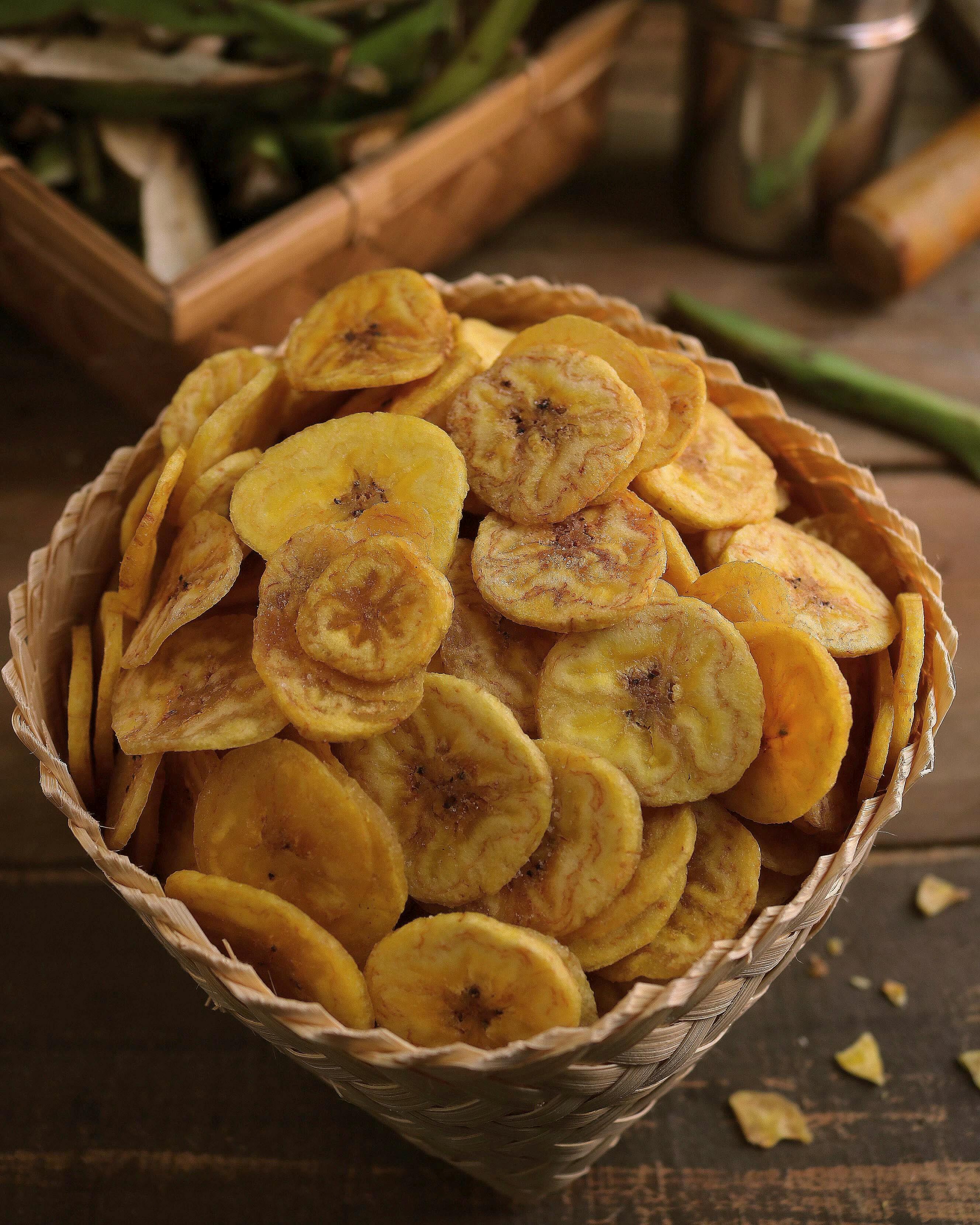
The diets react (see scores below)
Diet Ratings
Dried banana is concentrated carbohydrate. One ounce (small handful) contains approximately 20-24g net carbs. Incompatible with keto regardless of portion size.
Banana chips are plant-based but often fried in oil and may contain added sugars or honey. Some brands use animal-derived processing aids or coatings.
Some vegans accept plain banana chips as fully vegan if made with only bananas and plant-based oils.
Banana chips are dehydrated bananas (fruit-approved), but the dehydration concentrates sugars significantly. They are often fried in seed oils or coconut oil. Whole bananas are preferred; chips are a processed alternative.
Some paleo practitioners accept banana chips made with approved oils (coconut oil) as an occasional portable snack, though whole bananas remain the preferred form.
Processed snack with added oils, sugars, and salt. While bananas are acceptable, chips remove fiber and add processing. Whole bananas or dried fruit without added ingredients strongly preferred.
Dried fruit product from bananas. Plant-derived with concentrated sugars. No animal products. Directly violates carnivore exclusion of all plant foods.
Banana chips are technically made from a whole fruit (banana), but they are processed, dehydrated, and often fried or baked with added oils. While the base ingredient is compliant, the processing and concentration of sugars test the spirit of eating whole, unprocessed foods.
Official Whole30 guidelines allow whole fruits including dried fruits, but community interpretation varies on heavily processed fruit products like chips. Some argue dehydrated fruit chips are acceptable as a whole fruit derivative; others view them as processed snacks that violate the whole-food principle.
Banana chips are dried banana, which concentrates sugars. Bananas are low-FODMAP, but drying concentrates fructose. Monash rates fresh banana as low-FODMAP; dried/chip form increases FODMAP load. Portion control essential.
Monash University data on banana chips specifically is limited. Some practitioners consider them acceptable in small portions (1-2 chips); others recommend avoiding due to fructose concentration from drying process.
Fried, processed snack high in sodium, saturated fat, and calories. Lacks fiber of whole banana. Contradicts DASH emphasis on whole fruits and limiting processed foods.
Dried banana is high-glycemic carbohydrate (~15g carbs per oz) with minimal fiber. Often fried in omega-6 oils. Lacks protein and contains excessive fat from processing. Bananas are already discouraged in Zone; dehydration concentrates sugars further. Incompatible with low-glycemic carbohydrate principle.
Banana chips are typically deep-fried in seed oils (inflammatory omega-6 excess) and often coated with added sugars or honey. Processing destroys fiber and concentrates sugars. High caloric density with minimal anti-inflammatory benefit.
Fried or baked banana chips are high in sugar (15-20g per 1oz serving) and often fried in oil (high fat, 8-10g per 1oz). Minimal protein or fiber despite banana origin — processing removes fiber structure. Calorie-dense with poor satiety. Empty calories that displace nutrient-dense foods. Fried foods worsen GLP-1 nausea and bloating.
Nutritional profile
Six traits that cut across every diet.
Fiber & Plants
How much whole-plant food and fiber it delivers.
Healthy Fats
The quality of its fats (unsaturated, omega-3).
Whole / Unprocessed
How close it is to its natural, unprocessed form.
Gut Gentle
How easy it is on digestion (low FODMAP, few irritants).
Low Glycemic
How little it spikes your blood sugar.
Protein Density
How much protein it packs per calorie.
Controversy Index
Score range: 1–6/10. Higher controversy = more disagreement between diets.
Diet-Specific Tips for Banana chips
 Vegan — 6/10
- Plant-based base
- Often fried in oil
- Added sugars common
- Processing method varies
 Paleo — 4/10
- Sugar concentration
- Often fried
- Processing involved
- Oil quality variable
 Whole30 — 4/10
- Processed fruit product
- Concentrated sugars
- Often fried or baked
- Whole fruit base
 Low-FODMAP — 6/10
- Drying concentrates fructose
- Fresh banana is low-FODMAP
- Portion size critical
- Processing effect on FODMAP content