Diet Ratings
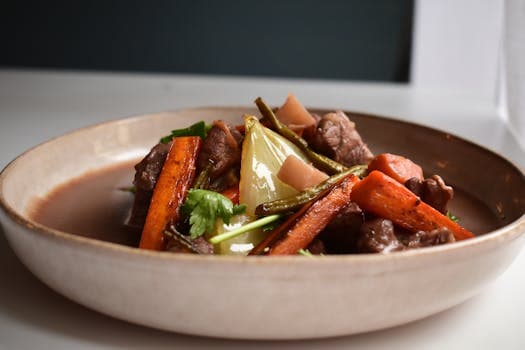
Beef stew provides excellent protein and fat from beef and broth, but often contains potatoes (15-20g net carbs per serving) and sometimes added sugar. Carb content varies significantly: 8-20g net carbs per serving depending on potato content.
Contains beef (red meat) and typically beef broth (animal-derived). Vegetables are vegan but insufficient to offset multiple animal products.
Beef, vegetables, and bone broth are all paleo-compliant. If prepared without grains and legumes, this is an excellent paleo meal. Cooking method (slow-cooked) preserves nutrients.
Beef stew exceeds Mediterranean guidelines for red meat consumption (few times monthly). While slow-cooked with vegetables has some merit, the red meat frequency and often high sodium content contradict core principles.
Beef and animal fat are primary, but traditional beef stew contains potatoes (plant), carrots (plant), onions (plant), and celery (plant). If vegetables are minimal and broth is pure animal-based, closer to acceptable. Highly preparation-dependent.
iStrict carnivore practitioners (Lion Diet, Saladino) reject all vegetables entirely. Baker's approach might accept if vegetables are minimal and beef/fat content dominates. Some practitioners make carnivore-compliant beef stew with only meat and fat.
Beef, vegetables (carrots, potatoes, celery, onions), and broth are all Whole30 compliant. If made without added sugar, flour thickener, or dairy, this is a classic Whole30-friendly meal. Home-prepared versions are ideal.
Beef stew contains beef (low-FODMAP), potatoes (low-FODMAP), and carrots (low-FODMAP). However, traditional beef stew is made with garlic, onion, and sometimes celery as aromatics. Garlic and onion are high-FODMAP. Celery is high-FODMAP. Broth and tomato paste are low-FODMAP.
iMonash University rates beef, potatoes, and carrots as low-FODMAP, but garlic and onion are foundational to beef stew flavor. Clinical practitioners recommend requesting garlic/onion-free preparation or making stew at home with controlled ingredients.
Red meat (beef) is limited in DASH. High sodium from broth and salt. Saturated fat from beef and cooking method. Refined carbohydrates from potatoes. Violates DASH guidelines on red meat, sodium, and saturated fat.
Beef provides protein; vegetables are low-glycemic; slow-cooking creates anti-inflammatory profile. However, beef is often fatty cuts; potatoes are high-glycemic; gravy adds saturated fat. Requires lean beef, potato reduction, vegetable maximization.
Red meat is pro-inflammatory (arachidonic acid, saturated fat). Long cooking in fat concentrates inflammatory compounds. Refined carbohydrates (potatoes, flour thickener) spike blood sugar. High sodium. While vegetables provide some antioxidants, they're insufficient to offset beef's inflammatory load.
Beef stew provides protein (12-15g per cup) and vegetables with fiber. However, it is often made with fatty beef cuts and thickened with flour or cornstarch, increasing fat and refined carbs. The heavy, rich broth can trigger nausea. Lean beef versions with plenty of vegetables are better. The warm, soft texture is easy to digest, but fat content is the limiting factor.
Controversy Index
Score range: 1–8/10. Higher controversy = more disagreement between diets.