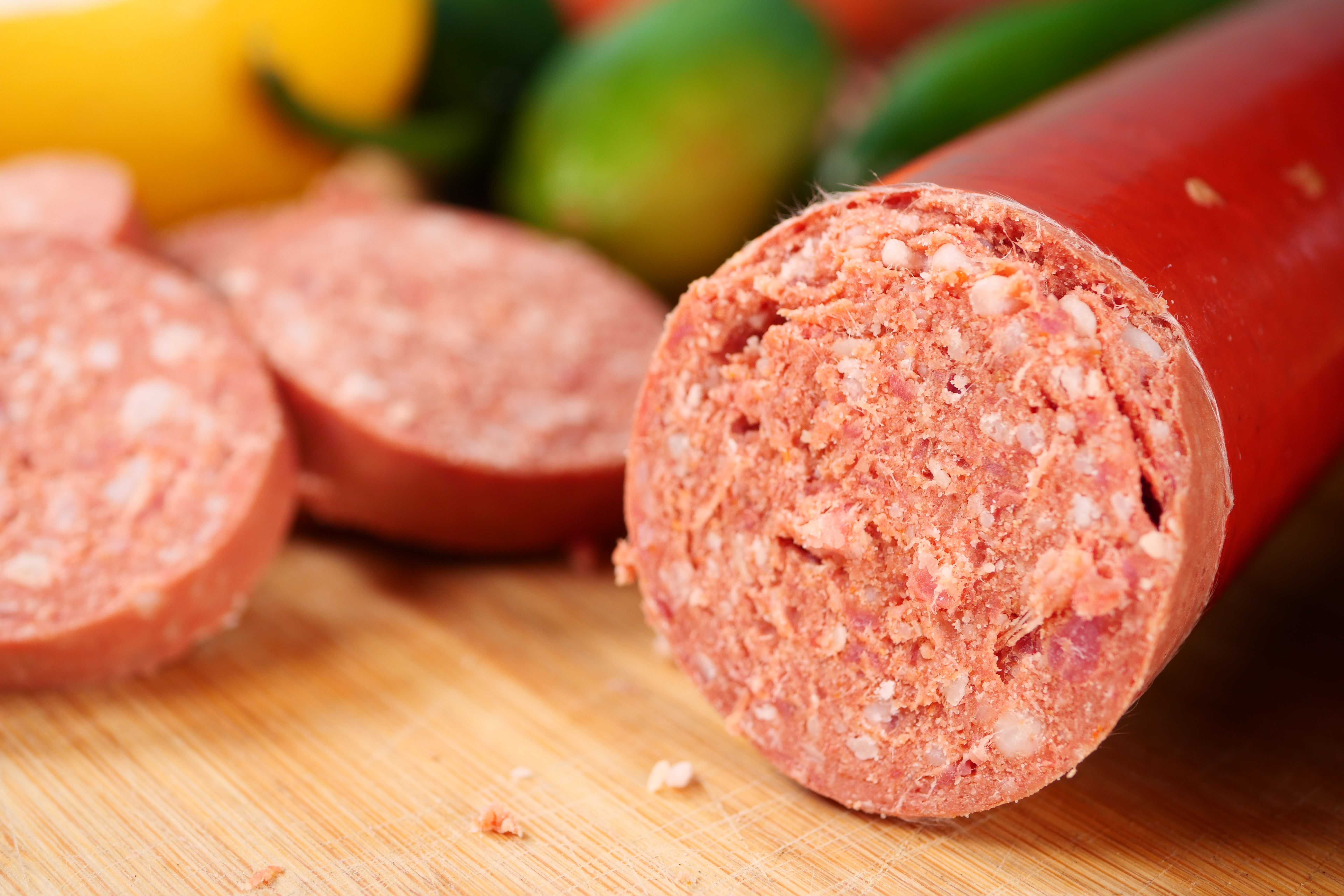
Beef summer sausage
Rated by 11 diets
The diets react (see scores below)
Diet Ratings
Most beef summer sausages contain 1-3g net carbs per ounce due to added sugars and starches as binders. Acceptable in moderation but requires label verification. Some strict keto practitioners avoid processed meats due to additives.
Strict keto advocates minimize processed meats due to added sugars, nitrates, and inflammatory seed oils, preferring whole unprocessed beef; mainstream keto allows them with label checking.
Beef is animal meat. Processed meat product with no plant-based components. Completely incompatible with vegan diet.
Processed meat product typically containing added sugars, nitrates/nitrites, soy, and other additives. While beef is paleo-approved, the processing, curing agents, and added ingredients violate paleo principles.
Processed red meat with high saturated fat, sodium, and often nitrates/nitrites. Red meat should be limited to few times monthly; processed forms are particularly discouraged. Contradicts core Mediterranean principles.
Processed meat product. Quality depends entirely on ingredients. Many commercial versions contain sugar, fillers, soy, or plant-based additives. Pure beef with salt and spices = approve; with additives = avoid.
Strict carnivores avoid all processed meats due to potential additives and inflammatory ingredients, while many practitioners consume quality summer sausage with minimal ingredients as a convenient protein source.
Beef summer sausage is often cured with added sugar, nitrates, and may contain soy or other additives. While some compliant versions exist, most commercial varieties contain excluded ingredients or additives that require careful label review.
Official Whole30 guidelines require checking labels for added sugar, soy, and other excluded ingredients. Many summer sausages contain sugar as a curing agent, making them non-compliant. Only explicitly sugar-free, additive-free versions qualify.
Beef summer sausage is primarily low-FODMAP (meat, fat, salt), but many commercial brands contain garlic powder, onion powder, or high-fructose corn syrup as additives. Monash testing on specific sausage products is limited. Check ingredient labels; plain varieties are safer.
Monash University does not comprehensively test processed meat products. Clinical FODMAP practitioners recommend checking labels for garlic/onion powder and avoiding brands with added sweeteners or excessive spices.
Processed red meat with high sodium (400-600mg per ounce), saturated fat (6-8g per ounce), and cholesterol. Cured with nitrates/nitrites. DASH guidelines explicitly limit red meat and processed meats due to cardiovascular risk.
Processed meat with added sodium and often sugar (2-3g per serving). Saturated fat content high. Can serve as protein block but requires careful portioning and carb/fat pairing to balance macros.
Processed red meat with high saturated fat, sodium, and often contains nitrates/nitrites (pro-inflammatory additives). High omega-6 to omega-3 ratio. Processed meats are consistently linked to inflammation and chronic disease. Lacks beneficial compounds.
High fat (8-12g per serving), high sodium, processed meat with nitrates, minimal fiber. Saturated fat and processing worsen GLP-1 side effects. Protein content (6-8g) is offset by fat burden and lack of fiber.
Nutritional profile
Six traits that cut across every diet.
Fiber & Plants
How much whole-plant food and fiber it delivers.
Healthy Fats
The quality of its fats (unsaturated, omega-3).
Whole / Unprocessed
How close it is to its natural, unprocessed form.
Gut Gentle
How easy it is on digestion (low FODMAP, few irritants).
Low Glycemic
How little it spikes your blood sugar.
Protein Density
How much protein it packs per calorie.
Controversy Index
Score range: 1–6/10. Higher controversy = more disagreement between diets.
Diet-Specific Tips for Beef summer sausage
 Keto — 6/10
- Added sugars (1-3g per oz)
- Starch binders
- Processed meat
- Label variation significant
 Carnivore — 5/10
- Ingredient-dependent quality
- Often contains sugar or fillers
- May include soy or plant additives
- Processing level varies
 Whole30 — 5/10
- often contains added sugar
- may contain soy
- requires label verification
 Low-FODMAP — 6/10
- Garlic and onion powder are common additives
- High-fructose corn syrup may be present
- Brand variation is significant
- Plain varieties are safer
 Zone — 4/10
- processed meat with added sugars
- high saturated fat
- high sodium
- requires careful portioning