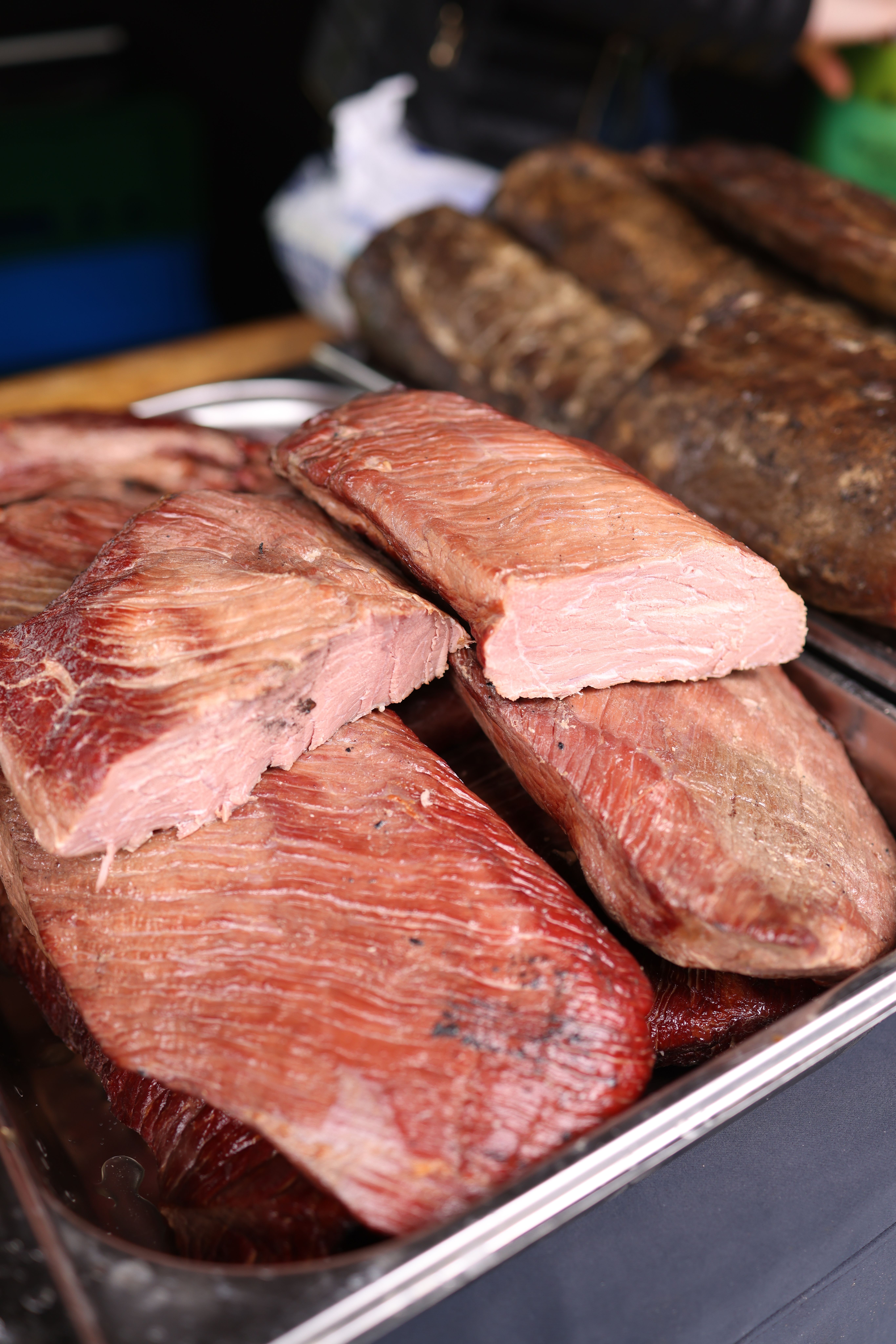
The diets react (see scores below)
Diet Ratings
Beef tongue is a nutrient-dense organ meat with virtually no carbs (0g net carbs) and high fat content, making it ideal for ketogenic diets. Excellent micronutrient profile.
Beef tongue is animal flesh from cattle, directly violating core vegan principles.
Unprocessed organ meat from grass-fed cattle. Nutrient-dense, available to hunter-gatherers, and aligns with nose-to-tail eating philosophy.
Organ meat from beef, which is red meat limited to few times monthly. Organ meats are nutrient-dense but beef remains restricted. Some Mediterranean traditions value offal; others emphasize limiting red meat entirely.
Traditional Mediterranean and Southern European cuisines incorporate organ meats as economical, nutrient-rich foods. Some practitioners view beef tongue as acceptable occasional consumption within monthly red meat allowance.
Beef tongue is a ruminant organ meat, highly nutrient-dense, and universally approved in carnivore communities. Excellent source of B vitamins, minerals, and fatty acids. Minimal processing required.
Beef tongue is a whole, unprocessed meat product with no excluded ingredients. It is explicitly compliant with Whole30 as a protein source.
Organ meat with negligible FODMAP content. Pure protein source without fermentable carbohydrates or problematic polyols.
Red meat with high saturated fat and cholesterol content. DASH guidelines limit red meat consumption. High in dietary cholesterol and not aligned with heart-healthy protein priorities.
Nutrient-dense organ meat with good protein, but higher in saturated fat than lean cuts. 3 oz (85g) cooked provides ~25g protein but ~15-18g fat. Requires pairing with minimal additional fat and low-glycemic carbs.
Organ meat with high saturated fat and cholesterol. Contains some B vitamins and minerals, but inflammatory profile due to high saturated fat content. Anti-inflammatory diet emphasizes limiting red meat.
Some nutrient-dense food advocates and ancestral diet proponents value organ meats for micronutrient density, though Dr. Weil's pyramid limits red meat consumption.
Beef tongue is nutrient-dense (high in protein, iron, B vitamins) and relatively lean for organ meat (~10g fat per 3oz cooked). However, it's high in saturated fat and cholesterol, and the texture/richness may trigger nausea in GLP-1 patients. Some RDs recommend organ meats for micronutrient density; others limit them due to fat and digestibility concerns.
Some GLP-1 nutrition specialists value organ meats for micronutrient density and recommend them in small portions; others prioritize avoiding high-saturated-fat foods due to nausea risk and prefer leaner protein sources.
Nutritional profile
Six traits that cut across every diet.
Fiber & Plants
How much whole-plant food and fiber it delivers.
Healthy Fats
The quality of its fats (unsaturated, omega-3).
Whole / Unprocessed
How close it is to its natural, unprocessed form.
Gut Gentle
How easy it is on digestion (low FODMAP, few irritants).
Low Glycemic
How little it spikes your blood sugar.
Protein Density
How much protein it packs per calorie.
Controversy Index
Score range: 1–9/10. Higher controversy = more disagreement between diets.
Diet-Specific Tips for Beef tongue
 Keto — 9/10
- 0g net carbs
- High fat and protein
- Nutrient-dense organ meat
- Whole food
 Paleo — 9/10
- unprocessed whole food
- organ meat
- nutrient-dense
- no additives
 Mediterranean — 5/10
- red meat source
- nutrient-dense organ meat
- high in iron and B vitamins
- limited frequency allowed
 Carnivore — 9/10
- Ruminant organ meat
- High micronutrient density
- Fatty and nutrient-rich
- Minimal processing
 Whole30 — 9/10
- Whole meat
- No processing
- No excluded ingredients
- Nutrient-dense
 Low-FODMAP — 8/10
- Protein-based food
- No fermentable carbohydrates
- No lactose or excess fructose
 Zone — 5/10
- High protein
- Organ meat benefits
- Elevated saturated fat
- Nutrient-dense
 Anti-Inflammatory — 4/10
- red meat
- high saturated fat
- high cholesterol
- nutrient density
 GLP-1 Friendly — 4/10
- high protein
- high micronutrient density
- moderate-to-high saturated fat
- rich/heavy texture
- less common (portion control easier)