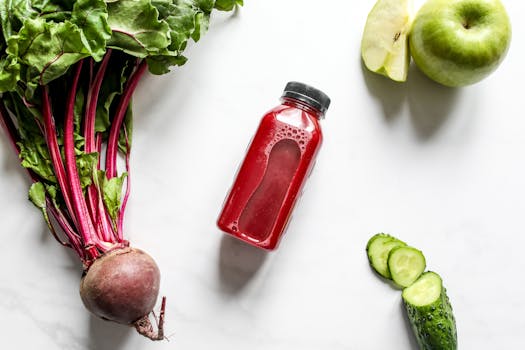
The diets react (see scores below)
Diet Ratings
Concentrated natural sugars without fiber. One cup contains approximately 13g net carbs. Liquid form makes it easy to overconsume and rapidly spike blood glucose.
Pure beet juice is a whole plant food with no animal products or derivatives. Nutrient-dense and minimally processed when freshly made.
Beet juice is extracted from a paleo-approved vegetable (beets are tubers), but juicing concentrates natural sugars and removes fiber. Most paleo practitioners prefer whole beets over juice to maintain satiety and stable blood sugar.
Some paleo practitioners, particularly those following Paul Jaminet's Perfect Health Diet, accept beet juice in moderation as a nutrient-dense beverage, especially post-workout for recovery.
While beets are Mediterranean-approved vegetables, juice removes fiber and concentrates natural sugars. Whole beets are preferred, but fresh juice in moderation can fit. Processing method matters significantly.
Some Mediterranean nutritionists accept fresh-pressed beet juice as a nutrient-dense beverage, particularly for its nitrate content and antioxidants, when consumed occasionally.
Plant-derived beverage with concentrated sugars. No animal products. Violates core carnivore exclusion of all plant foods.
100% beet juice is whole fruit juice with no added sugar. Per official Whole30 guidance, 100% fruit juice is Whole30 compatible as both a standalone drink and recipe ingredient. Beet juice is a natural, unprocessed juice.
Beets contain moderate fructans and excess fructose. Monash rates whole beets as low-FODMAP in small portions (2 slices, ~70g), but juice concentrates FODMAPs. Safe serving is limited.
Monash University data on beet juice specifically is limited; some practitioners consider even small portions of concentrated beet juice problematic due to fructose concentration.
Rich in potassium, nitrates, and antioxidants. Supports vasodilation and blood pressure reduction. Core DASH vegetable derivative with strong cardiovascular benefits.
Concentrated natural sugars without fiber buffering. One cup contains ~12g sugar with minimal fiber. High glycemic load despite being from whole food source. Difficult to portion into Zone ratios without excessive carbohydrate.
Beets are rich in betalains (antioxidants), nitrates (vascular health), and polyphenols. Beet juice concentrates these compounds. Supports anti-inflammatory pathways and endothelial function.
Beet juice is nutrient-dense (folate, nitrates, antioxidants) and hydrating, but high in natural sugars (12-15g per 8oz serving) with minimal fiber since pulp is removed. Liquid calories are less satiating than whole foods. Works as occasional supplement but not a meal replacement. Some GLP-1 patients tolerate it well; others find concentrated fruit juice triggers nausea or blood sugar dysregulation.
Some RDs recommend beet juice for its cardiovascular benefits and micronutrient density, especially for patients with poor vegetable intake. Others avoid it entirely due to sugar concentration and lack of satiety — whole beets would be superior if tolerated.
Nutritional profile
Six traits that cut across every diet.
Fiber & Plants
How much whole-plant food and fiber it delivers.
Healthy Fats
The quality of its fats (unsaturated, omega-3).
Whole / Unprocessed
How close it is to its natural, unprocessed form.
Gut Gentle
How easy it is on digestion (low FODMAP, few irritants).
Low Glycemic
How little it spikes your blood sugar.
Protein Density
How much protein it packs per calorie.
Controversy Index
Score range: 1–9/10. Higher controversy = more disagreement between diets.
Diet-Specific Tips for Beet juice
 Vegan — 8/10
- Whole plant food
- No animal products
- Nutrient-rich
- Minimal processing
 Paleo — 5/10
- Natural sugar concentration
- Fiber removed
- Nutrient-dense
- Portion control critical
 Mediterranean — 5/10
- Fiber removed in processing
- Concentrated natural sugars
- Nutrient density retained
- Freshness critical
 Whole30 — 9/10
- 100% fruit juice
- No added sugar
- Officially approved juice category
 Low-FODMAP — 5/10
- Concentration effect of juicing
- Excess fructose in beets
- Portion size critical
 DASH — 8/10
- High potassium content
- Dietary nitrates for vasodilation
- Low sodium
- Antioxidant-rich
 Anti-Inflammatory — 8/10
- high antioxidant content (betalains)
- nitrates improve vascular function
- polyphenols
- natural sugars (portion consideration)
 GLP-1 Friendly — 5/10
- high natural sugar
- no fiber (juice form)
- nutrient-dense
- liquid calories
- low satiety