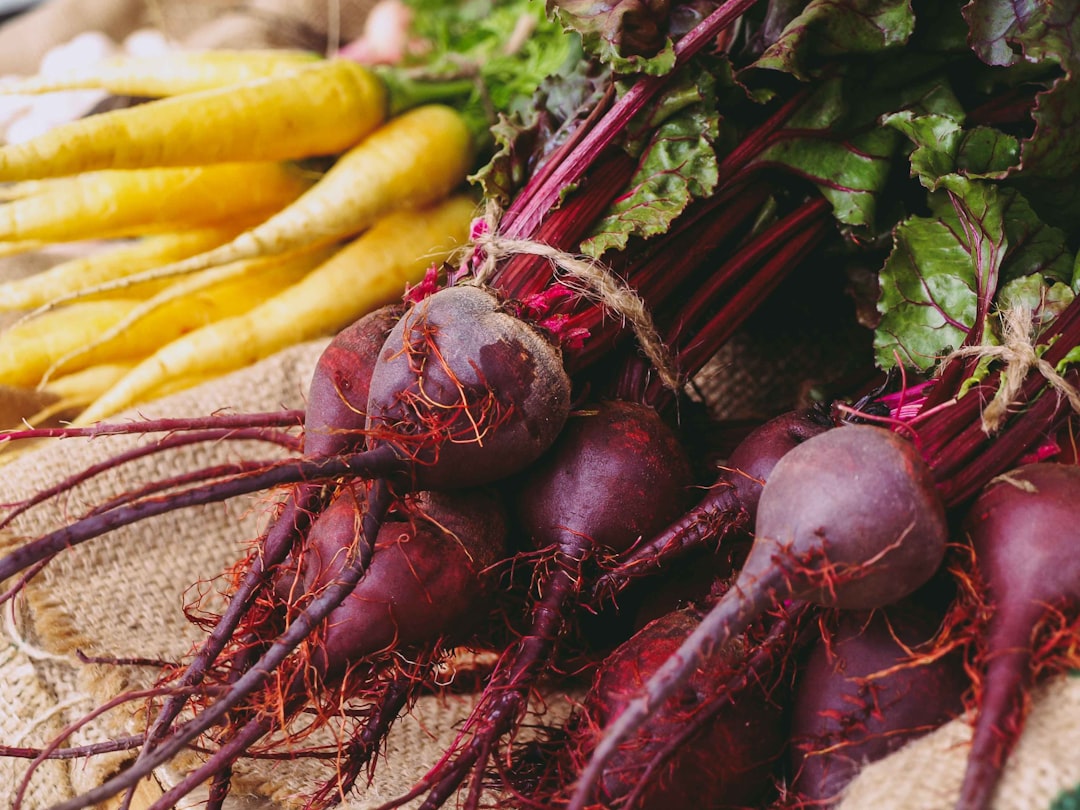
The diets react (see scores below)
Diet Ratings
High net carbs (~8-10g per medium beet). Naturally sweet with significant sugar content. Incompatible with strict carb limits. No meaningful place in ketogenic diet.
Whole plant food with no animal products or derivatives. Nutrient-dense root vegetable suitable for vegan diets.
Beets are unprocessed vegetables but contain higher natural sugar content compared to other vegetables. Generally acceptable in paleo diet but portion control recommended due to carbohydrate density.
Strict paleo practitioners may limit beets due to higher sugar content, while mainstream paleo (Sisson, Whole30) accepts them in moderate portions as nutrient-dense root vegetables.
Beets are nutrient-dense root vegetables rich in folate, manganese, and betalains. Used in Mediterranean salads and preparations. Minimal processing when fresh. Supports plant-based nutrition.
Beets are plant-derived vegetables with high carbohydrate content. Carnivore diet excludes all vegetables and plant foods.
Whole vegetable explicitly allowed on Whole30. No excluded ingredients.
Monash University confirms beets are low-FODMAP only at restricted portions (2 slices or 60g). Contains excess fructose relative to glucose that accumulates with larger servings.
DASH-approved vegetable. Good source of potassium, folate, and nitrates (which support blood pressure reduction). Low sodium. Fresh beets preferred over canned with added sodium.
High carb density (~13g net carbs per cup raw) makes beets problematic for Zone balance. High glycemic load and sugar content conflict with low-glycemic carb requirement. Sears explicitly discourages root vegetables like beets.
Rich in betalains (betacyanins and betaxanthins), powerful antioxidants and anti-inflammatory compounds. Contains nitrates supporting vascular function. High in folate and manganese.
Higher natural sugar content (9g carbs per medium beet) and higher calorie density than leafy/watery vegetables. Good fiber and nutrients (folate, manganese), but portion control is important. Better as occasional addition than primary vegetable.
Some RDs include beets freely for their nutrient density and fiber; others restrict them due to sugar content and calorie density relative to other vegetable options. Clinical consensus favors moderation for GLP-1 patients.
Nutritional profile
Six traits that cut across every diet.
Fiber & Plants
How much whole-plant food and fiber it delivers.
Healthy Fats
The quality of its fats (unsaturated, omega-3).
Whole / Unprocessed
How close it is to its natural, unprocessed form.
Gut Gentle
How easy it is on digestion (low FODMAP, few irritants).
Low Glycemic
How little it spikes your blood sugar.
Protein Density
How much protein it packs per calorie.
Controversy Index
Score range: 1–9/10. Higher controversy = more disagreement between diets.
Diet-Specific Tips for Beets
 Vegan — 9/10
- Whole plant food
- No animal products
- Good source of folate and manganese
 Paleo — 6/10
- Higher natural sugar content
- Nutrient-dense
- Unprocessed
- Portion control recommended
 Mediterranean — 7/10
- Betalain antioxidants
- Folate and manganese content
- Traditional Mediterranean salad ingredient
- Minimal processing
 Whole30 — 9/10
- Whole vegetable
- Unprocessed
- Compliant
 Low-FODMAP — 5/10
- Excess fructose content
- Dose-dependent FODMAP status
- Monash tested with clear portion cutoff
 DASH — 8/10
- Low sodium
- High potassium
- Contains nitrates for vasodilation
- Good folate source
- Supports blood pressure
 Anti-Inflammatory — 8/10
- betalains
- nitrates
- antioxidants
- folate
 GLP-1 Friendly — 5/10
- higher natural sugar
- higher calorie density
- good fiber
- nutrient-dense
- portion control needed