Diet Ratings
Rice base contains 30-45g net carbs per serving. Vegetables (carrots, zucchini) add 8-12g carbs. Egg and meat are keto-friendly but overwhelmed by rice carbs. Gochujang sauce adds 3-5g carbs.
Traditional bibimbap contains egg (often a fried egg on top) and may contain animal-based broth or fish sauce. However, vegetarian/vegan versions exist with plant-based substitutes. Ingredient verification essential.
iSome vegans accept bibimbap if prepared without egg and animal broths, making it fully plant-based when customized.
Contains white rice (grain), which is excluded. Vegetables, egg, and meat components are paleo-approved. Gochujang sauce may contain added sugars. Composition is mixed.
iSome paleo practitioners accept white rice as a post-workout starch; others (Cordain) exclude all grains including rice.
Bibimbap contains vegetables (positive) and can include legumes, but typically served with white rice and fried egg. High sodium from fermented components. Preparation often uses excessive oil. Mediterranean-compatible if made with whole grains and minimal oil.
iSome nutritionists view bibimbap's vegetable-forward composition and fermented ingredients as aligned with Mediterranean principles, despite Asian origin. The dish's flexibility allows Mediterranean adaptation.
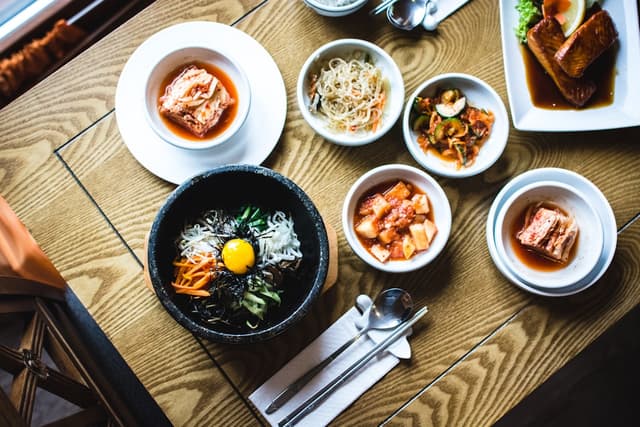
Bibimbap is a rice bowl with multiple vegetables (spinach, carrots, zucchini, mushrooms, bean sprouts), egg, and meat. While egg and meat are approved, the dish is predominantly plant-based vegetables and grain rice. Fundamentally incompatible with carnivore diet.
Served over rice (grain, excluded). Gochujang sauce contains fermented soybeans (legume, excluded) and added sugar. Vegetables and egg are compliant, but the dish fundamentally relies on excluded ingredients.
Bibimbap contains multiple high-FODMAP ingredients: garlic and onion in sauce and vegetables, mushrooms (polyols), and often includes legumes. Gochujang sauce typically contains garlic and onion. Rice base is low-FODMAP but overwhelmed by other components.
iSome clinical practitioners may allow modified bibimbap with garlic-free sauce and limited mushrooms, but traditional preparation is high-FODMAP.
Bibimbap contains vegetables, legumes, and lean protein (egg, sometimes beef). However, gochujang sauce is high in sodium, and sesame oil adds fat. Rice is refined unless brown rice used. Acceptable if sodium-controlled and brown rice substituted.
iNIH DASH guidelines support vegetable-rich meals; bibimbap's vegetable content is substantial. However, traditional gochujang preparation and sesame oil exceed sodium/fat targets. Updated interpretation suggests low-sodium gochujang and brown rice modifications align with DASH.
Excellent vegetable variety (low-glycemic), lean protein from beef/egg, but white rice base is high-glycemic. Gochujang sauce contains sugar. Achievable by reducing rice portion and increasing vegetable ratio, but standard preparation is carb-heavy.
iDr. Sears would recommend brown rice or cauliflower rice substitution; white rice portion should be minimal relative to vegetables.
Colorful vegetables (spinach, carrots, mushrooms, sprouts), whole grain brown rice, fermented gochujang paste (probiotics, capsaicin), and egg provide excellent anti-inflammatory profile. High in antioxidants, fiber, and polyphenols. Minimal processed ingredients.
Excellent nutrient density: protein (15-20g from egg/meat), high fiber (vegetables), moderate fat, easy to digest. Small portion satisfying due to volume and variety. Fermented components (kimchi) support gut health. Customizable to reduce fat.
Controversy Index
Score range: 1–8/10. Higher controversy = more disagreement between diets.