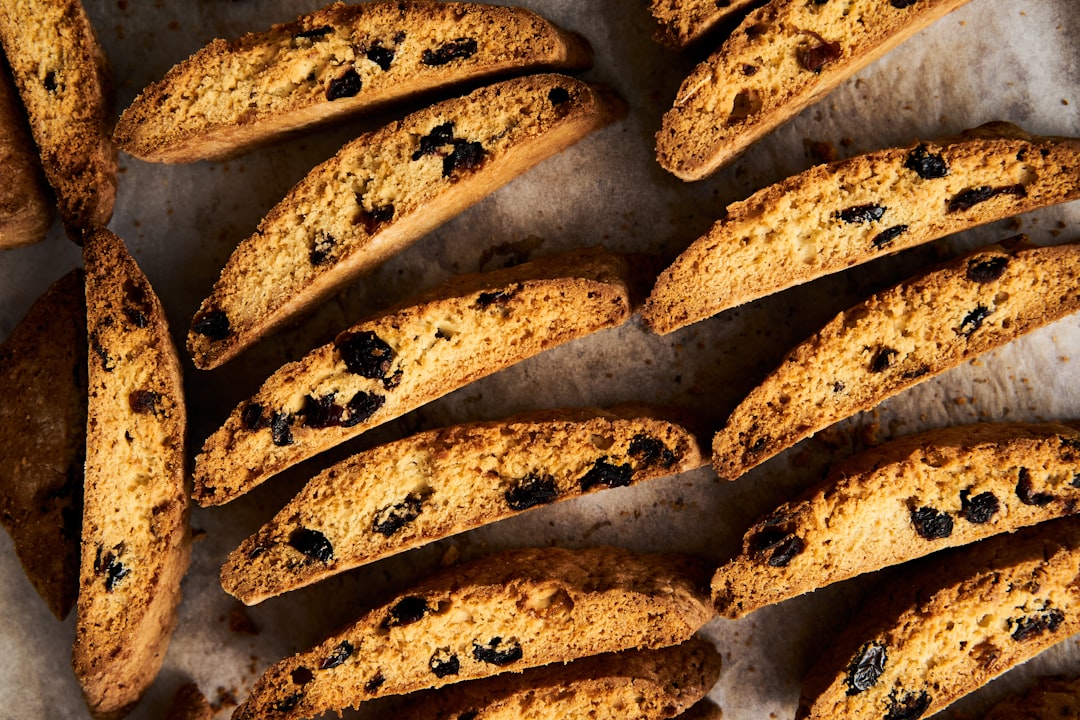
The diets react (see scores below)
Diet Ratings
Biscotti is a twice-baked cookie made primarily from flour and sugar. One piece typically contains 10-15g net carbs; multiple pieces quickly exceed daily limits.
Traditional biscotti contains eggs and often butter or milk. Vegan versions exist but are uncommon.
Italian twice-baked cookie made from wheat flour, refined sugar, and often seed oils. Grain-based processed product incompatible with paleo.
Traditional Italian twice-baked cookie made with whole grains and nuts in some recipes, but typically contains added sugar and refined flour. Acceptable as occasional treat in Mediterranean regions, but not a staple.
In Italy, particularly Tuscany, biscotti are traditional accompaniments to wine and considered part of cultural food heritage. Homemade versions with whole grains and minimal sugar align better with diet principles.
Twice-baked grain cookie made from wheat flour and sugar. Plant-derived, processed, and incompatible with carnivore diet.
Biscotti is a baked good made from grains (wheat flour) and added sugar. Violates both excluded ingredient rules and the no-recreating-baked-goods spirit.
Traditional biscotti is made with wheat flour (fructans) and often contains honey, dried fruit, or nuts with added sweeteners. High FODMAP at any reasonable serving.
Refined grain product with added sugar and often moderate sodium. While not as problematic as Danish pastry, it lacks fiber and key nutrients. Acceptable in very small portions as occasional treat.
Refined flour-based, high sugar, minimal protein. Extremely high-glycemic carbs with minimal nutritional value. Cannot be balanced into Zone macros without excessive portions.
Biscotti are typically made with refined flour, added sugars, and often contain butter or oil. They lack significant anti-inflammatory compounds and contribute to inflammatory blood sugar responses.
Refined grain, high sugar, low protein, low fiber. Hard texture may be difficult to digest on GLP-1. Often contains added fat. Minimal nutritional value per calorie.
Nutritional profile
Six traits that cut across every diet.
Fiber & Plants
How much whole-plant food and fiber it delivers.
Healthy Fats
The quality of its fats (unsaturated, omega-3).
Whole / Unprocessed
How close it is to its natural, unprocessed form.
Gut Gentle
How easy it is on digestion (low FODMAP, few irritants).
Low Glycemic
How little it spikes your blood sugar.
Protein Density
How much protein it packs per calorie.
Controversy Index
Score range: 1–5/10. Higher controversy = more disagreement between diets.
Diet-Specific Tips for Biscotti
 Mediterranean — 5/10
- traditional Italian food
- added sugar content
- portion control important
- recipe variation significant
 DASH — 5/10
- Refined carbohydrates
- Added sugar
- Moderate sodium
- Low fiber
- Low nutrient density