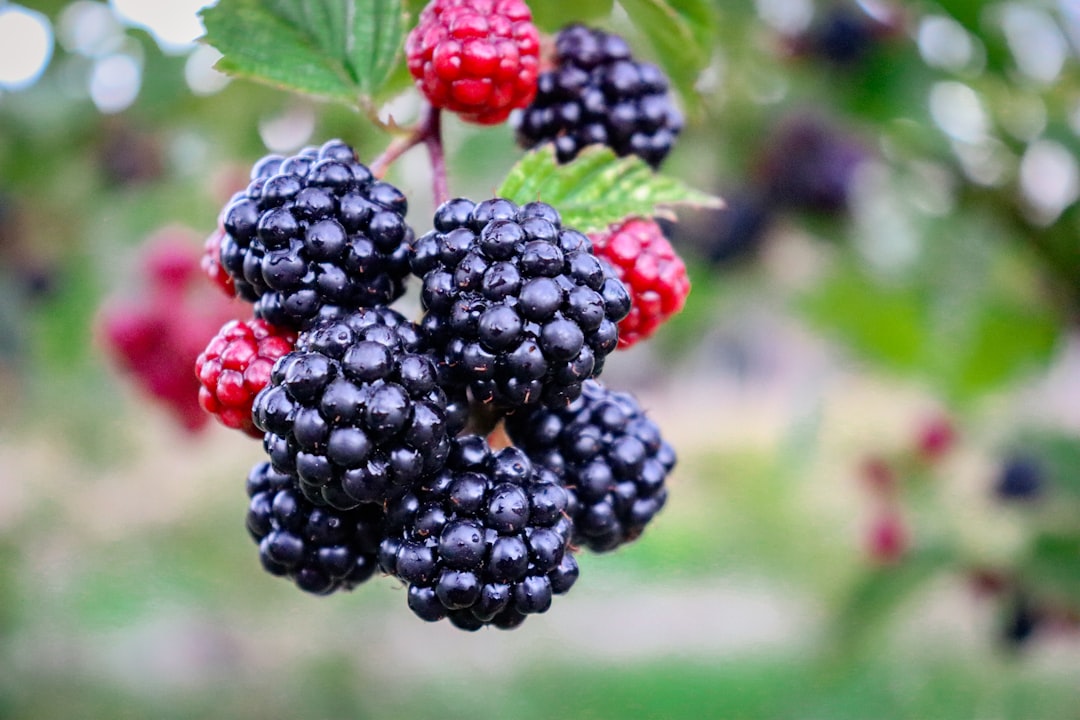
The diets react (see scores below)
Diet Ratings
1 cup (~144g) contains ~7g net carbs (high fiber offsets total carbs). Keto-friendly berry option. Moderate portions fit easily within daily carb limits.
Whole plant food, naturally vegan, high in fiber and antioxidants. No animal products or derivatives.
Excellent paleo berry. Very low sugar, high fiber, nutrient-dense, and rich in antioxidants. Wild berries were dietary staples for Paleolithic humans. No anti-nutrients.
Blackberries are nutrient-dense berries with high fiber, polyphenols, and antioxidants. They are strongly encouraged in Mediterranean diet as part of daily plant-based food consumption.
Plant-derived berry with carbohydrates and plant compounds. Excluded from carnivore diet as a plant food.
Whole fruit with no added ingredients. Explicitly compliant as a natural fruit allowed on Whole30.
Monash University rates blackberries as low-FODMAP at a generous serving of 1 cup (150g). They are among the lowest-FODMAP berries with minimal fermentable carbohydrates and polyols.
Excellent DASH fruit. Very high in fiber, potassium, and antioxidants. Low sodium and natural sugars. One of the most nutrient-dense berries.
Exceptional fiber-to-carb ratio with minimal net carbs and outstanding polyphenol profile. Lowest glycemic berry option. Top-tier Zone fruit recommendation alongside raspberries.
Exceptionally high in anthocyanins, ellagic acid, and polyphenols. Among the most anti-inflammatory fruits with superior antioxidant capacity. Low glycemic impact with excellent nutrient density.
Highest fiber among berries (5.3g per 100g), low sugar (4.9g per 100g), excellent fiber-to-sugar ratio, high water content (88%), nutrient-dense. Ideal GLP-1 fruit choice alongside raspberries.
Nutritional profile
Six traits that cut across every diet.
Fiber & Plants
How much whole-plant food and fiber it delivers.
Healthy Fats
The quality of its fats (unsaturated, omega-3).
Whole / Unprocessed
How close it is to its natural, unprocessed form.
Gut Gentle
How easy it is on digestion (low FODMAP, few irritants).
Low Glycemic
How little it spikes your blood sugar.
Protein Density
How much protein it packs per calorie.
Controversy Index
Score range: 2–10/10. Higher controversy = more disagreement between diets.
Diet-Specific Tips for Blackberries
 Keto — 8/10
- 7g net carbs per cup
- 8g fiber per cup
- Low net carb berry
- Antioxidant rich
 Vegan — 9/10
- whole food
- no processing
- high nutritional value
- no animal products
 Paleo — 9/10
- Unprocessed whole food
- Very low glycemic impact
- High fiber and antioxidants
- Available to hunter-gatherers
 Mediterranean — 9/10
- Excellent fiber source
- High polyphenol content
- Antioxidant properties
- Low sugar relative to fiber
 Whole30 — 10/10
- Whole fruit
- No added sugar
- No processing
 Low-FODMAP — 9/10
- Very low fructan content
- Very low polyol content
- Generous serving size permitted
 DASH — 9/10
- Very high fiber
- High potassium
- Antioxidant-rich
- Low sodium
- Low sugar content
 Zone — 9/10
- Lowest glycemic index
- Highest fiber density
- Exceptional polyphenol content
- Minimal net carbs
- 1 serving ≈ 1 cup
 Anti-Inflammatory — 9/10
- Anthocyanins
- Ellagic acid
- High polyphenol content
- Low glycemic index
 GLP-1 Friendly — 9/10
- very high fiber
- very low sugar
- excellent fiber-to-sugar ratio
- high water content
- nutrient-dense