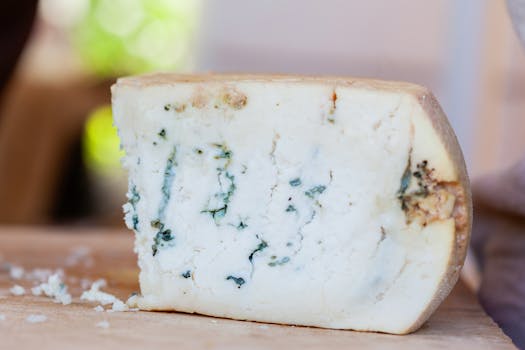
The diets react (see scores below)
Diet Ratings
Blue cheese contains <1g net carbs per ounce. High fat, moderate protein, no added sugars. Excellent keto cheese choice. Flavor-dense, small portions satisfy.
Blue cheese is made from dairy milk and contains mold cultures. It is a direct animal product and non-vegan.
Blue cheese is a dairy product made from milk. Dairy is a core exclusion in paleo diet. Fermentation does not change its fundamental classification as dairy.
Aged cheese used in Mediterranean cuisines, particularly Italian and Greek traditions. Contains beneficial probiotics and calcium but is high in saturated fat and sodium. Acceptable in small amounts as a flavor accent, not as a primary food.
Some Mediterranean diet authorities emphasize that aged cheeses like blue cheese, when consumed in small portions (1 ounce) as a flavor component, fit within traditional Mediterranean eating patterns, particularly in Southern European regions.
Animal-derived dairy cheese with high fat content and minimal lactose due to fermentation. Widely consumed by carnivore practitioners. However, strict dairy-exclusion camp views all cheese as problematic.
Strict carnivore and Lion Diet adherents exclude all dairy products, including cheese, preferring meat-only approaches for metabolic clarity and avoiding potential inflammatory responses to casein.
Blue cheese is a dairy product explicitly excluded during the 30-day Whole30 period.
Blue cheese is low-FODMAP per Monash University. Aged cheeses have minimal lactose due to fermentation and aging processes. Safe at standard serving sizes.
High in saturated fat and sodium (400-500mg per ounce). Full-fat cheese with minimal potassium or fiber. Contradicts DASH guidelines on saturated fat and sodium limits.
Blue cheese provides protein and monounsaturated fat, but is high in saturated fat and sodium. Approximately 1 oz (28g) contains ~6g protein, ~8g fat (mostly saturated), ~1g carbs. Can function as a fat/protein block in small portions, but saturated fat content requires careful integration into daily fat targets. Best used as a flavoring rather than primary protein source.
High in saturated fat and sodium, which can promote inflammation. However, contains beneficial bacteria and some argue fermented foods support gut health. Limited anti-inflammatory compounds. Best used sparingly as a flavoring rather than primary protein source.
Some researchers emphasize the probiotic and fermentation benefits of aged cheeses in supporting gut microbiome diversity, which may offset some inflammatory effects. However, mainstream anti-inflammatory guidance recommends limiting full-fat cheese.
High fat (8-9g per ounce) with moderate protein (6g per ounce). Fat-to-protein ratio is poor for GLP-1 patients. Aged cheese is dense and may trigger nausea or reflux. Better protein sources exist with lower fat.
Nutritional profile
Six traits that cut across every diet.
Fiber & Plants
How much whole-plant food and fiber it delivers.
Healthy Fats
The quality of its fats (unsaturated, omega-3).
Whole / Unprocessed
How close it is to its natural, unprocessed form.
Gut Gentle
How easy it is on digestion (low FODMAP, few irritants).
Low Glycemic
How little it spikes your blood sugar.
Protein Density
How much protein it packs per calorie.
Controversy Index
Score range: 1–9/10. Higher controversy = more disagreement between diets.
Diet-Specific Tips for Blue cheese
 Keto — 9/10
- Negligible net carbs (<1g per oz)
- High fat content
- No added sugars
- Flavor-dense
 Mediterranean — 5/10
- traditional Mediterranean cheese
- high saturated fat
- high sodium
- portion control essential
- probiotic content
 Carnivore — 6/10
- dairy-derived (animal product)
- fermented (lower lactose)
- high fat content
- dairy debate within community
 Low-FODMAP — 8/10
- Monash-tested as low-FODMAP
- Aging process reduces lactose
- Safe at typical cheese portions
 Zone — 6/10
- Moderate protein content
- High saturated fat relative to monounsaturated
- Low carbohydrate content
- High sodium
- Best as flavoring, not primary protein
 Anti-Inflammatory — 4/10
- high saturated fat
- high sodium
- fermented probiotic content
- limited antioxidants
- portion control essential