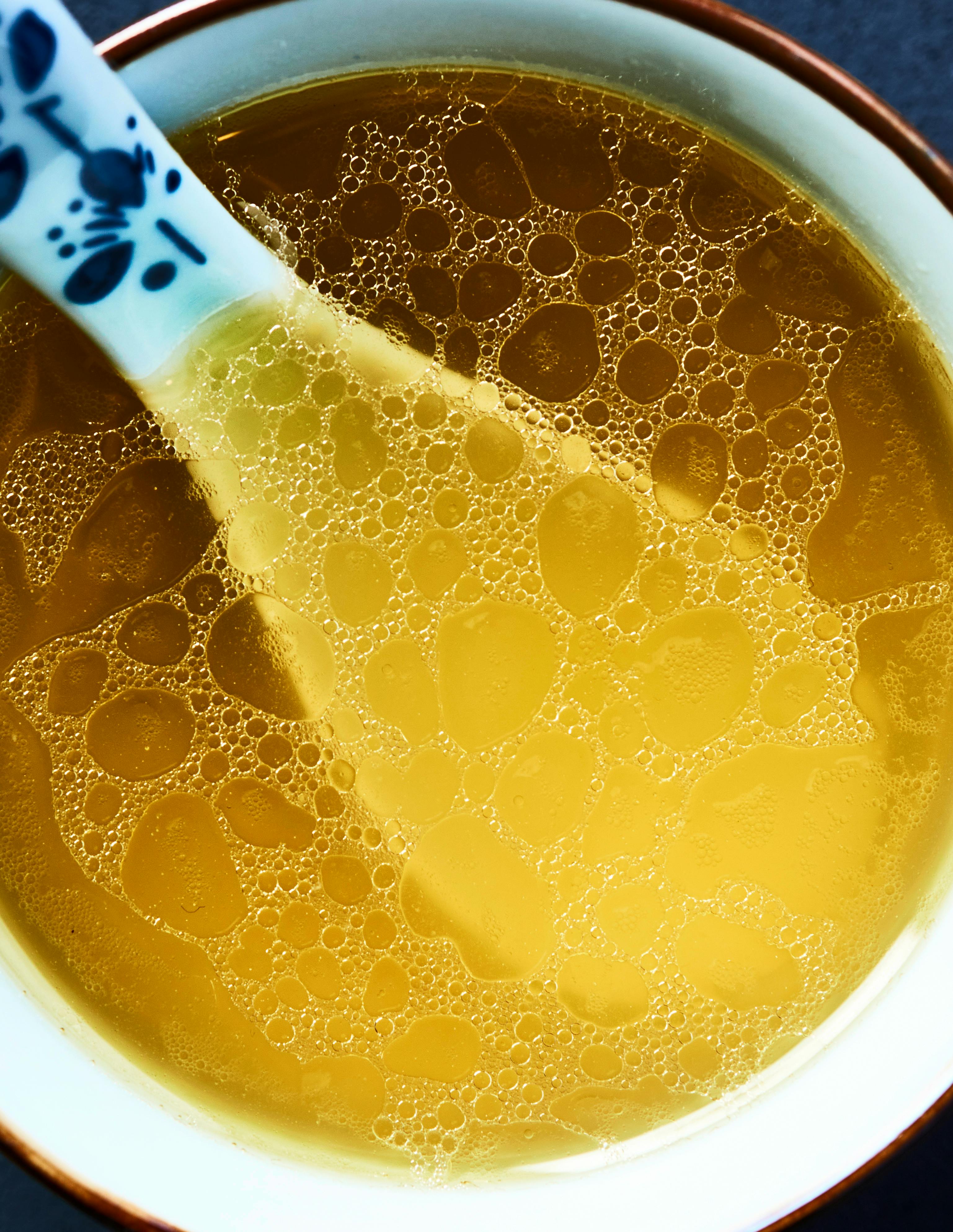
The diets react (see scores below)
Diet Ratings
Bone broth contains 0-1g net carbs per serving and provides collagen, electrolytes, and fat. Whole food, unprocessed. Excellent for keto, especially for fasting and nutrient density.
Bone broth is made from animal bones and connective tissue, a direct animal product incompatible with vegan diet.
Bone broth is made by simmering bones and connective tissue—a preparation method ancestral humans used. Rich in collagen, gelatin, and minerals. Represents nose-to-tail eating.
Bone broth is a whole food preparation with potential nutritional benefits (collagen, minerals), but it is derived from animal bones and may contain saturated fat depending on preparation. It's not a core Mediterranean diet staple but can be used as a cooking base. Nutritional claims are debated.
Some Mediterranean diet authorities view bone broth skeptically as a modern trend not traditional to Mediterranean cuisine. Others accept it as a whole food preparation method acceptable for cooking vegetables and legumes, particularly if fat is minimized.
Bone broth is universally accepted in carnivore diet. Provides collagen, gelatin, minerals, and amino acids from animal bones. Represents ideal carnivore food with exceptional nutrient density.
Whole30 explicitly allows bone broth made from bones, water, and compliant seasonings. It is a foundational Whole30 food.
Plain bone broth made from bones and water is low-FODMAP. Monash University confirms bone broth without added garlic, onion, or high-FODMAP vegetables is low-FODMAP. If broth contains garlic or onion, it becomes high-FODMAP.
Bone broth is nutrient-dense with collagen and minerals, but sodium content varies widely (400-1000mg per cup depending on preparation). Homemade low-sodium versions align with DASH; commercial versions often exceed limits. Acceptable if sodium-controlled.
NIH DASH guidelines don't specifically address bone broth; updated clinical interpretation recognizes potential benefits (minerals, collagen) but emphasizes sodium verification. Some clinicians view it as acceptable; others caution due to typical commercial sodium levels.
Bone broth is primarily collagen/gelatin with minimal complete protein (~2-6g per cup depending on preparation). Macro profile is unclear; fat content varies widely (0-5g per cup). Sears' writings don't explicitly address bone broth. Useful for anti-inflammatory benefits but insufficient as standalone protein source.
Some Zone practitioners embrace bone broth for its collagen, polyphenols, and anti-inflammatory properties, counting it as supplemental protein. Others note it lacks sufficient complete amino acids to serve as primary protein block and classify it as a condiment/supplement rather than Zone building block.
Bone broth contains collagen, gelatin, and minerals with potential anti-inflammatory benefits. However, inflammatory potential depends on animal source and preparation. Grass-fed sources preferable. Limited clinical evidence for anti-inflammatory claims.
Paleo and functional medicine practitioners strongly advocate bone broth for gut healing and anti-inflammatory properties. Mainstream medical research shows limited evidence for specific anti-inflammatory benefits beyond general nutrition.
Provides collagen and minerals, but protein content is low (8-12g per cup) relative to calories. Often contains moderate fat (2-5g per cup depending on preparation). Hydrating and easy to digest, which supports GLP-1 side effect management. However, insufficient as primary protein source. Best used as supplement to whole-food proteins.
Some RDs recommend bone broth for hydration and micronutrient support in GLP-1 patients; others note low protein density makes it inefficient for meeting daily protein targets. Clinical consensus views it as supportive but not primary protein source.
Nutritional profile
Six traits that cut across every diet.
Fiber & Plants
How much whole-plant food and fiber it delivers.
Healthy Fats
The quality of its fats (unsaturated, omega-3).
Whole / Unprocessed
How close it is to its natural, unprocessed form.
Gut Gentle
How easy it is on digestion (low FODMAP, few irritants).
Low Glycemic
How little it spikes your blood sugar.
Protein Density
How much protein it packs per calorie.
Controversy Index
Score range: 1–10/10. Higher controversy = more disagreement between diets.
Diet-Specific Tips for Bone broth
 Keto — 8/10
- 0-1g net carbs
- High collagen content
- Electrolytes
- Unprocessed
 Paleo — 9/10
- Ancestral preparation method
- Collagen and gelatin-rich
- Mineral-dense
- No additives if homemade
- Supports gut health
 Mediterranean — 5/10
- Whole food preparation
- Potential mineral content
- Fat content variable
- Not traditional Mediterranean staple
- Useful as cooking base
 Carnivore — 10/10
- Pure animal product
- Collagen and gelatin source
- Mineral-rich
- Universally accepted
- Nutrient-dense
 Whole30 — 9/10
- Explicitly approved by Whole30
- Whole food preparation
- No added sugar or excluded ingredients
 Low-FODMAP — 8/10
- Low carbohydrate content
- Safe if made without garlic/onion
- Minimal fermentable content
- Check ingredient list for additives
 DASH — 5/10
- Variable sodium content
- Rich in minerals and collagen
- Homemade versions preferable
- Commercial versions often high-sodium
- Nutrient density varies
 Zone — 5/10
- Low complete protein content
- Variable fat content
- Anti-inflammatory polyphenols
- Insufficient as standalone protein
 Anti-Inflammatory — 5/10
- Contains collagen and gelatin
- Mineral content beneficial
- Source quality critical
- Limited clinical evidence for inflammation reduction
- Preparation method matters
 GLP-1 Friendly — 4/10
- low protein density
- hydrating
- easy to digest
- micronutrient-rich
- insufficient as primary protein