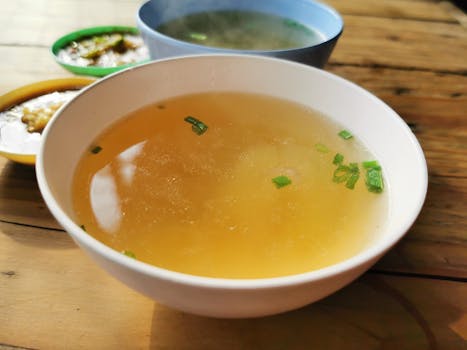
The diets react (see scores below)
Diet Ratings
Typically 0-2g net carbs per serving, high in collagen and electrolytes, supports gut health and satiety. Widely recommended in keto for fasting and nutrient density.
Made by simmering animal bones. Direct animal product explicitly excluded from vegan diet.
Bone broth is made by simmering animal bones and connective tissue in water, extracting collagen, gelatin, minerals, and amino acids. It is a whole-food product available to Paleolithic humans and is highly valued in paleo nutrition for gut health and nutrient density.
Not a traditional Mediterranean staple, but contains collagen and minerals. Acceptable as occasional supplement if unsalted and made from quality bones. Not emphasized in Mediterranean diet but not contradictory.
Some Mediterranean diet practitioners view bone broth as outside traditional Mediterranean cuisine and prefer plant-based broths or vegetable stocks as primary cooking bases.
Bone broth made from animal bones, connective tissue, and water. Universally approved across all carnivore protocols. Provides collagen, gelatin, minerals, and amino acids. Minimally processed and purely animal-derived.
Plain bone broth made from bones, water, and compliant seasonings is explicitly approved by Whole30. It's a whole food-based beverage with no excluded ingredients.
Plain bone broth (simmered bones and water) contains no fermentable carbohydrates. Low-FODMAP at any serving. However, if flavored with garlic, onion, or high-FODMAP vegetables, it becomes problematic.
Sodium content varies widely (500–1500mg per serving depending on brand/preparation). Some bone broths are high in sodium; homemade low-sodium versions are acceptable. Collagen and minerals are beneficial but not unique to DASH.
NIH DASH guidelines do not specifically address bone broth; updated clinical interpretation recognizes potential benefits (collagen, minerals) but emphasizes sodium verification. Some practitioners view it as acceptable; others recommend whole-food alternatives.
Provides collagen-derived amino acids and minerals; minimal carbs. However, protein content typically low (5-10g per serving). Useful as supplement but insufficient as meal protein source. Macros depend on preparation and additions.
Some Zone practitioners rate bone broth higher (7) for collagen amino acids and joint support; others note incomplete amino acid profile and recommend pairing with complete protein sources.
Bone broth contains collagen, gelatin, and amino acids (glycine, proline) that may support gut health and reduce intestinal inflammation. However, scientific evidence for systemic anti-inflammatory effects is limited. Quality varies significantly; many commercial versions contain additives. Homemade versions are preferable but require substantial preparation.
Strict evidence-based anti-inflammatory advocates note that bone broth benefits are largely anecdotal and not well-established in peer-reviewed research. Some AIP protocols emphasize it; mainstream medicine remains skeptical of therapeutic claims. Nutritional content is modest compared to whole foods.
Low calorie (15-20 cal per cup), some collagen/gelatin (partial protein, ~2-3g per cup), good for hydration and may support gut health. However, protein content is modest and incomplete (lacks several essential amino acids). Better as a hydrating sip than a protein source. Quality varies widely by brand.
Some GLP-1 nutrition experts view bone broth as a helpful hydration and collagen source with potential gut-healing benefits, while others argue the protein is insufficient and incomplete, and patients should prioritize complete protein sources (eggs, fish, poultry) instead. Clinical evidence for GLP-1-specific benefit is limited.
Nutritional profile
Six traits that cut across every diet.
Fiber & Plants
How much whole-plant food and fiber it delivers.
Healthy Fats
The quality of its fats (unsaturated, omega-3).
Whole / Unprocessed
How close it is to its natural, unprocessed form.
Gut Gentle
How easy it is on digestion (low FODMAP, few irritants).
Low Glycemic
How little it spikes your blood sugar.
Protein Density
How much protein it packs per calorie.
Controversy Index
Score range: 1–9/10. Higher controversy = more disagreement between diets.
Diet-Specific Tips for Bone broth drink
 Keto — 8/10
- Negligible net carbs
- Collagen and amino acids
- Electrolyte content
- Supports satiety and fasting
 Paleo — 9/10
- Whole animal product
- Rich in collagen and gelatin
- Mineral-dense
- Supports gut health
- No processing or additives
 Mediterranean — 6/10
- Not traditional Mediterranean
- Contains collagen and minerals
- Should be unsalted
- Occasional use acceptable
 Carnivore — 9/10
- 100% animal-derived
- Nutrient-dense
- Universally endorsed
- Supports gut health and joint function
 Whole30 — 9/10
- Whole food source
- Explicitly approved
- No excluded ingredients if unsweetened
 Low-FODMAP — 8/10
- Plain bone broth is carbohydrate-free
- Check for added garlic or onion
- Monash-tested as low-FODMAP when plain
 DASH — 5/10
- Sodium content highly variable
- Check label for sodium
- Collagen and minerals present
- Homemade low-sodium versions preferable
 Zone — 6/10
- Low protein content
- Minimal carbs
- Collagen amino acids
- Requires pairing with complete protein
 Anti-Inflammatory — 6/10
- collagen and gelatin content
- amino acid profile
- potential gut health benefits
- limited clinical evidence
- quality variability in commercial products
 GLP-1 Friendly — 5/10
- low calorie
- modest protein (incomplete)
- supports hydration
- may support gut health
- quality varies by brand