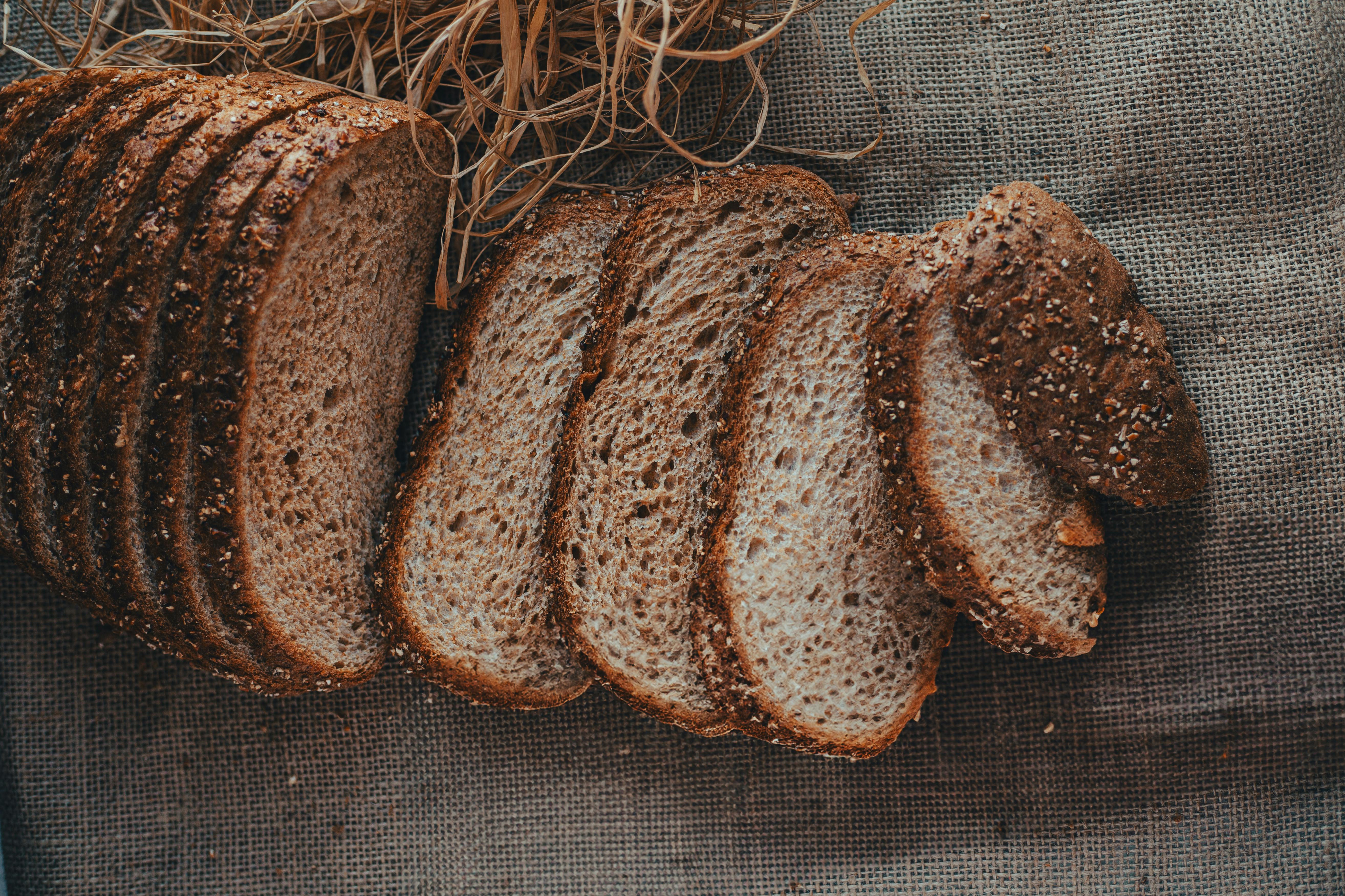
The diets react (see scores below)
Diet Ratings
Ezekiel bread contains approximately 12-15g net carbs per slice. While lower-carb than conventional bread and nutrient-dense, it still exceeds acceptable keto portions. Some flexible/cyclical keto practitioners use small portions; most strict keto avoids entirely.
Cyclical keto and some flexible practitioners argue that sprouted grain bread's nutrient density and lower carb profile make occasional small portions acceptable on refeed days or for those with higher carb tolerance.
Made from sprouted grains and legumes, entirely plant-based. Minimal processing and high nutritional value. Most commercial versions are vegan, though label verification is prudent.
Despite sprouting reducing some anti-nutrients, ezekiel bread is still grain-based (wheat, barley, spelt, lentils). Grains and legumes are excluded from paleo. Sprouting does not change fundamental paleo incompatibility.
Sprouted whole grain bread aligns with Mediterranean principles. Sprouting increases nutrient bioavailability and reduces antinutrients. Excellent source of fiber and whole grains for daily consumption.
Sprouted grain bread is still plant-derived with significant carbohydrate content. Sprouting does not change fundamental plant origin or make it compatible with carnivore diet.
Ezekiel bread is made from sprouted grains (wheat, barley, lentils, millet, spelt, soybeans). Grains and legumes are explicitly excluded on Whole30. Bread format also violates the 'no recreating baked goods' rule.
Ezekiel bread contains sprouted grains including wheat, barley, and legumes. While sprouting may reduce some FODMAPs, fructans remain present. Monash data is limited; small portions (1 slice) may be tolerated by some.
Monash University has limited specific testing for sprouted grain breads; clinical FODMAP practitioners suggest 1 slice may be tolerable due to reduced fructan content from sprouting, but this varies individually and is not recommended during strict elimination.
Sprouted whole grain bread is ideal for DASH. High in fiber, protein, potassium, and micronutrients. Low sodium (typically <150mg per slice). Sprouting increases bioavailability of nutrients and reduces anti-nutrients.
Ezekiel/sprouted bread is the highest-quality bread option for Zone, made from whole sprouted grains with no refined flour. One slice (~34g) contains ~8g net carbs with 3g fiber. However, Zone protocol limits grains to 0-1 serving/day; bread should be occasional and carefully portioned. Better than refined bread but not ideal for daily consumption.
Made from sprouted whole grains and legumes. Sprouting increases bioavailability of minerals, reduces phytic acid, and lowers glycemic index. High fiber and complete protein profile. Aligned with anti-inflammatory whole-grain principles.
Sprouted bread is superior to refined bread: higher protein (8g per slice), higher fiber (3g per slice), lower glycemic index, and contains all 9 essential amino acids. However, it's still calorie-dense (80 cal per slice) and carb-heavy (15g per slice). GLP-1 patients with severely reduced appetite may struggle to justify bread calories when protein-dense alternatives exist. Acceptable in moderation (1 slice with high-protein topping) but not a staple.
Nutritional profile
Six traits that cut across every diet.
Fiber & Plants
How much whole-plant food and fiber it delivers.
Healthy Fats
The quality of its fats (unsaturated, omega-3).
Whole / Unprocessed
How close it is to its natural, unprocessed form.
Gut Gentle
How easy it is on digestion (low FODMAP, few irritants).
Low Glycemic
How little it spikes your blood sugar.
Protein Density
How much protein it packs per calorie.
Controversy Index
Score range: 1–9/10. Higher controversy = more disagreement between diets.
Diet-Specific Tips for Bread (ezekiel/sprouted)
 Vegan — 9/10
- sprouted grains
- legume-based
- minimal processing
 Mediterranean — 8/10
- whole grain
- sprouted increases nutrient density
- high fiber
- lower glycemic impact than refined breads
 Low-FODMAP — 5/10
- Contains wheat and barley (fructans)
- Contains legumes (GOS)
- Sprouting may reduce FODMAPs
- Limited Monash testing
- Individual tolerance varies
 DASH — 9/10
- Whole grain base
- High fiber content
- Low sodium
- Enhanced nutrient bioavailability
 Zone — 6/10
- Whole sprouted grains
- No refined flour
- Moderate glycemic index
- Better fiber than white bread
- Still requires careful portioning
- Grain limit of 0-1 serving/day applies
 Anti-Inflammatory — 8/10
- Sprouted whole grains
- Lower glycemic index
- High fiber
- Complete protein
- Enhanced nutrient bioavailability
 GLP-1 Friendly — 6/10
- higher protein than refined bread
- higher fiber
- lower glycemic index
- still calorie-dense
- still carb-heavy
- portion-sensitive