How the diets react
Diet Ratings
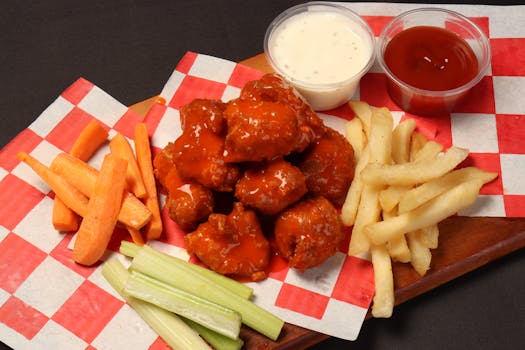
Buffalo wings are an excellent keto food. Chicken wings are high in fat and protein, zero carbs. Buffalo sauce (hot sauce + butter) adds minimal carbs. Whole food preparation.
Chicken wings are poultry meat. Primary ingredient is animal flesh, explicitly excluded from vegan diet.
Chicken wings are paleo-approved, but buffalo sauce typically contains added sugar, vinegar (acceptable), and hot sauce (check ingredients). Deep-frying in seed oil is problematic. Baked with homemade sauce would be better.
Buffalo wings baked (not fried) with a sauce made from hot sauce, butter, and vinegar (no added sugar) would be fully approvable (score 8-9).
Fried preparation with high saturated fat. Spicy sauce typically contains added sugars and sodium. Minimal nutritional value. Contradicts Mediterranean cooking methods.
Buffalo wings are chicken wings (animal-derived meat and fat) coated in a sauce. The meat is excellent, but buffalo sauce typically contains hot sauce (plant-derived peppers), vinegar (plant-derived), and added sugars. If sauce is minimal or made with pure animal fat and salt, wings are acceptable. Check sauce ingredients carefully.
Strict carnivore practitioners avoid buffalo sauce due to plant-derived hot peppers and added sugars, preferring plain chicken wings with salt or dipped in pure animal fat. Most practitioners consume buffalo wings despite the sauce.
Chicken wings with buffalo sauce (hot sauce + butter/ghee) are compliant. Verify hot sauce contains no added sugar or excluded ingredients. Whole, unprocessed preparation.
Buffalo wings are chicken (low-FODMAP) coated in hot sauce (typically vinegar, hot peppers, butter). Standard buffalo sauce contains minimal FODMAPs. Verify sauce does not contain garlic or onion powder. Serving of 6-8 wings is low-FODMAP.
Fried (high trans fat, saturated fat), high sodium from sauce and seasoning, high cholesterol. Minimal nutritional benefit. Directly contradicts DASH principles.
Wings provide good protein and fat, but are typically deep-fried (omega-6 seed oils) and coated in high-sodium sauce. Carbohydrate content is minimal. Lacks balanced carbohydrates for Zone meal. Works as protein/fat component if baked, sauce minimized, and paired with low-glycemic vegetables.
Deep-fried in seed oils (high omega-6, inflammatory). Chicken skin adds saturated fat. Buffalo sauce contains added sugars and sodium. High-heat frying creates inflammatory compounds (AGEs). Inflammatory across all dimensions despite whole food base.
Fried preparation means very high fat and calories. Spicy sauce triggers reflux and nausea in GLP-1 patients. While wings contain protein (12-15g per 3 wings), the fat content and spice profile make them problematic. Difficult to digest. Easy to overeat.
Controversy Index
Score range: 1–9/10. Higher controversy = more disagreement between diets.