The diets react (see scores below)
Diet Ratings
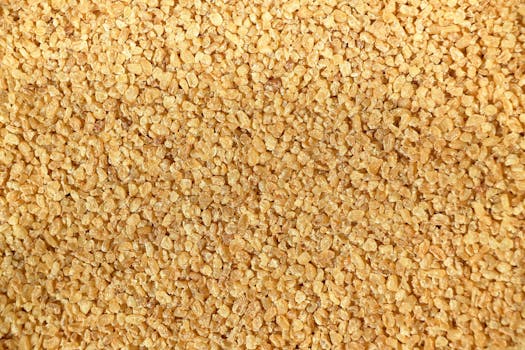
Bulgur is a processed grain product with approximately 26g net carbs per 100g cooked serving. Grains are fundamentally incompatible with ketogenic diet goals and will rapidly exceed daily carb limits.
Whole grain plant food with no animal products or derivatives. Nutritious, minimally processed, and fully compliant with all vegan standards.
Bulgur is a processed grain product made from wheat. Grains are explicitly excluded from the paleo diet due to anti-nutrients, lectins, and gluten content.
Whole grain with high fiber content, minimal processing, and a staple in Mediterranean cuisines. Excellent source of complex carbohydrates and nutrients.
Bulgur is a processed grain product derived from wheat. It is plant-based and explicitly excluded from carnivore diet principles. Contains carbohydrates and plant compounds incompatible with carnivore protocol.
Bulgur is a processed grain product made from wheat. Grains (including wheat) are explicitly excluded during the 30-day Whole30 elimination period.
Bulgur is made from wheat and contains high levels of fructans, a key FODMAP. Even small portions exceed low-FODMAP thresholds.
Whole grain rich in fiber, magnesium, and potassium. Minimal sodium. Core DASH food supporting cardiovascular health and blood pressure regulation.
Whole grain with moderate glycemic impact. Contains ~17g net carbs per 1/4 cup cooked. Can fit Zone meals but requires precise portioning to maintain 40/30/30 ratio. Better than refined grains but not a preferred carb source compared to vegetables.
Whole grain with intact bran and germ, providing fiber, B vitamins, and polyphenols. Low glycemic index compared to refined grains. Supports healthy gut microbiome and reduces inflammatory markers.
Whole grain with 3.7g fiber and 3.6g protein per cooked cup. High fiber supports digestion and prevents GLP-1-related constipation. Low fat, nutrient-dense, easy to digest in small portions. Pairs well with lean proteins.
Nutritional profile
Six traits that cut across every diet.
Fiber & Plants
How much whole-plant food and fiber it delivers.
Healthy Fats
The quality of its fats (unsaturated, omega-3).
Whole / Unprocessed
How close it is to its natural, unprocessed form.
Gut Gentle
How easy it is on digestion (low FODMAP, few irritants).
Low Glycemic
How little it spikes your blood sugar.
Protein Density
How much protein it packs per calorie.
Controversy Index
Score range: 1–9/10. Higher controversy = more disagreement between diets.
Diet-Specific Tips for Bulgur wheat
 Vegan — 9/10
- 100% plant-based
- Whole grain
- No processing concerns
 Mediterranean — 9/10
- whole grain
- high fiber
- minimal processing
- traditional Mediterranean staple
 DASH — 9/10
- High fiber content
- Whole grain
- Low sodium
- Rich in magnesium and potassium
 Zone — 5/10
- Moderate glycemic load
- Whole grain fiber content
- Requires careful portioning
- Better than white grains but vegetables preferred
 Anti-Inflammatory — 8/10
- whole grain
- high fiber
- low glycemic index
- polyphenols
- minimal processing
 GLP-1 Friendly — 8/10
- high fiber content
- whole grain
- low fat
- moderate protein density