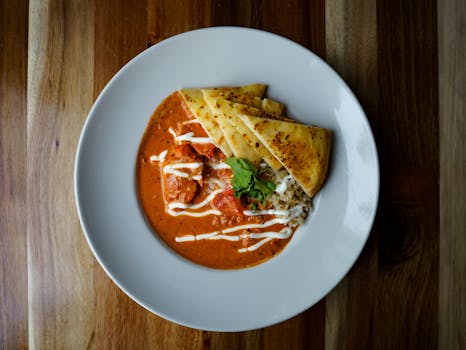
How the diets react
Diet Ratings
Butter chicken provides high-quality protein and fat from cream and butter, but tomato-based sauce contains natural sugars (5-8g per serving) and some recipes add sugar. Carb content varies widely by preparation (5-15g net carbs per serving). Compatible if sauce is low-sugar and portion-controlled; problematic if served with rice or naan.
Strict keto practitioners avoid tomato-based sauces due to cumulative sugar content and prefer purely fat-based sauces, while mainstream keto allows butter chicken as long as total daily carbs stay under 50g and it's not paired with high-carb sides.
Contains chicken (poultry flesh) and butter (dairy). Both are explicitly prohibited in vegan diet.
Contains cream and butter (dairy), tomato-based sauce with added sugar, and often thickened with flour or cornstarch (grains). The chicken is paleo, but the sauce and dairy make this incompatible.
High in saturated fat from butter and cream, contradicting Mediterranean emphasis on olive oil as primary fat. Processed tomato sauce often contains added sugars. Preparation method is fundamentally misaligned with Mediterranean cooking principles.
Chicken (animal) and butter (animal fat) are acceptable, but sauce typically contains tomato (plant), cream (dairy—debated), spices (plant), and sugar. Dairy inclusion creates medium confidence; strict carnivores exclude dairy.
Strict carnivore practitioners (Lion Diet adherents, meat-only advocates) exclude all dairy including cream and butter, viewing them as inflammatory or problematic. Some also exclude chicken in favor of ruminant meat.
Butter chicken contains chicken (compliant) and butter/ghee (ghee is compliant, butter is dairy and excluded). The sauce is made with tomato, cream (dairy, excluded), and spices, often with added sugar. Cream is a clear dairy exclusion.
Butter chicken sauce typically contains garlic and onion as base ingredients, making it high-FODMAP. However, if prepared without garlic and onion, the cream and butter base would be low-FODMAP. Chicken itself is low-FODMAP. Depends entirely on sauce preparation.
Monash University rates garlic and onion as high-FODMAP. Traditional butter chicken recipes contain both. Some restaurants may offer modified versions without these ingredients, but standard preparations are problematic.
High saturated fat from butter, cream, and coconut milk. High sodium from salt and spices. High added sugar in tomato-cream sauce. Processed preparation. Directly contradicts DASH guidelines on saturated fat and sodium.
Chicken provides lean protein (~25g per serving), but butter chicken sauce contains cream, butter, and often added sugar/tomato paste. Fat profile acceptable but saturated-heavy. Carbs moderate but sauce-dependent. Requires careful portioning and ideally served with low-glycemic vegetables instead of rice/naan.
Prepared with heavy cream and butter (saturated fat, pro-inflammatory), refined flour in sauce, and often added sugars. While chicken provides lean protein, the cooking method and sauce composition make this significantly pro-inflammatory. Contradicts anti-inflammatory guidelines on limiting saturated fat and cream-based sauces.
Cream and butter-based sauce is high in saturated fat and calories. Difficult to digest, strongly triggers nausea, bloating, and reflux in GLP-1 patients. While chicken provides protein, the sauce overwhelms the nutritional benefit. Poor choice for GLP-1 diet.
Controversy Index
Score range: 1–5/10. Higher controversy = more disagreement between diets.