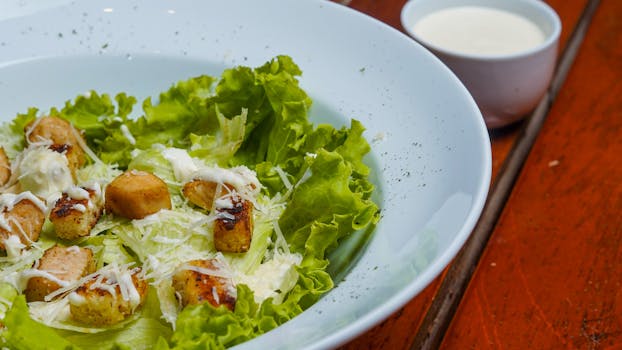
The diets react (see scores below)
Diet Ratings
Store-bought versions often contain added sugars and seed oils; homemade with mayo, anchovies, and parmesan is keto-friendly. Quality and ingredients vary significantly.
Strict keto advocates avoid most commercial dressings due to hidden sugars and seed oils; lazy keto practitioners accept low-carb store versions without concern.
Traditional Caesar dressing contains anchovies, eggs, and Parmesan cheese. Multiple animal products make it non-vegan.
Commercial Caesar dressing typically contains seed oils, refined sugar, artificial additives, preservatives, and often anchovies in processed form. Even homemade versions often include Worcestershire sauce (contains sugar and additives) and may use seed oils. The processed nature and ingredient profile violate paleo principles.
Traditional Caesar contains anchovies (Mediterranean-approved) but is typically made with processed oils, added sugars, and high sodium. Homemade versions with olive oil and minimal additives are acceptable; store-bought versions are problematic.
Some Mediterranean diet practitioners accept traditional Caesar dressing made with quality ingredients as a reasonable condiment, particularly when anchovy-based versions honor Mediterranean seafood traditions.
Traditional Caesar dressing contains anchovies (animal), egg yolks (animal), and Parmesan (dairy), but also includes plant-based ingredients like garlic, Worcestershire sauce (plant-derived), and often vegetable oil. Quality varies significantly by brand and homemade versions.
Strict carnivore practitioners avoid Caesar dressing due to garlic and plant-based additives in commercial versions. Homemade versions using only anchovies, eggs, and animal fat would be acceptable, but store-bought versions typically contain plant ingredients.
Most commercial Caesar dressings contain dairy (anchovies in oil are acceptable, but dressing typically includes cheese, sour cream, or milk-based ingredients). Even dairy-free versions often contain added sugar, soy lecithin, or other additives.
Caesar dressing typically contains garlic and anchovies. Garlic is high-FODMAP (fructans). Most commercial versions contain garlic powder or fresh garlic, making them problematic. Homemade garlic-free versions may be low-FODMAP.
Monash University rates garlic as high-FODMAP at any meaningful serving. Some clinical practitioners suggest trace amounts in dressings may be tolerated, but standard Caesar dressing should be avoided during elimination phase.
Typically high in sodium (300–500mg per 2 tbsp), saturated fat from cheese and anchovies, and added sugars. Exceeds DASH sodium limits rapidly. Better to use vinegar-based dressings.
Typically contains egg yolks (good protein/fat) but often made with vegetable oil (problematic) and high sodium. Macros can work if portion-controlled and made with olive oil base. Commercial versions often use seed oils.
Homemade Caesar with olive oil, anchovies, and egg yolks scores higher (7); commercial versions with vegetable oil score lower (3-4).
Commercial Caesar dressing typically contains seed oils (inflammatory omega-6), high saturated fat (anchovies, cheese, egg yolks), added sugars, and artificial additives. Even 'healthier' versions usually contain problematic oils. The inflammatory load outweighs any benefits from anchovies' omega-3s.
Typically 10-15g fat per 2 tbsp serving with minimal protein (0-1g) and zero fiber. High in saturated fat (anchovies, cheese, egg yolk base) and often contains added sugar. Calorie-dense (150-200 cal per serving) with poor nutrient density. Will trigger nausea and bloating in most GLP-1 patients.
Nutritional profile
Six traits that cut across every diet.
Fiber & Plants
How much whole-plant food and fiber it delivers.
Healthy Fats
The quality of its fats (unsaturated, omega-3).
Whole / Unprocessed
How close it is to its natural, unprocessed form.
Gut Gentle
How easy it is on digestion (low FODMAP, few irritants).
Low Glycemic
How little it spikes your blood sugar.
Protein Density
How much protein it packs per calorie.
Controversy Index
Score range: 2–6/10. Higher controversy = more disagreement between diets.
Diet-Specific Tips for Caesar dressing
 Keto — 6/10
- Added sugar in commercial versions
- Seed oil content variable
- Homemade versions are superior
- Check label for net carbs
 Mediterranean — 5/10
- Often contains processed oils
- Added sugars and sodium
- Homemade versions can be approved
- Anchovy component is Mediterranean-friendly
 Carnivore — 5/10
- Mixed animal and plant ingredients
- Commercial versions contain plant oils and additives
- Homemade versions can be carnivore-compliant
- Garlic is plant-derived
 Low-FODMAP — 4/10
- Garlic is high-FODMAP (fructans)
- Most commercial versions contain garlic
- Homemade garlic-free versions possible
 Zone — 5/10
- Oil source critical
- Sodium content
- Egg yolk protein/fat
- Portion-dependent