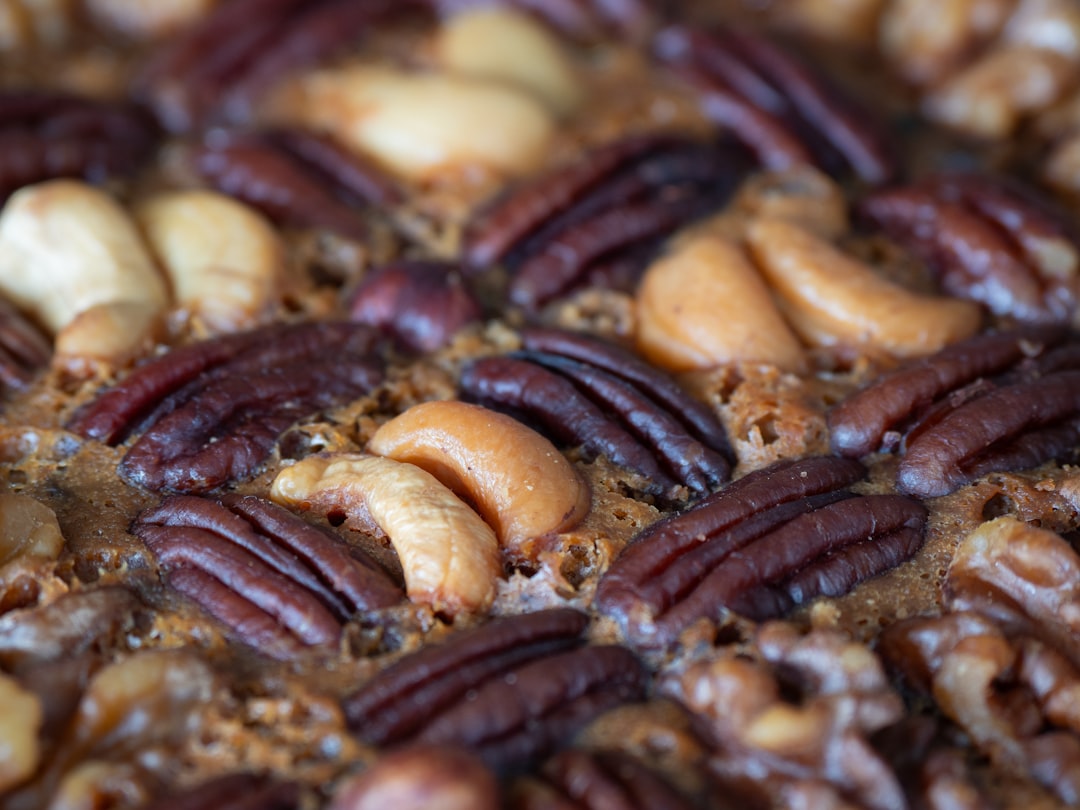
The diets react (see scores below)
Diet Ratings
Candied pecans are coated in sugar, containing 10-15g net carbs per ounce depending on coating thickness. Added sugar incompatible with keto. Plain pecans are keto-approved; candying disqualifies them.
Pecans are plant-based, but candying process often uses refined sugar and may include animal-derived binders or coatings. Heavily processed.
Some vegans accept candied nuts if made with plant-based sweeteners and no animal-derived additives, viewing them as acceptable processed vegan foods.
Candied pecans contain added refined sugar and often seed oils or other additives. While pecans are paleo-approved, the candying process with refined sugar violates paleo principles.
Pecans are acceptable, but candying adds significant sugar and processing. High in added sugars and refined ingredients. Contradicts Mediterranean principles of minimal added sugars and whole foods.
Nuts (plant-derived) coated with sugar. Violates carnivore principles on two fronts: nuts are excluded plant foods, and added sugar is prohibited.
Candied pecans contain added sugar (the 'candied' coating). Added sugar is explicitly excluded during Whole30.
Candied pecans contain added sugars (excess fructose and glucose) from the candy coating. The sugar load makes them high-FODMAP. Plain pecans are low-FODMAP, but the candying process adds high-FODMAP sweeteners.
High in added sugar (coating) and saturated fat. While plain pecans are DASH-approved, candying process adds significant sugar and calories. Conflicts with DASH limits on sweets and saturated fat.
Added sugar (5-8g per oz) and often coated with sweeteners/oil. While pecans are Zone-friendly, candying process adds high-glycemic carbs and processed ingredients that violate carb quality standards.
Pecans themselves are anti-inflammatory (omega-3s, polyphenols), but candying process adds refined sugars and often uses inflammatory oils. High sugar coating overwhelms beneficial compounds. Pro-inflammatory due to added sugars and processing.
High in added sugar (coating), high in calories (~200 per oz), high in fat (~20g per oz, mostly unsaturated but calorie-dense). Sugar content triggers cravings and blood sugar spikes. Minimal protein relative to calorie burden. Empty calories disguised as a snack. Better to eat plain pecans if nuts are desired.
Nutritional profile
Six traits that cut across every diet.
Fiber & Plants
How much whole-plant food and fiber it delivers.
Healthy Fats
The quality of its fats (unsaturated, omega-3).
Whole / Unprocessed
How close it is to its natural, unprocessed form.
Gut Gentle
How easy it is on digestion (low FODMAP, few irritants).
Low Glycemic
How little it spikes your blood sugar.
Protein Density
How much protein it packs per calorie.
Controversy Index
Score range: 1–5/10. Higher controversy = more disagreement between diets.
Diet-Specific Tips for Candied pecans
 Vegan — 5/10
- Plant-based base ingredient
- Heavily processed
- May contain animal-derived binders or coatings
- Verify ingredient list for animal products